Overview
An insulated copper wire is a copper conductor wrapped in a protective layer, usually PVC, that keeps current contained and guards against shock and fire. The grade of insulation decides how safe it is. This overview explains insulation types, their properties and how to choose, using the real Kundan Cab range.
Introduction
The thin coloured layer around a wire looks unremarkable, yet it is the barrier standing between live current and your home. An insulated copper wire owes almost all of its safety to that covering, which contains the current and resists fire. Picture a bunch of wires running warm inside a conduit behind your wall, where only sound insulation keeps a small fault from becoming a serious one. This resource explains insulation and how to choose it, using the real Kundan Cab range.
What Insulation Does
Insulation is any material that resists the flow of current, and around a cable it does three jobs. It contains the current safely inside the conductor, it prevents contact between wires and people, and its grade decides how the wire behaves in a fire. An insulated conductor is therefore only as safe as the covering chosen for it. Kundan Cab wraps its copper in PVC compounds built to IS 694:2010, so each insulated electrical wire meets a consistent, certified standard.
Common Insulation Types
Buyers meet a few insulation names, and knowing them helps.
- PVC, the common, flexible and cost effective choice for house and industrial wiring.
- FR PVC, a flame retardant grade that resists catching light, giving an fr insulated wire.
- FR-LSH PVC, which adds low smoke and halogen control for safer escape in a fire.
- HR PVC, a heat resistant grade for hot spots, used in the Kundan Cab GREEN+ range.
The everyday pvc insulated copper wire found in most Indian homes uses one of these grades, so the label on the coil tells you exactly how it will behave in a fault. You may also hear of an xlpe insulated cable, a cross linked grade used in some high voltage and specialist power cables. Kundan Cab focuses its house and industrial range on proven PVC grades rather than XLPE, since PVC covers the vast majority of building needs. Knowing these copper insulation types lets you match the covering to the risk of the space, room by room, rather than settling for a single grade throughout a whole building.
Why the Grade Matters
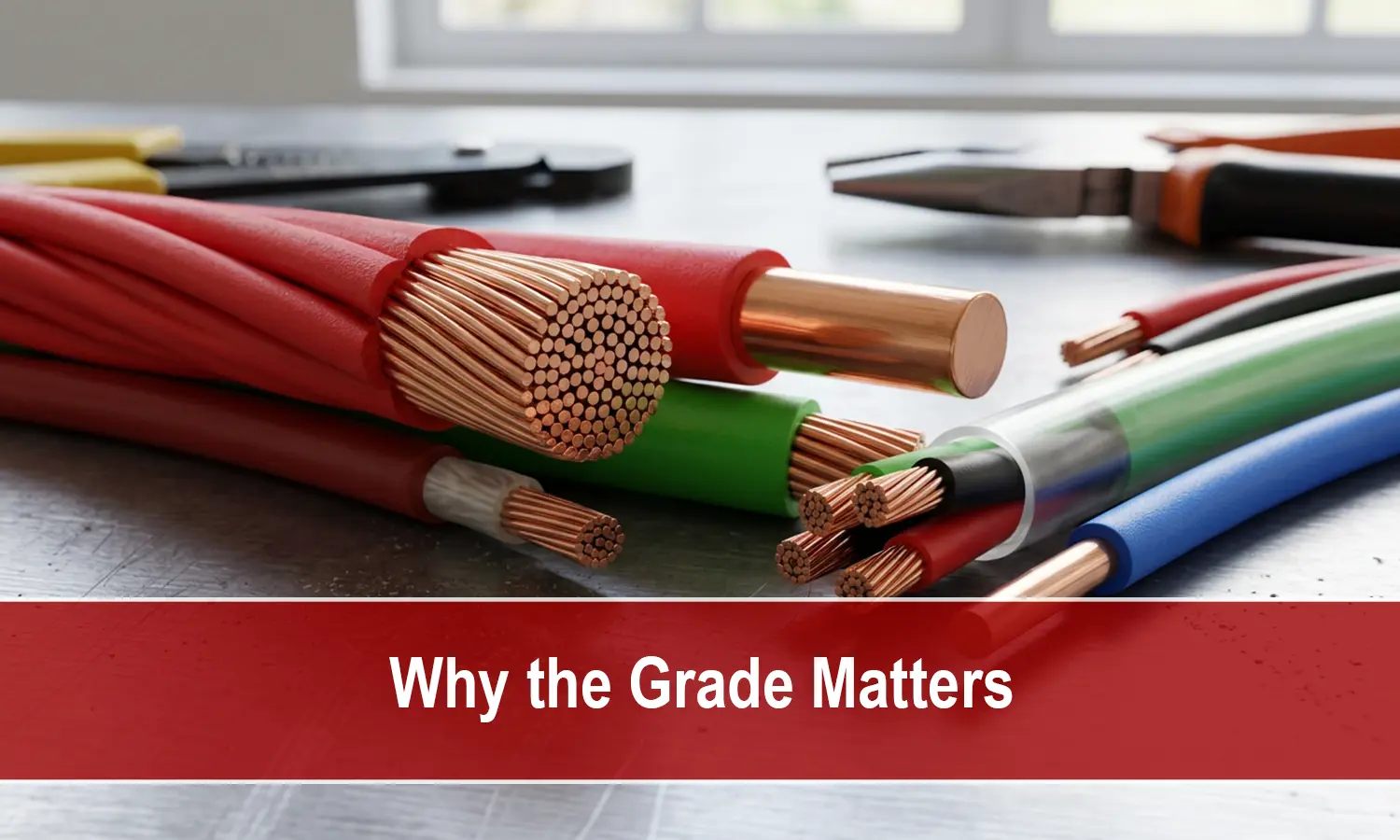
The grade is not a detail, it is a safety decision. A plain wire in a hot kitchen ages faster than a heat resistant one, and a stairwell wired without low smoke insulation can fill with choking fumes in a fault. This is why an insulated copper cable should be chosen for its setting, not just its price. A low smoke grade in escape routes and a heat resistant grade near heat sources are small choices that protect lives when they matter most.
Think of a small flat where the same coil of ordinary wire runs from the meter to the kitchen, the bedrooms and the common stairwell. Each of those spaces carries a different risk, and matching the grade to the space costs very little at the time of wiring yet changes how the whole home behaves in a fire. That is the quiet logic behind grading, and it is why a serious installer treats the covering as carefully as the copper inside it.
Choosing the Right Insulated Wire
Start with the environment, then the load. Match a low smoke grade to enclosed and public spaces, a heat resistant grade to kitchens and high load points, and a standard flame-retardant grade to everyday circuits. Then size the conductor to the current. A quality electrical insulation wire pairs the right grade with the right size, and Kundan Cab offers FR, FR-LSH and heat resistant grades so you can do exactly that across a whole building.
Key Takeaways
- An insulated copper wire relies on its covering to contain current and resist fire.
- An insulated conductor is only as safe as the grade of insulation chosen for it.
- An fr insulated wire resists flame, while FR-LSH adds low smoke for safer escape.
- Match the copper insulation types to the space, with heat resistant grades near heat.
- Kundan Cab offers FR, FR-LSH and heat resistant PVC grades to IS 694:2010.
FAQs
1. What is an insulated copper wire?
An insulated copper wire is a copper conductor wrapped in a protective layer, usually PVC, that keeps current contained and guards against shock and fire. The grade of that covering decides its safety in a fault. Kundan Wire and Cables builds its wires with FR, FR-LSH and heat resistant PVC to IS 694:2010, so each insulated electrical wire meets a certified standard.
2. What insulation grade should I choose?
Match the grade to the space. A standard FR grade suits everyday circuits, an FR-LSH grade adds low smoke for stairwells and public areas, and a heat resistant grade suits kitchens and hot spots. Choosing the right copper insulation types for each area, rather than one grade everywhere, is a simple and powerful safety step.
3. Is PVC or XLPE insulation better?
Both have their place. PVC covers the vast majority of house and industrial wiring, while an xlpe insulated cable is a specialist choice for some high voltage power cables. Kundan Cab focuses on proven PVC grades for building wiring, so for homes and most industry a quality insulated copper cable in FR or FR-LSH PVC is the sensible choice.
Insulate Safely With Kundan Cab
Good insulation is quiet, invisible protection, and it is where Kundan Cab puts real care. Every insulated wire uses 99.97 percent copper wrapped in PVC grades from FR to FR-LSH to heat resistant, all made to IS 694:2010. Match the grade to each space, and your wiring stays safe long after the walls are closed.
Wiring a home or building? Browse the Kundan Cab range and choose the right insulated copper wire grade for every space. Visit kundancab.in or contact a Kundan Cab dealer for guidance.