Electrical Wires Guide: Secure Your Home for Generations

Wiring Your Home for Generations:
Why Electrical Wires Are Your Home's Most Critical Investment

Here is a number that should stop you cold: Electrical fires account for over 30,000 structure fires annually in India, and faulty or substandard wiring is the single largest contributing factor. The wire buried inside your wall today will be conducting electricity for the next 30, 40, or even 50 years, long after you've forgotten the brand name printed on the drum.

Your home's electrical wiring is not a purchase. It is a declaration about how seriously you take the safety and longevity of the building your family lives in. Every socket, every switch, every circuit depends on the integrity of the cables hidden behind the plaster. And yet, most homeowners and even many contractors treat wire selection as an afterthought, choosing whatever is cheapest or most available at the time.

This guide changes that. In the article that follows, you will learn exactly what separates a wire that merely passes current from a wire built to serve your home for generations. You will understand the technical factors that govern wire longevity, fire safety, and energy efficiency. And you will understand why Kundan Cab, one of India's pioneer wire manufacturers, operating continuously since 1968, has remained the trusted choice for homeowners, engineers, contractors, architects, and industrial clients across the country.

Whether you are building a new home, undertaking a renovation, advising a client on electrical specifications, or evaluating the price of wires for a bulk procurement, this is the only resource you need.
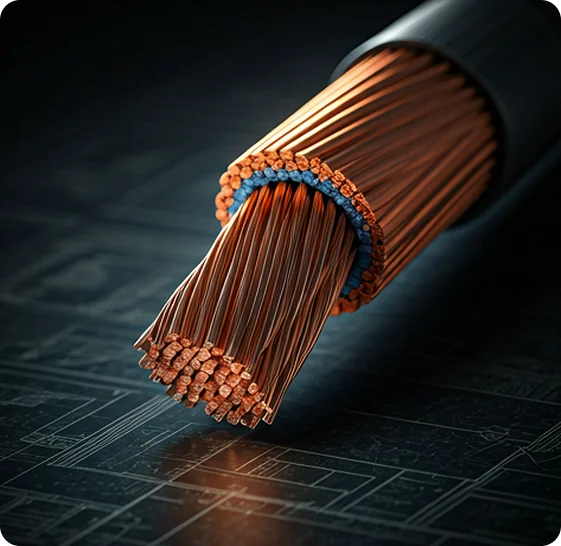
THE WIRE BEHIND YOUR WALL:
Why Most People Get This Wrong

Ask most homeowners what brand of wire is installed in their home, and they will stare at you blankly. The wire is invisible, buried in walls, snaking through conduits, hidden above false ceilings. This invisibility creates a dangerous illusion: that all wires are essentially the same.

They are not. The difference between a 90-purity copper conductor and a 99.97% electrolytic-grade copper conductor is not academic; it is the difference between a wire that runs cool and efficient at full load and one that generates heat, wastes energy, and degrades prematurely. The difference between a Flame Retardant Low Smoke and Halogen (FR-LSH) insulated wire and a basic PVC-insulated wire can, in a fire scenario, be the difference between a few seconds of additional evacuation time and a catastrophe.

The Indian electrical wires market has grown significantly, with the cables and wires segment valued at over INR 70,000 crore and projected to expand at a CAGR of 12–14% through 2027, driven by urban housing, infrastructure expansion, and the push for smart commercial buildings. Within this expanding market, quality variance is extreme, and the consequences of choosing poorly are borne not by the installer or supplier but by the family living inside the walls.

"When you wire a home, you're not just connecting switches to circuits. You're building the nervous system of a building that will outlive many of the people who inhabit it. That demands uncompromising quality." An electrical consultant with 25+ years of residential project experience

What 'Wiring for Generations' Actually Means

The phrase sounds aspirational. But wiring for generations is an engineering discipline, not a marketing slogan. It means selecting cables and wires calibrated not for today's appliance load but for the load a home will carry fifteen, twenty, or thirty years from now. Consider how dramatically home electrical consumption has changed. In 1990, an average Indian household used a fan, a single-door refrigerator, a black-and-white television, and a few incandescent bulbs. Today, the same home might simultaneously run a 1.5-tonne inverter air conditioner, a washing machine, a microwave, multiple LED televisions, EV charging infrastructure, and a solar inverter system. Each of these additions demands more from the wiring infrastructure.

A wire installed with appropriate current-carrying capacity today will handle tomorrow's load without thermal stress. A wire installed to the minimum specification of current load will overheat as load increases, leading to insulation degradation, increased fire risk, and ultimately, costly rewiring.

The Five Technical Pillars of Generational Wiring

1. Conductor Purity

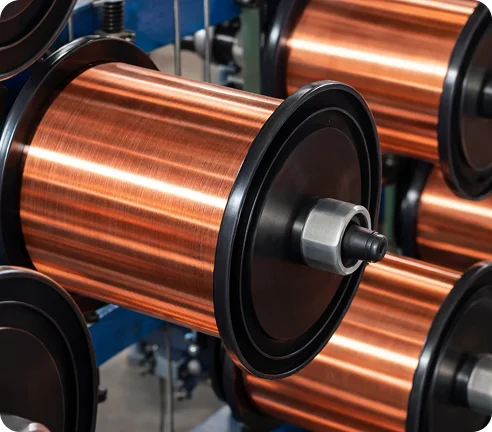
Pure electrolytic-grade copper (99.97%) offers maximum conductivity, minimal resistive heating, and superior flexural endurance.

2. Insulation Grade

FRLS (Flame Retardant Low Smoke) and HRFR (Heat Resistant Flame Retardant) insulations provide significantly enhanced safety margins in high-temperature or confined-space installations.

3.Cross-Sectional Area Adequacy

Always specify wires with a 20–25% headroom above current calculated loads to accommodate future electrical additions.

4.Compliance Certification

IS 694 (the Bureau of Indian Standards specification for PVC-insulated cables) is the non-negotiable baseline. Look for ISI-marked products from BIS-licensed manufacturers.

5. Environmental Resistance

UV-stable, moisture-resistant insulations are essential for external runs, conduit installations in damp areas, and any application in humid coastal climates.

Decoding Electrical Wire Specifications:
A Buyer's Reference

The specifications printed on a wire drum are not marketing decoration. They contain everything a professional buyer needs to know to make the right choice. Here is how to read them correctly.

Specification
What It Means
What To Look For
Conductor Cross-Section
Current-carrying capacity
1.5 sq mm (lighting)
2.5 sq mm (power)
4–6 sq mm (AC/heavy load)
Conductor Material
Conductivity and purity
99.97% electrolytic-grade copper
Insulation Type
Fire and heat resistance
FR, FRLS, HRFR, choose per application
Voltage Rating
Maximum safe operating voltage
650/1100V for standard house wiring
Standard Compliance
Regulatory certification
IS 694 (BIS/ISI marked)
Colour Code
Circuit identification
Red/Yellow/Blue (phase), Black (neutral), Green (earth)

Understanding these specifications is what separates an informed procurement decision from an expensive mistake. A 1.5 sq mm FR wire is not the same product as a 1.5 sq mm HRFR wire, and neither should be interchangeable in a specification without careful review.

Types of Electrical Wires and Their Correct Applications

The specifications printed on a wire drum are not marketing decoration. They contain everything a professional buyer needs to know to make the right choice. Here is how to read them correctly.

FR (Flame Retardant) Wires

The standard specification for most residential and commercial wiring applications. FR wires are engineered to resist the spread of flame. In the event of ignition, an FR wire will self-extinguish once the flame source is removed, preventing fire propagation along the cable run. Suitable for general home wiring, office installations, and standard commercial environments.

FRLS (Flame Retardant Low Smoke) Wires

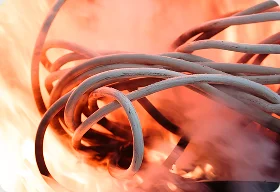
FRLS wires take the safety profile a significant step further. During combustion, standard PVC insulation releases dense black smoke and toxic halogen gases, conditions that impair evacuation and damage sensitive electronic equipment. FRLS insulation dramatically reduces both smoke volume and toxicity, providing critical additional safety margins in multi-story residential buildings, hospitals, educational institutions, and data centres.

HRFR (Heat Resistant Flame Retardant) Wires

The standard specification for most residential and commercial wiring applications. FR wires are engineered to resist the spread of flame. In the event of ignition, an FR wire will self-extinguish once the flame source is removed, preventing fire propagation along the cable run. Suitable for general home wiring, office installations, and standard commercial environments.

Industrial and Power Cables (IS 1554 Compliant)

For heavy-duty industrial applications, armoured cables with cross-linked polyethylene (XLPE) insulation or PVC-sheathed multi-core cables conforming to IS 1554 are the correct specification. These products are engineered for the demanding environments found in manufacturing facilities, substations, and heavy commercial construction.

Kundan Cab:
50+ Years of Wiring India's Homes and Industries

In 1968, when Kundan Cab was founded in Chennai, India's construction sector was in a different era. Electrical wiring was a specialised trade practised by a handful of manufacturers. The founding team at Kundan Cab made a decision that would define the brand for decades: to focus not on volume, but on quality. Every wire manufactured would be built to outlast the building it served.

Over five and a half decades, that commitment has not wavered. Today, Kundan Cab operates a modern manufacturing facility at the RIICO Industrial Area in Bhiwadi, Rajasthan, one of India's premium industrial zones, with its corporate headquarters in Noida. The brand holds BIS certification against IS 694 for its PVC-insulated cables and IS 1554 for its high-voltage power cables. Every product that leaves the Kundan Cab manufacturing floor is ISI marked.

But the numbers that matter most are these: over 10,000 satisfied clients across India. More than 500 product variants. A steadily expanding national dealer network. And a client roster that includes BHEL (Bharat Heavy Electricals Limited) and some of India's most reputed real estate developers, Arun Excello, Appaswamy Real Estate, and Ceebros. These are not customers who select vendors casually. They are institutions with rigorous quality standards and long-term accountability.

Kundan Cab's clients include BHEL and some of India's most trusted real estate developers, organisations that apply the same standards to their wire procurement that they apply to structural steel and concrete. Their continued trust in Kundan Cab is the most meaningful quality endorsement in the market

The Kundan Cab House Wire Range

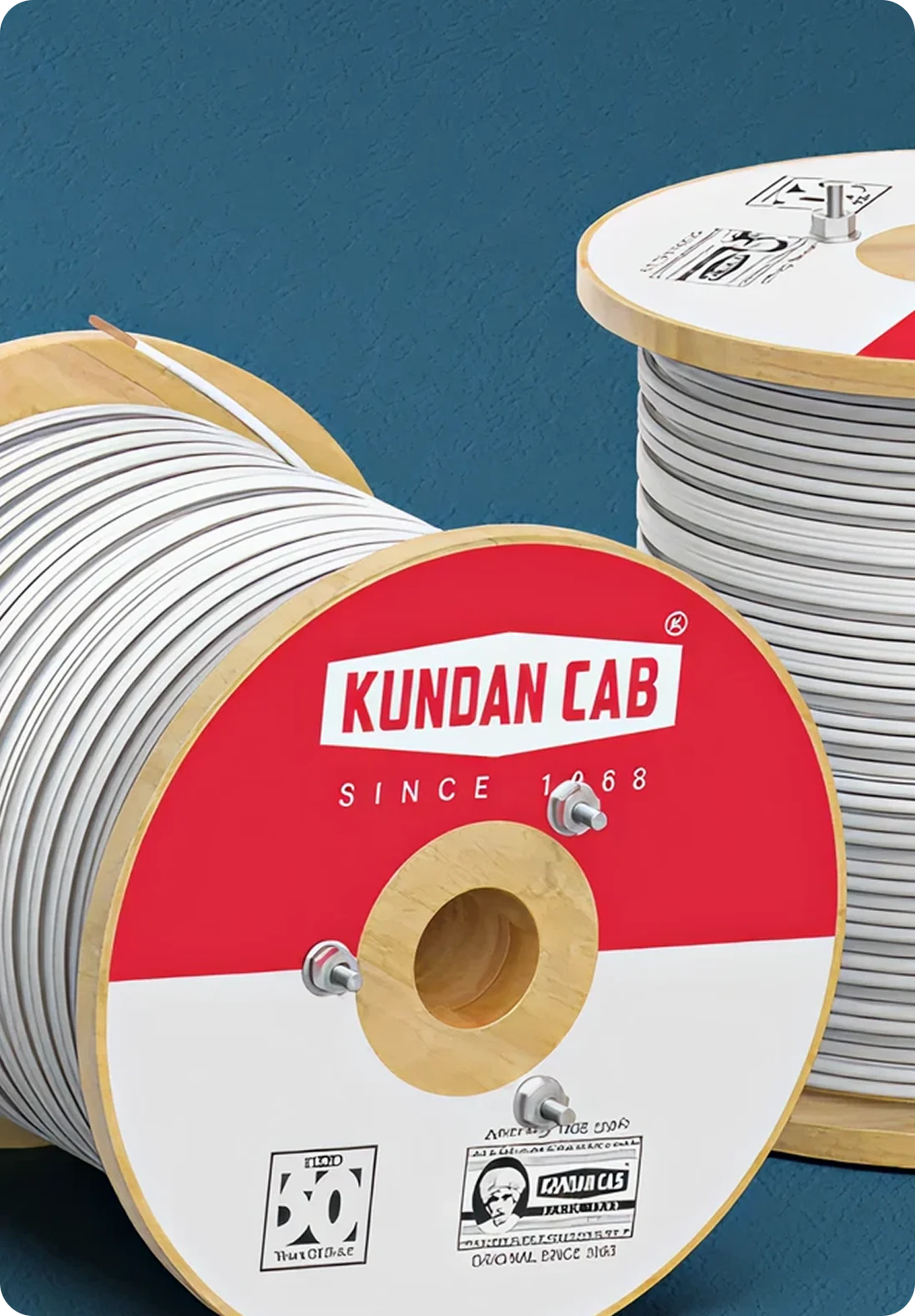
At the heart of Kundan Cab's residential offering is the House wire, engineered specifically for modern Indian homes. House wires are manufactured using high-purity copper conductors and advanced FR-grade insulation, fully compliant with IS 694. They are designed to accommodate the electrical load demands of today's smart homes: multiple air conditioning circuits, EV charging points, high-capacity kitchen appliances, and intelligent automation systems.

What makes house wire the right specification for generational wiring is not just the base quality; it is the consistent manufacturing tolerance. Every drum of house wire meets the same exacting specifications, with uniform conductor cross-section, verified insulation thickness, and certified flame-retardant properties. This consistency is what guarantees reliable performance across an entire building's worth of wiring.

Price of Wires in India 2026:
Understanding What You Are Actually Paying For

The price of electrical wires in India varies significantly across the market, and understanding that variation is critical to making a sound procurement decision. At first glance, the wire market appears to offer substantial savings through lower-priced products. On closer examination, those apparent savings carry costs that dwarf the initial differential.

Electrical wire pricing is principally determined by three factors: copper content (both purity and actual weight per metre), insulation quality (the grade and quantity of PVC or compound used), and compliance and testing overheads (the costs associated with BIS licensing, product testing, and quality certification). A manufacturer who cuts corners on any of these three factors can offer a lower price per metre, but the product that results is measurably inferior.

Wire Type

1.5 sq mm FR (ISI)

2.5 sq mm FR (ISI)

4 sq mm FR (ISI)

6 sq mm FR (ISI)

2.5 sq mm FRLS

4 sq mm HRFR

Approximate Price Range (2026)

INR 12–18 per metre

INR 20–30 per metre

INR 32–45 per metre

INR 48–65 per metre

INR 28–40 per metre

INR 45–62 per metre

Best For

Lighting & fan circuits

General power points

AC & heavy appliance circuits

Main sub-distribution

Multi-story/commercial buildings

Industrial/high-temperature zones

Note: These are indicative market ranges as of April 2026. Actual pricing varies by region, volume, dealer margin, and specific product variant. Contact kundancab.in or your nearest Kundan Cab dealer for precise pricing and volume-based offers.

The relevant comparison is not price per metre, it is cost per year of safe, reliable service. A wire that costs 20% more per metre but delivers 40 years of reliable performance without degradation, versus a cheaper wire that requires replacement or re-insulation at the 15-year mark, is demonstrably the lower-cost option over the building's life. This is the calculation that architects, civil engineers, and institutional buyers have always understood, and that savvy homeowners are increasingly beginning to make.

What Electricians, Architects, and Contractors Need to Know in 2026

India's construction sector is in a period of intense transformation. The National Building Code of India has progressively strengthened electrical safety requirements. Smart home systems are creating new complexity in residential wiring specifications. The proliferation of EV charging infrastructure is adding high-current circuits to residential and commercial buildings that did not previously carry such loads.

For professionals specifying electrical infrastructure, architects, civil engineers, interior designers, electrical consultants, and contractors, the implications are significant.

For Architects and Interior Designers

The electrical specification is one of the most consequential items in a building brief. Specify ISI-certified FRLS cables for all multi-story residential and commercial work as a minimum standard. For premium projects, specify IS 694-compliant cables with HRFR insulation for all concealed wiring and FR-LSH for areas with restricted egress. Ensure wire specifications are locked before interior finishes are applied; remediation costs for substandard wiring discovered after completion are substantial.

For Civil Engineers and Contractors

Procurement decisions made at the site level can override even excellent design specifications. Enforce wire brand and specification compliance through verification of ISI marks, batch numbers, and compliance documents at the point of delivery. Establish approved vendor lists that include certified manufacturers like Kundan Cab, and resist substitution pressure based solely on unit price differentials.

For Electricians and B2B Vendors

Your professional reputation is built on the reliability of the installations you complete. Recommending or installing substandard cables creates liability that can last for decades. Partner with certified, BIS-licensed manufacturers who provide consistent batch quality, product traceability, and technical support. Kundan Cab's expanding dealer network offers competitive margins alongside the product quality that protects your professional standing.

For Dealers and Distributors

The electrical wire distribution market is consolidating around quality and compliance. As building codes tighten and consumer awareness grows, demand for verified ISI-certified products from established manufacturers continues to strengthen. Stocking a portfolio anchored by trusted brands with long manufacturing histories and robust institutional client bases provides a sustainable competitive position.

The Six Wiring Mistakes That Cost Indian Homeowners the Most

After decades of serving India's residential and commercial sectors, the Kundan Cab team has identified a consistent set of wiring errors that create long-term problems for property owners. Understanding these mistakes is as important as understanding wire specifications.

01

Undersizing Conductors

Selecting 1.5 sq mm wire for circuits that will carry 2.5 sq mm loads is the single most common wiring mistake in India. It creates resistive heat, energy losses, and premature insulation degradation.

02

Using Non-ISI Marked Cables

Counterfeit and substandard wires are prevalent in the Indian market. Always verify the ISI mark, BIS licence number, and manufacturer name on every drum before acceptance.

03

Ignoring Insulation Grade

Specifying standard FR wires for high-rise residential buildings when FRLS is the appropriate grade is a false economy that compromises building safety.

04

Excessive Joint Connections

Every junction in a wire run is a potential failure point. Specify wire lengths that minimise the number of joints, and ensure all joints are properly made using appropriate connectors.

05

Inadequate Earthing

Earthing is the foundation of electrical safety. Substandard earth conductors or inadequate earthing electrode systems render all other safety measures ineffective.

06

Failing to Account for Future Load

Wiring installed today will carry tomorrow's loads. Always build in conductor capacity headroom of at least 20–25% above current calculated requirements.

CHOOSING KUNDAN CAB:
The Decision That Repays Itself for Decades

In a market populated by established national brands, what distinguishes Kundan Cab?

The answer is not a single differentiating feature but a combination of factors that together define a product of genuine long-term value. Kundan Cab wires are manufactured at a dedicated facility in Bhiwadi, Rajasthan, one of India's premier industrial manufacturing zones, using high-purity electrolytic-grade copper conductors and advanced polymer insulation compounds. Every product meets IS 694 and IS 1554 standards and carries the ISI mark.

What Kundan Cab offers that no brand established in the last decade or two can offer is institutional memory. 50+ years of manufacturing means 50+ years of understanding how Indian homes age electrically, the load growth cycles, the environmental stresses specific to different climatic zones, and the failure modes that reveal themselves only over decades. This knowledge is embedded in the product specifications, the quality standards, and the manufacturing tolerances that define every Kundan Cab cable.

When a homeowner in Tamil Nadu, a contractor in Delhi, or a real estate developer managing large residential projects across multiple cities chooses Kundan Cab, they are choosing a wire specification validated by more than half a century of Indian market experience. That experience is irreplaceable, and it is precisely what 'wiring for generations' means in practice.

Kundan Cab products are available through a growing nationwide dealer network. For dealers, distributors, project inquiries, bulk pricing, and technical specifications, visit kundancab.in or contact the regional sales team directly.

With 50+ years of manufacturing excellence, 100% ISI certification, and an institutional client base that includes BHEL and India's leading real estate developers, Kundan Cab brings a level of proven reliability to every installation that newer market entrants cannot match.