Overview
The cable manufacturing process turns raw copper into a finished, tested cable through drawing, annealing, stranding, insulation and quality checks. Each stage shapes safety and life. This overview explains how quality cable is made and why the process matters, using the standards Kundan Cab manufactures to.
A cable that looks perfect on the outside can still hide a weak core or thin insulation. That is why the cable manufacturing process matters so much, since safety is built in long before a coil reaches a site. Picture two look-alike drums where only one was drawn from pure copper and tested at every stage, and the difference becomes clear the day a load is applied. This resource walks through how quality cable is made, using the standards Kundan builds to.
From Copper Rod to Fine Wire
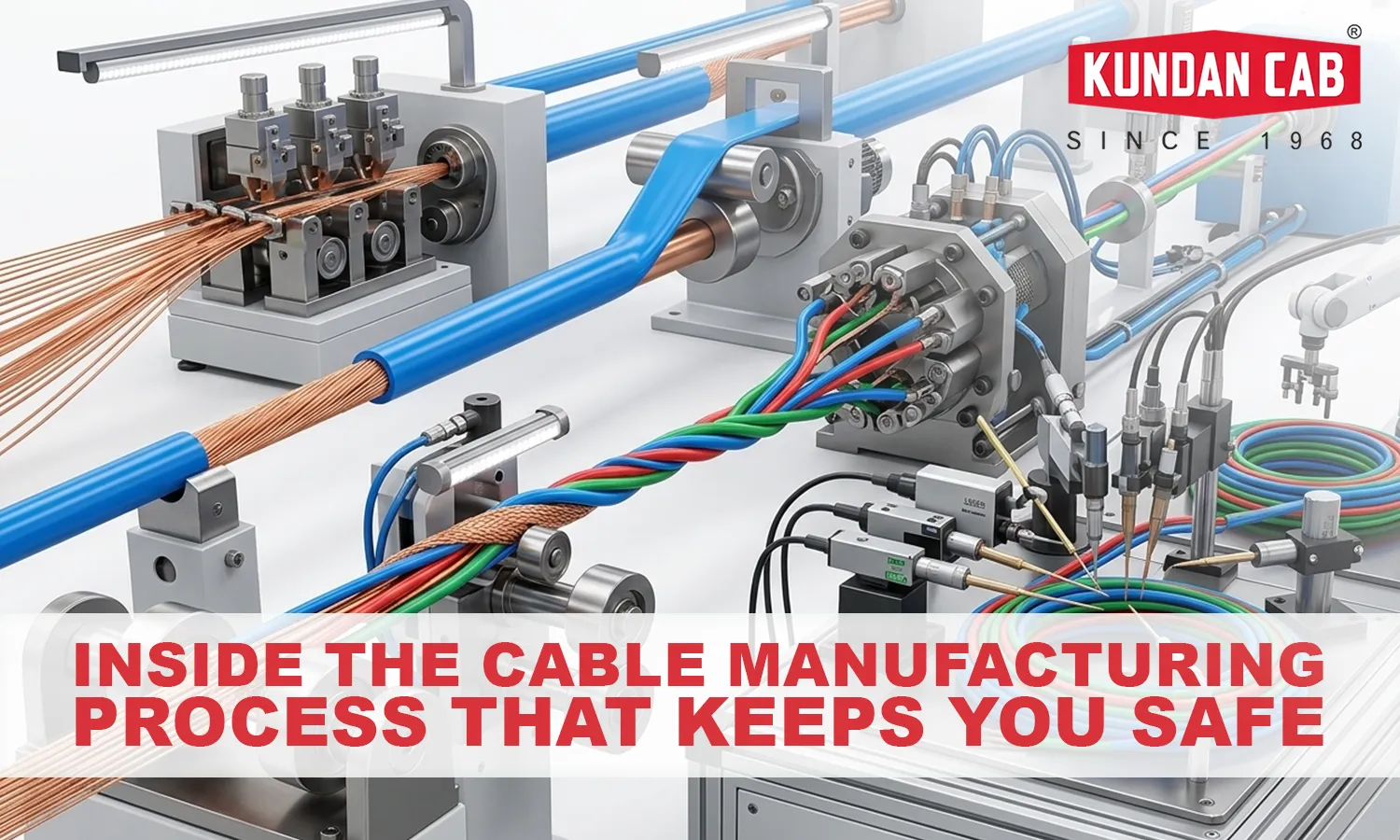
The journey starts with copper. Thick copper rod is drawn down through a series of dies until it reaches the right diameter, the first step in any wire manufacturing process. Kundan uses electrolytic grade copper at 99.97 percent purity, so the metal enters the line clean and consistent. This drawing stage sets the resistance of the finished wire, which is why a careful copper wire manufacturing process starts with high grade metal rather than fixing quality later.
Annealing and Stranding
Freshly drawn copper is hard and springy, so it is annealed, or heat softened, to make it flexible and easy to work. Softened strands are then twisted together in a stranding stage to form solid or flexible conductors to the right class. This part of the wire production process decides how the cable will bend and behave in service. A neat, even strand also carries current more evenly, which keeps the conductor cool under load.
Insulation and Testing
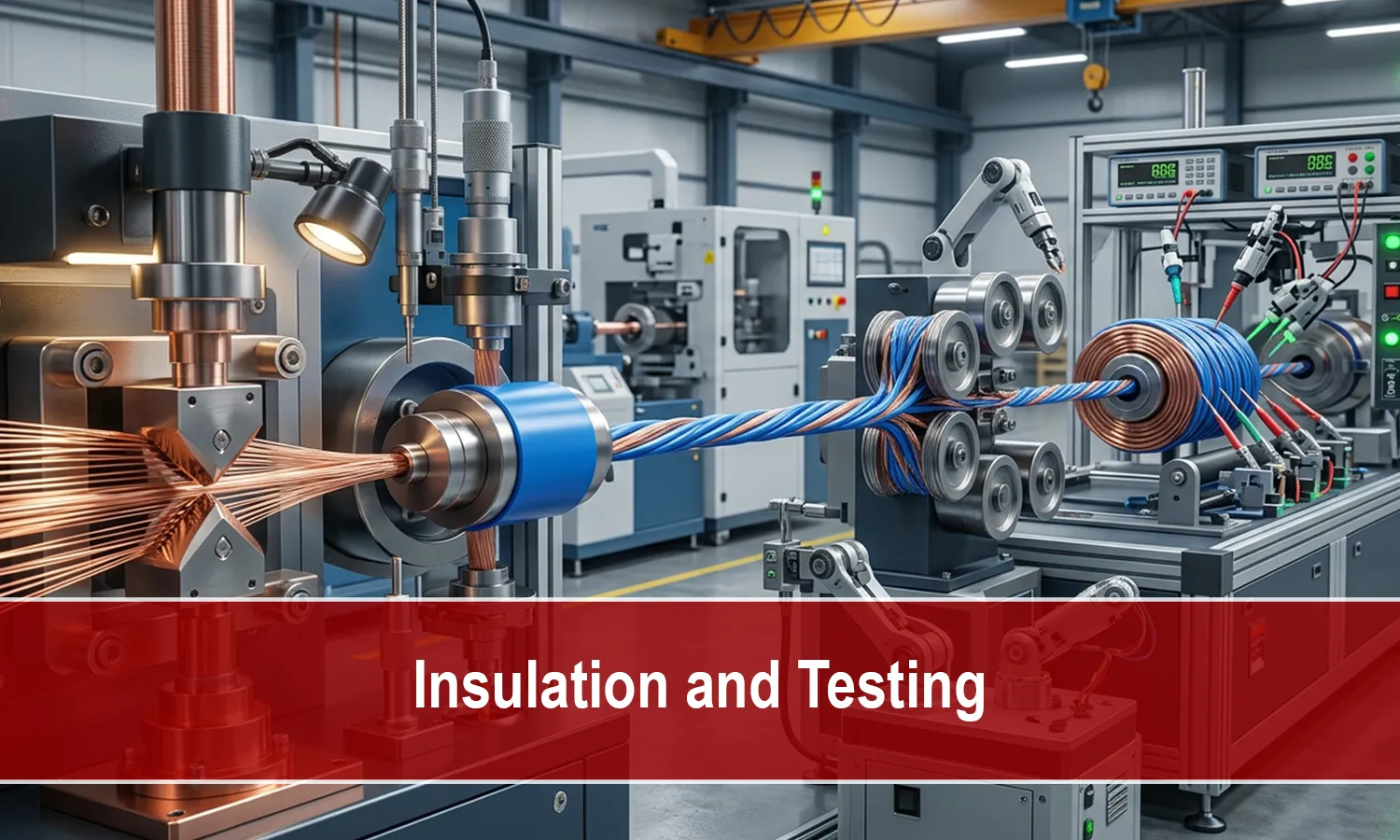
Next the conductor passes through an extruder, where molten PVC is applied as a smooth, even layer. This cable extrusion process must be tightly controlled, since a thin or uneven coat is a weak point waiting to fail. Kundan applies FR, FR-LSH and heat resistant grades depending on the product. After insulation, samples go through electrical cable manufacturing checks for insulation resistance, dielectric strength and dimensions, so a fault is caught in the plant rather than in your wall.
- Conductor resistance to confirm copper purity and size.
- Insulation thickness measured around the full circumference.
- High voltage and insulation resistance checks for safety.
- Spark testing along the length to catch pinholes.
Finishing and Why It Matters
Finally the cable is printed with its size and rating, coiled and packed. A modern cable manufacturing plant automates much of this so quality stays consistent from coil to coil, and Kundan upgraded its plant with automated testing for exactly that reason. The full cable production process, from drawing to packing, is what stands behind the IS 694:2010 marking on the sheath. When you trust that marking, you are really trusting the process behind it.
What This Means When You Buy
You will never watch a cable being made, but the process leaves clues you can check on the coil. Clear, evenly spaced printing shows a controlled line, while smudged or missing marking hints at a rushed one. The insulation should feel uniform, and the stated copper purity and IS 694 grade should be printed, not just claimed by a shopkeeper. A maker proud of its process prints its details plainly, as Kundan does with its 99.97 percent grade and 1100 volt rating.
- Clear printing of size, grade and IS 694 marking.
- Even, firm insulation with no thin or tacky spots.
- Stated copper purity from a named manufacturer.
Think of it like buying food with a proper label against an unmarked packet. The extra minute spent reading the sheath tells you if the process behind it was one you can trust with your walls for decades. There is a safety reason too, since a cable made on a poorly controlled line can pass current today yet fail years later as thin insulation ages or an impure strand runs hot. Because those flaws are invisible from outside, the marking and the maker are your best guide.
Key Takeaways
- The cable manufacturing process builds safety in through drawing, annealing, stranding, insulation and testing.
- A careful wire manufacturing process starts with high purity copper, since drawing sets the resistance.
- A controlled cable extrusion process gives even insulation with no thin, weak points.
- Testing during electrical cable manufacturing catches faults in the plant, not in your wall.
- A modern cable manufacturing plant with automated testing keeps quality consistent.
FAQs
1. What are the main steps of the cable manufacturing process?
The cable manufacturing process runs from drawing copper rod into fine wire, through annealing and stranding, then insulation extrusion, testing and packing. Each stage affects safety and life. Kundan follows this full cable production process with automated testing and 99.97 percent electrolytic copper, so every coil meets IS 694:2010.
2. Why does the manufacturing process affect cable safety?
Because faults are built in or designed out at the factory. A poor wire production process can leave impure copper or thin insulation that overheats later. A controlled cable extrusion process and proper testing catch these problems early, which is why buying from a maker with a modern, tested line protects your wiring for decades.
3. How can I tell a cable was made to a good standard?
Look for clear printing of the size, voltage grade and IS 694 marking, which reflects proper electrical cable manufacturing and testing. A trusted cable manufacturing plant states its copper purity too. Kundan prints its 99.97 percent grade and 1100 volt rating, so you can confirm the quality behind the coil before you buy.
Trust the Process With Kundan
A cable is only as good as the plant that made it, and that is where Kundan Cab has invested since 1968. From high purity copper drawing to automated testing, every step is controlled so the finished coil performs safely for years. Choose a cable made to a real standard, and the quality follows it into your walls.
Want wiring built to a proven standard? Browse the Kundan Cab range, made through a controlled cable manufacturing process to IS 694:2010. Visit kundancab.in or contact a Kundan dealer to learn more.