Different Types of Communication Cables
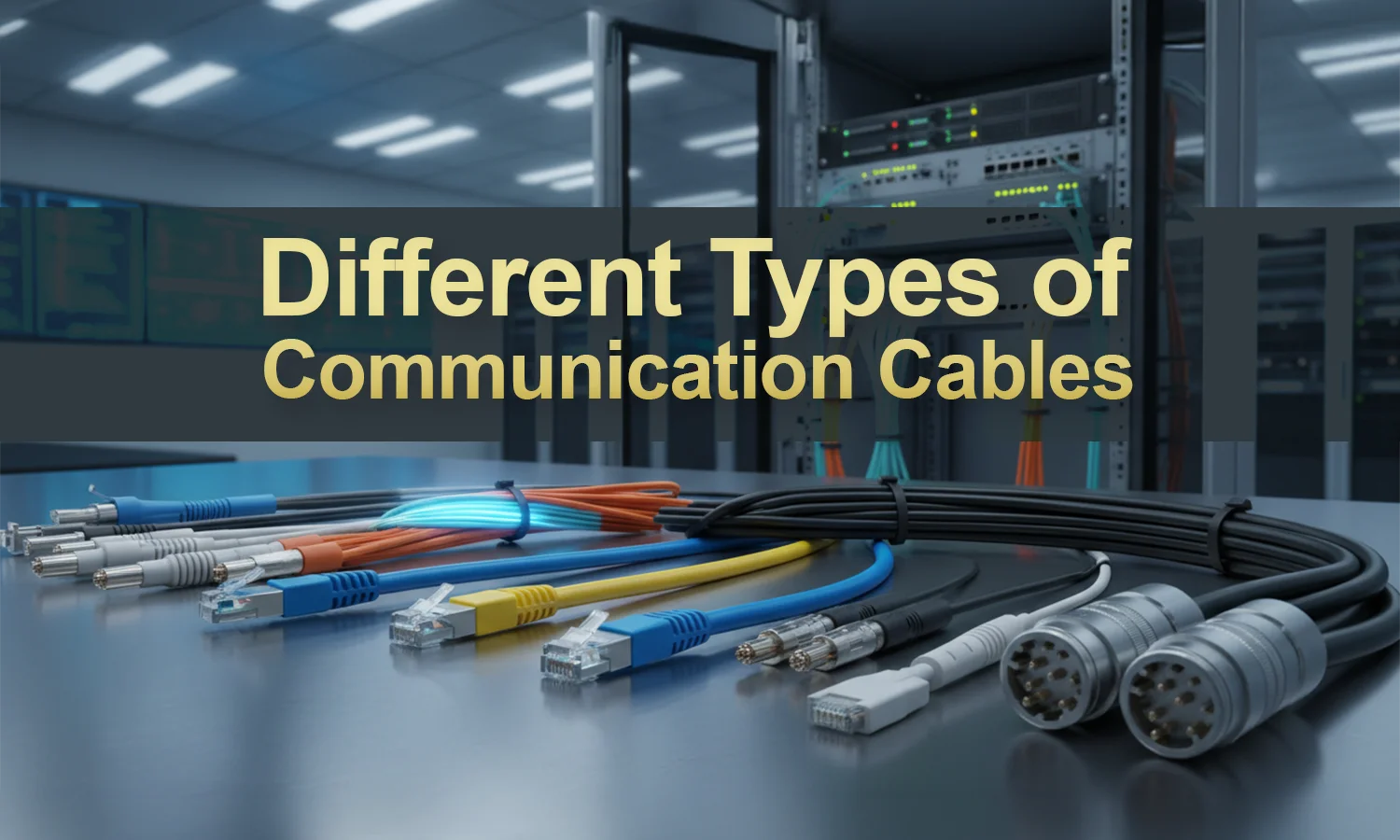
Modern systems depend on types of communication cables to transfer data between devices. These cables support everything from internet connections to industrial control systems. When the right cable is used, signal quality remains stable and performance is consistent.
Understanding types of communication cables helps in selecting the correct option for different applications. Each cable is built for a purpose, and knowing the difference can prevent performance issues and system failures.
What Are Communication Cables?
Communication cables are used to transfer data signals between devices. These signals can be electrical or optical, depending on the design. In simple terms, they act as a pathway for information to travel.
Communication cable types vary based on speed, distance, and environment. Some are used in homes, while others are built for industrial conditions. Cable communication systems rely on proper insulation and shielding to maintain signal quality and reduce interference.
Coaxial Cables
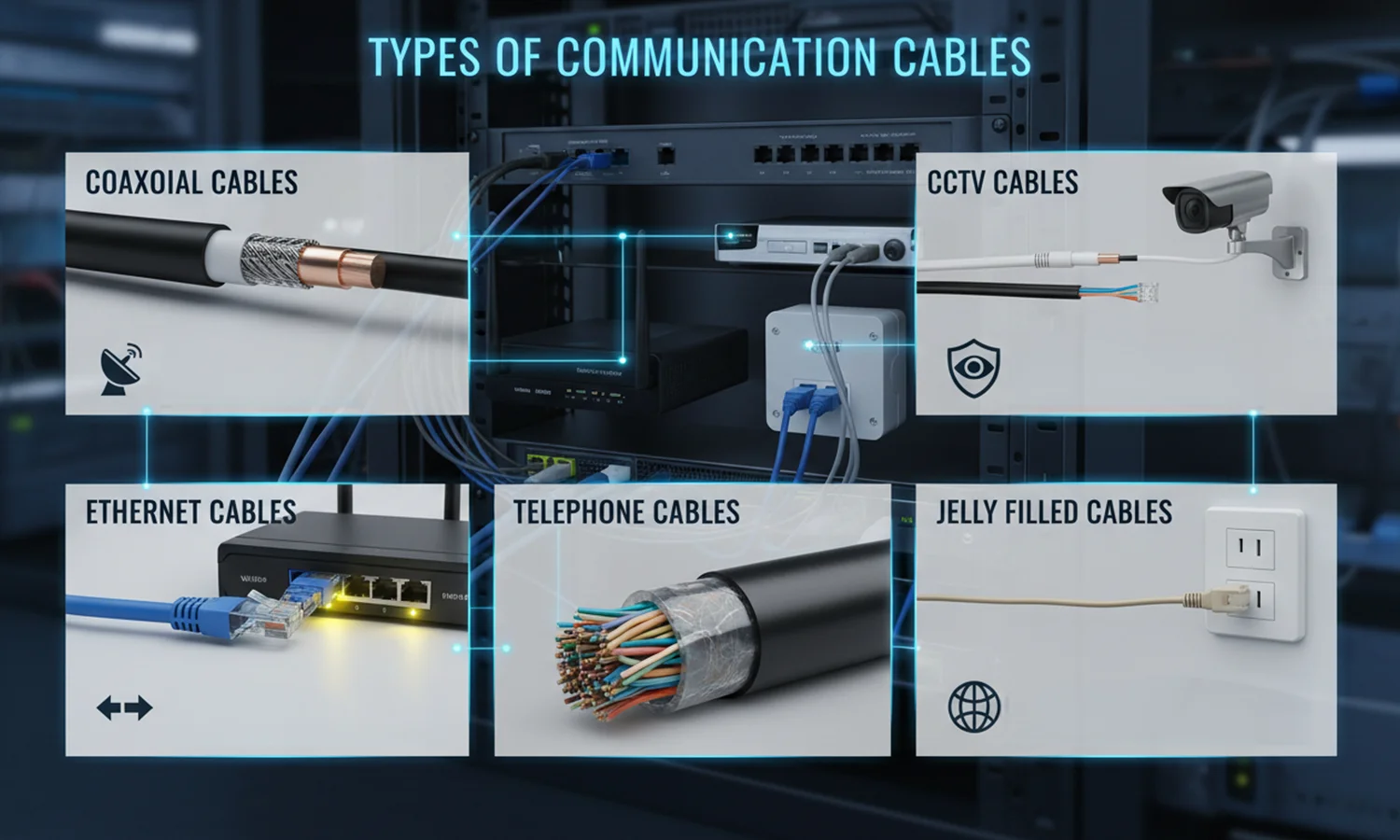
Coaxial cables are widely used in television and broadband connections. If you’ve ever asked what coaxial cables are, they are cables with a central conductor surrounded by insulation and shielding.
There are different types of coaxial cables, each designed for specific applications. These include cables used for the internet, television, and surveillance systems. Cables with coaxial connectors ensure proper signal transfer and reduce signal loss over distance.
CCTV Cables
CCTV systems depend on reliable cables to transmit video signals. CCTV camera cables are designed to handle continuous data transmission without interruption.
There are multiple types of CCTV cables available, including coaxial and combined power cables. When selecting between different CCTV cables types, it is important to consider distance, signal clarity, and installation conditions.
Ethernet Cables
Ethernet cables are commonly used in networking systems. They connect computers, routers, and switches within a network.
Different types of ethernet cables are available, such as CAT 5e, CAT 6, and CAT 7. Each offers different speed and performance levels. Understanding ethernet cables types helps in choosing the right option for both small and large networks. Factors like performance and even ethernet cables price can influence the decision.
Telephone Cables
Telephone systems use dedicated cables to transmit voice signals. Telephone lines use cables that are designed for stable and clear communication.
There are various types of telephone cables, including twisted pair cables. These cables are used in both residential and commercial setups. Their design ensures minimal interference and consistent signal transmission.
Jelly Filled Cables
Jelly-filled cables are designed for underground and outdoor use. These cables contain a protective gel that prevents moisture from entering the cable.
Jelly-filled copper cables are commonly used in telecom infrastructure. They provide durability and long-term performance. Jelly-filled telephone cables are especially useful in environments where cables are exposed to water or humidity.

Choosing the Right Communication Cable
Selecting the right cable depends on multiple factors. Each application requires a specific solution, and choosing correctly ensures long-term performance.
Key factors to consider:
- Distance of data transmission
- Type of signal being transferred
- Environmental conditions
- Required speed and performance
In some systems, communication wire may be used for basic setups, while advanced networks may require high-performance cables. Technologies like one-wire communication are used in specific low-data applications, while devices like computers often rely on a USB communication cable for direct connections.
Conclusion
Understanding types of communication cables helps in building efficient and reliable systems. Each cable type is designed for a specific purpose, from simple data transfer to complex industrial communication.
Choosing the right cable improves performance and reduces the chances of failure. Manufacturers like Kundan Cab focus on producing quality cables that meet industry requirements and ensure consistent operation across different applications.
Key Takeaways
- Types of communication cables are used across residential and industrial systems
- Each cable type serves a specific purpose based on speed and environment
- Coaxial, Ethernet, and telephone cables are widely used in communication systems
- Jelly-filled cables protect against moisture and external damage
- Choosing the right cable improves performance and reliability
FAQs
1. What is the use of a communication cable?
Types of communication cables are used to transfer data, voice, and video signals between devices. They ensure stable and reliable communication across systems in homes, offices, and industries.
2. What is the maximum length for a communication cable?
The maximum length depends on the types of communication cables being used. For example, Ethernet cables typically support up to 100 meters, while fiber optic cables can work over much longer distances.
3. Does cable length affect the signal?
Yes, cable length can impact performance. In many types of communication cables, longer distances can lead to signal loss if the cable is not designed for that range.
4. How much data can communication cables carry every second?
The data capacity depends on the types of communication cables. Ethernet cables can support speeds from 100 Mbps to 10 Gbps, while fiber optic cables can handle much higher data rates.