Communication Cables: Essential Guide to Data and Network Cable Types
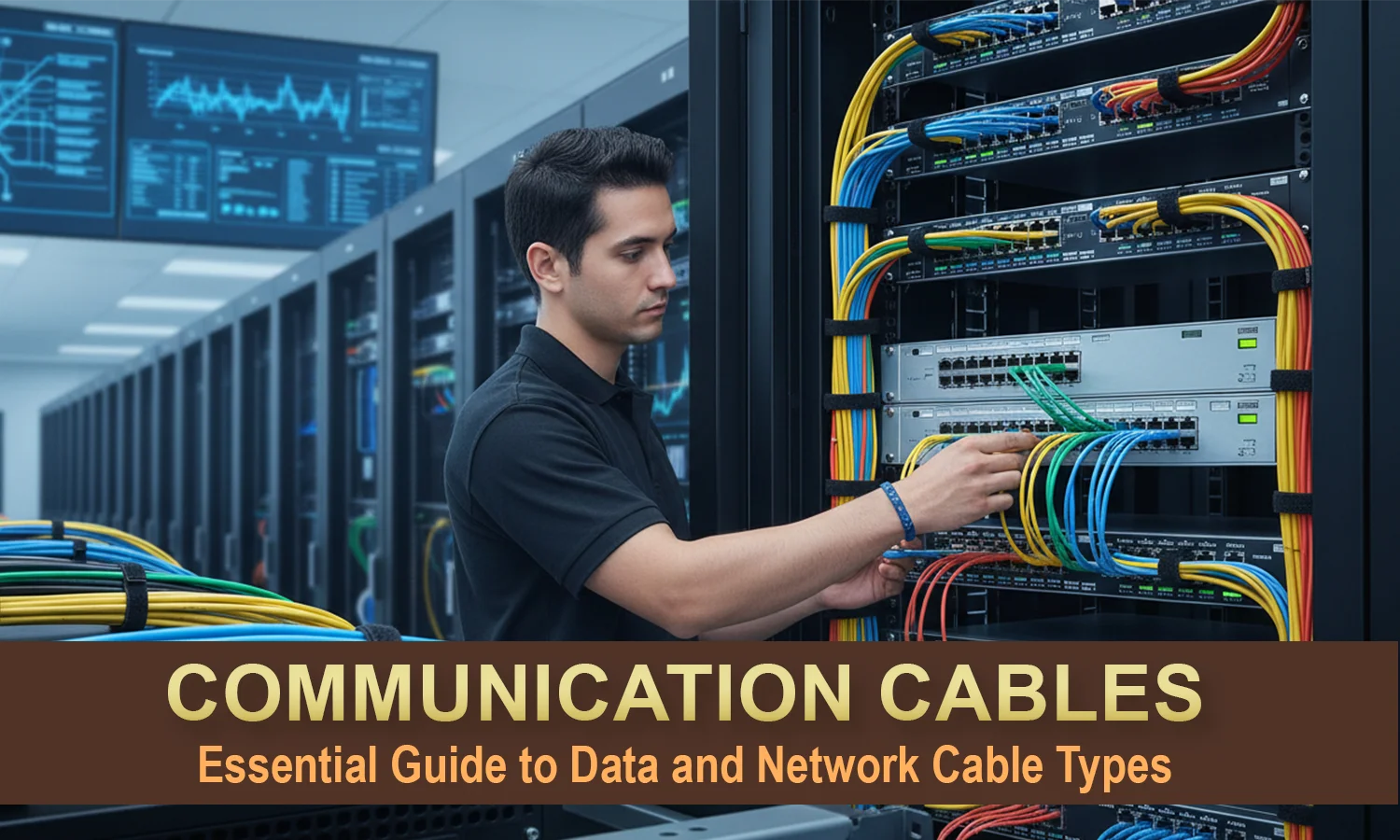
Every system that transfers data depends on reliable communication cables. From office networks to industrial setups, these cables carry signals that keep operations running without interruption. When the right cable is used, performance remains stable and data loss is reduced. When the wrong one is used, systems slow down or fail.
This makes it important to understand how communication cables work and where each type fits. Once you know the basics, choosing the right cable becomes much easier and more practical.
What is a Data and Communication Cable?
A data communication cable is used to transfer signals between devices. These signals can be electrical or optical, depending on the cable type. The main purpose is simple. Move data from one point to another without loss or interference.
Cable communication systems are designed to maintain signal quality across different environments. In homes, they support internet and television. In industries, they connect machines and control systems. The structure of the cable, including insulation and shielding, plays a major role in how well it performs.

Types of Communication Cables
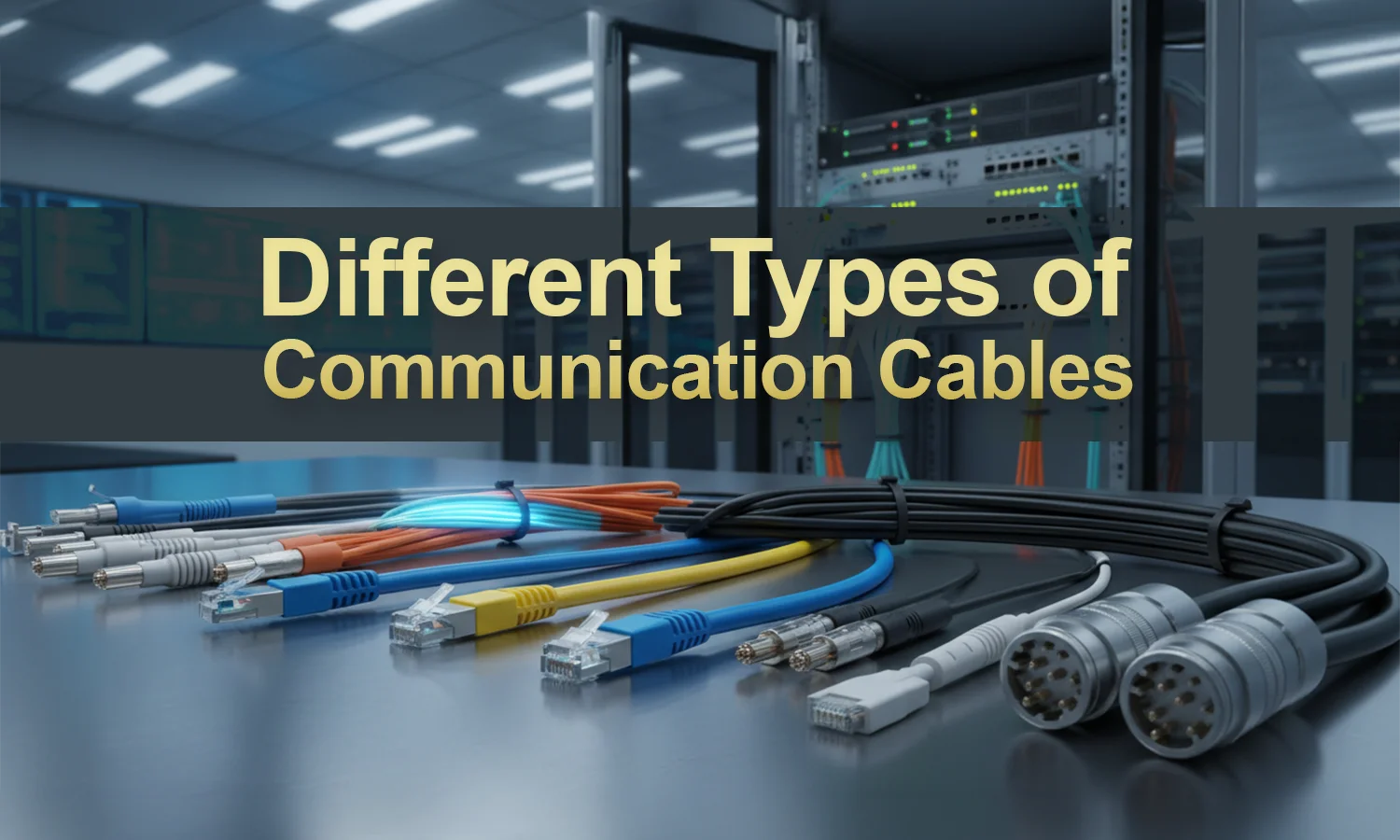
There are different communication cable types used based on speed, distance, and environment. Each type is built for a specific purpose, and using the right one ensures stable performance.
Understanding types of communication cable helps in selecting the correct option for both simple and complex systems. Let’s look at the most common ones.
Coaxial Cable
Coaxial cables are one of the earliest forms of cable communications used for data transfer. They have a central conductor, an insulating layer, and a shielding layer that protects against interference.
These cables are widely used in television systems and broadband connections. Their design helps maintain signal strength over moderate distances. They are reliable but are now slowly being replaced by faster options in high-speed networks.
Fiber Optic Cable
Fiber optic cables transmit data using light instead of electricity. This allows them to carry large amounts of data over long distances with minimal loss.
They are ideal for high-speed networks, data centers, and long-distance communication. Since they are not affected by electromagnetic interference, they offer very stable performance. This makes them suitable for environments where signal clarity is important.
Twisted Pair Cable
Twisted pair cables are the most commonly used type of communication cable in networking. They consist of pairs of wires twisted together to reduce interference.
These cables are widely used in LAN networks and office setups. They are easy to install and cost-effective. Their performance depends on the category rating, such as CAT 5e or CAT 6.
Profibus Cable
Profibus cables are used in industrial automation systems. They support communication between controllers, sensors, and machines.
These cables are designed to handle industrial environments where electrical noise is common. Proper shielding ensures consistent data transfer even in demanding conditions.
CAN Bus Cable
CAN bus cables are used in automotive and industrial systems. They allow multiple devices to communicate with each other through a single network.
These cables are designed for real-time data transfer. They are commonly used in control systems where fast and accurate communication is required.
Communication Cable Connectors and Working Principles
Communication cable connectors play an important role in ensuring proper signal transfer. A cable alone cannot function without the right connector.
Connectors link cables to devices and maintain signal continuity. Poor connections can lead to data loss or signal disruption
The working principle is simple:
- Signals travel through the conductor
- Insulation prevents leakage
- Shielding protects from interference
- Connectors ensure stable endpoints
Each part must function correctly for the entire system to work efficiently.

Network Cabling Options for Data Communication
CAT 5e
CAT 5e cables support basic networking needs. They are suitable for small offices and home networks.
CAT 6
CAT 6 cables provide higher speeds and better performance. They are commonly used in modern office setups.
CAT 6a
CAT 6a cables support higher bandwidth and reduced interference. They are used in larger networks.
CAT 7
CAT 7 cables offer advanced shielding and higher data transfer speeds. They are suitable for high-performance systems.
Fiber Optic Networks
Fiber optic networks use light-based transmission. They provide high speed and are used in large-scale data systems.
Each type supports data communication cable requirements based on speed and distance.
Special Application Communication Cables
Some communication cables are designed for specific environments. These include cables used in industries, underground installations, and high-temperature areas.
A type of communication cable used in such conditions must handle stress, heat, and interference. These cables are built with special insulation and shielding materials to ensure long-term performance.
Choosing the Right Data Communication Cable
Choosing the right cable depends on several factors:
- Distance between devices
- Data transfer speed required
- Environmental conditions
- Level of interference
Each type of communication cable serves a purpose. Selecting the wrong one can reduce efficiency and increase maintenance issues. Always match the cable type with the application for better results.
Where Can You Get Data Cables?
Reliable suppliers and manufacturers provide tested and certified communication cables. It is important to choose products that meet industry standards.
Quality manufacturing ensures consistency in performance. This becomes important in large installations where failure can affect multiple systems.
Conclusion
Communication cables form the base of every data and network system. Their role is simple but important. They carry information accurately and consistently across systems.
Understanding their types, working principles, and applications helps in making better decisions. Manufacturers like Kundan Cab focus on producing cables that meet performance and safety standards, ensuring dependable operation across different environments.
Key Takeaways
- Communication cables are essential for transferring data across systems
- Different cable types serve different applications and environments
- Proper connectors and shielding improve performance and reliability
- Network cables vary based on speed and capacity requirements
- Choosing the right cable improves efficiency and reduces failure risks
FAQs
1. What are the 4 types of network cables?
The four main types of communication cables used in networks are twisted pair, coaxial, fiber optic, and specialized industrial cables. Each type is used based on speed, distance, and application needs.
2. How does a communication cable work?
Communication cables transfer signals between devices through conductors. These signals can be electrical or optical. Proper insulation and shielding help maintain signal quality and prevent interference.
3. What is the maximum length for a communication cable?
The maximum length of communication cables depends on the type. Twisted pair cables typically support up to 100 meters, while fiber optic cables can transmit data over several kilometers without signal loss.
4. Which cable type is used for communication purposes?
Different types of communication cables are used depending on the requirement. Twisted pair cables are common in networks, while fiber optic cables are used for high-speed and long-distance communication