Overview
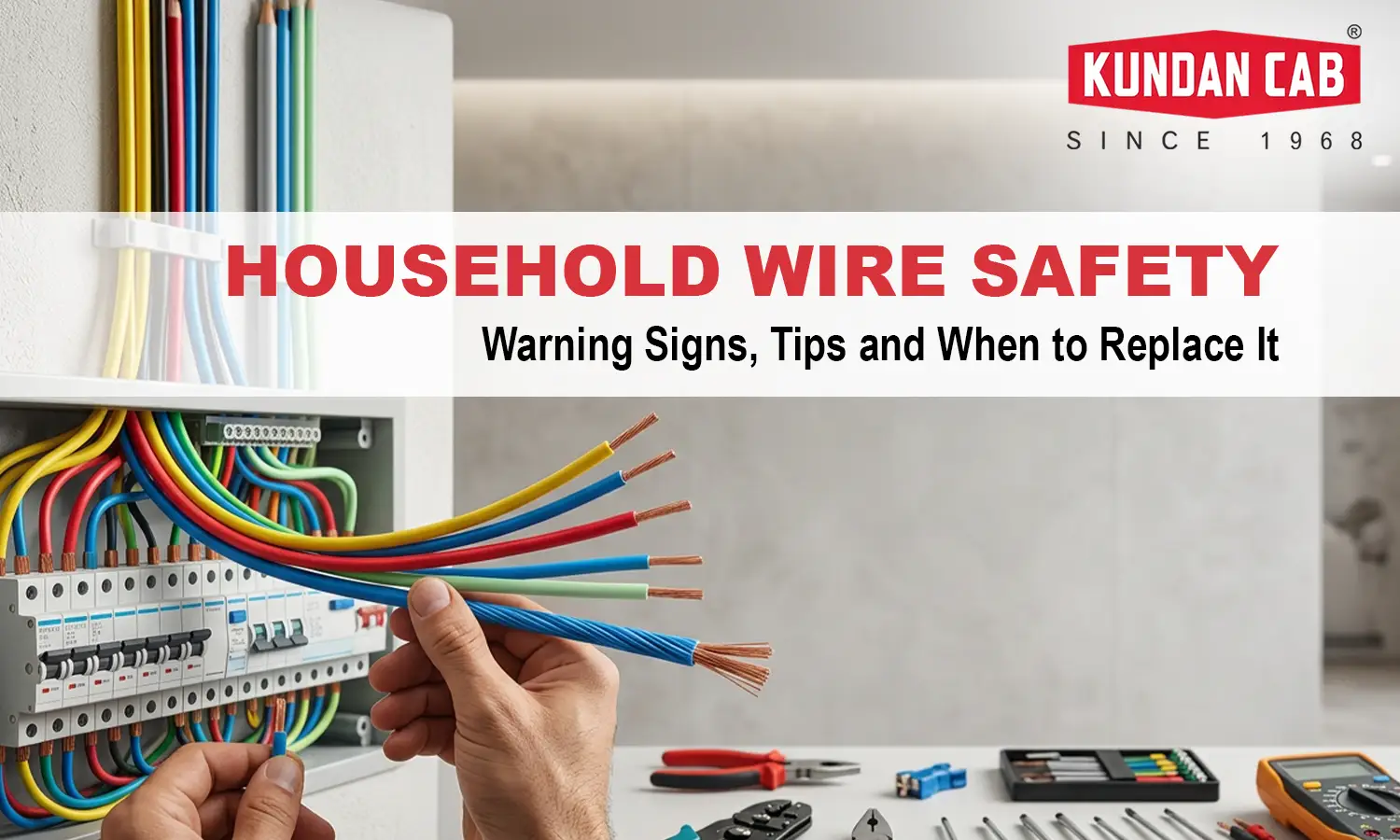
A household wire carries power to every point in a home, so its condition decides safety. Genuine copper, the right flame retardant grade and IS 694:2010 certification keep it reliable, while old or damaged wire raises real risk. Knowing the warning signs protects an Indian home.
What a Household Wire Does
A household wire connects the main board to lights, fans, sockets and appliances. The copper inside carries current, and the insulation outside keeps it safe. When this electrical wire is genuine copper of the right size, it works quietly for decades. A poor house wire heats up, leaks or fails, which is why quality matters from the start.
Copper Makes a Household Wire Reliable
The metal decides how safe a wire stays. A copper wire carries more current for the same thickness, runs cooler and holds its grip at joints far better than aluminium. High purity electrolytic copper, around 99.97 percent in Kundan Cab wires, is what makes a domestic wire dependable under daily load. This is why copper remains the trusted choice for a home.
Warning Signs of a Failing Household Wire
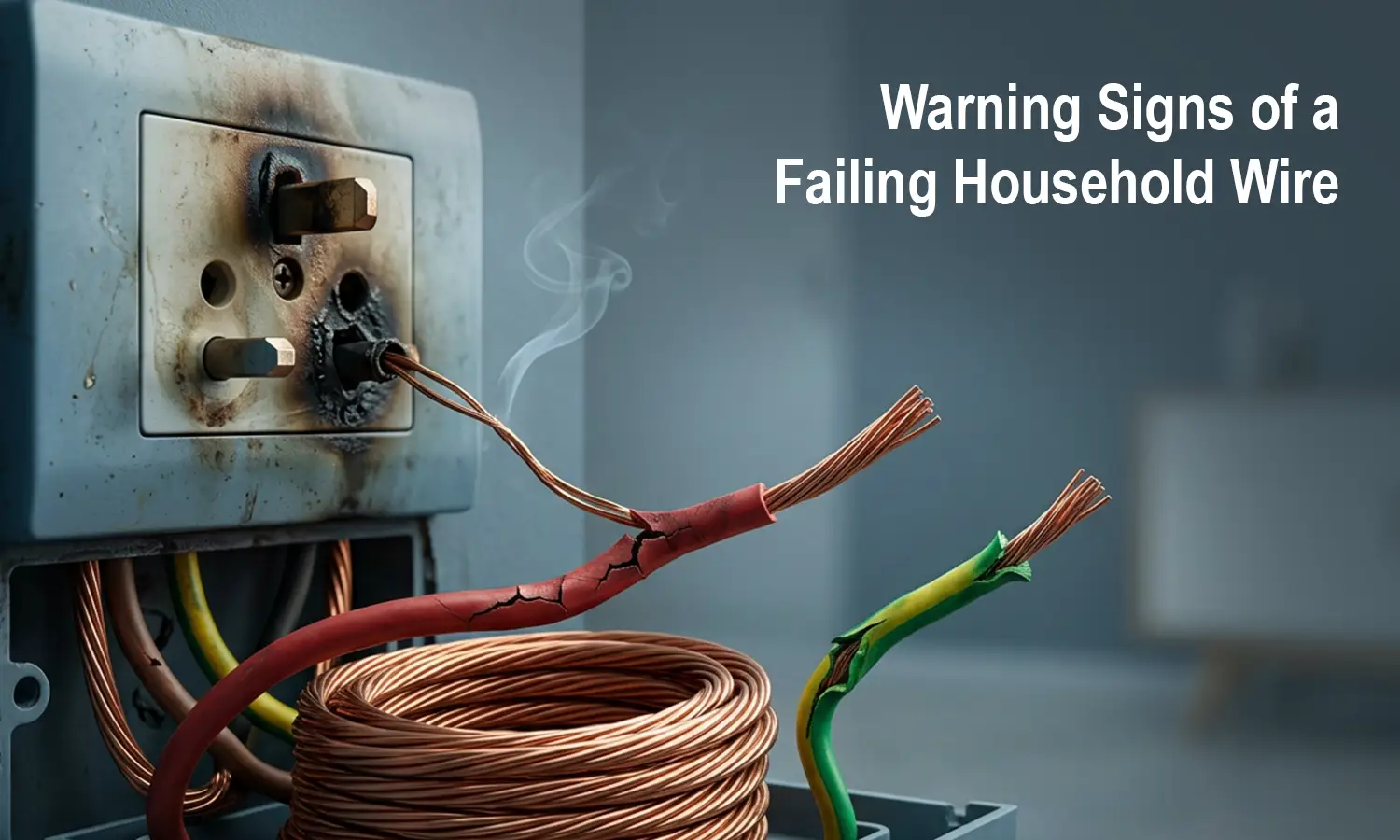
Old or damaged wire often warns you first. Flickering lights, warm switches or sockets, a burning smell, tripping MCBs and discoloured plates all point to a stressed home wire. Cracked or brittle insulation on an exposed building wire is another clear sign. When these appear, the household wire should be checked by a licensed electrician before the problem grows.
When to Replace Old Household Wire
Wiring does not last forever. Homes older than a few decades often carry undersized or aged cable that cannot handle modern loads like air conditioners and geysers. Replacing an old electrical cable with a genuine copper residential wire of the right size restores safety and efficiency. A rewire is also the right moment to move every circuit to a certified flame retardant grade.
Choosing the Right Grade of Household Wire
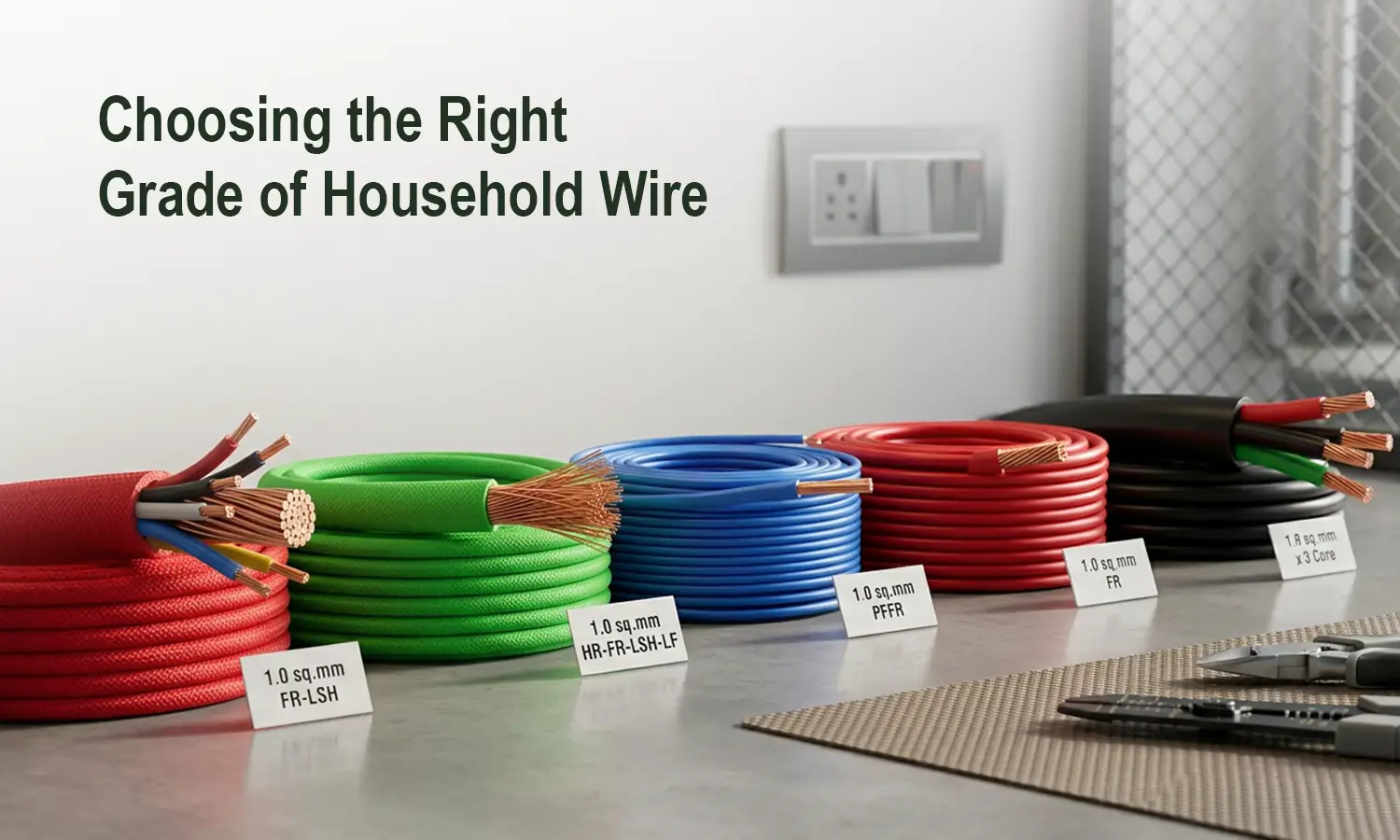
Grade decides fire safety. FR resists flame for general rooms, while FR-LSH adds low smoke and halogen safety for closed rooms and high rise flats. Both are built on the same certified copper, so the choice depends on the space. A safe home wiring wire matches its grade to the room, and planning the whole home around a consistent home wiring wire grade avoids weak points.
Safe Habits for Household Wire
A few habits keep wiring safe. Avoid overloading a single socket, use dedicated circuits for heavy appliances, and never hide joints inside walls without a proper box. Buying a certified house wire with the IS 694:2010 mark protects the home from the start. A quality copper wire installed correctly rewards a family with decades of safe use.
A Simple Home Wiring Safety Checklist
A short check once a year keeps a home safe. Feel for warm switch plates, watch for lights that dim when an appliance starts, and listen for buzzing at sockets. Make sure every heavy appliance has its own circuit, and confirm the earth connection is intact. If the home still runs old or undersized cable, plan a rewire with a genuine copper house wire. These simple checks protect a copper wire installation and give a family early warning before any fault grows serious.
Trusted Household Wire From Kundan Cab
Kundan Cab has built home and industrial wire for over 50 years. Its range covers Safety Pro FR, Flexy Plus FR-LSH and Power Plus PFFR, all from high purity electrolytic copper certified to IS 694:2010. For a new home or a rewire, choose a domestic wire you can trust from the first point to the main line. Visit kundancab.in to find the right electrical wire and grade for your home.
FAQs
1. How do I know if my household wire is unsafe?
Warning signs include warm switches, flickering lights, a burning smell, tripping MCBs and cracked insulation. These show the household wire is stressed or ageing. A licensed electrician should inspect it, and an old home wire may need replacing with a certified copper cable.
2. When should old house wiring be replaced?
Homes older than a few decades often need rewiring, especially if the cable is undersized for modern appliances. Replacing an old electrical cable with a genuine copper residential wire of the correct size restores safety. A rewire is also the right time to upgrade to a flame retardant grade.
3. Which wire is safest for a home?
The safest choice is a copper house wire built to IS 694:2010 in an FR or FR-LSH grade. Copper carries more current and lasts longer than aluminium. FR suits general rooms, while FR-LSH adds low smoke safety, making it the safer building wire for closed spaces.
Key Takeaways
- A household wire should be genuine copper with a certified flame retardant grade.
- Warm switches, flickering lights and burning smells are warning signs to act on.
- Homes older than a few decades often need a rewire for modern loads.
- FR suits general rooms, while FR-LSH suits closed and high rise spaces.
- Choose a certified IS 694:2010 copper wire and match the size to each circuit.
Conclusion
A safe home depends on a healthy household wire. Genuine copper, the right grade, correct sizing and honest IS 694:2010 certification keep a family protected, and watching for warning signs prevents trouble. Kundan Cab has delivered that trusted quality for over 50 years.