Overview
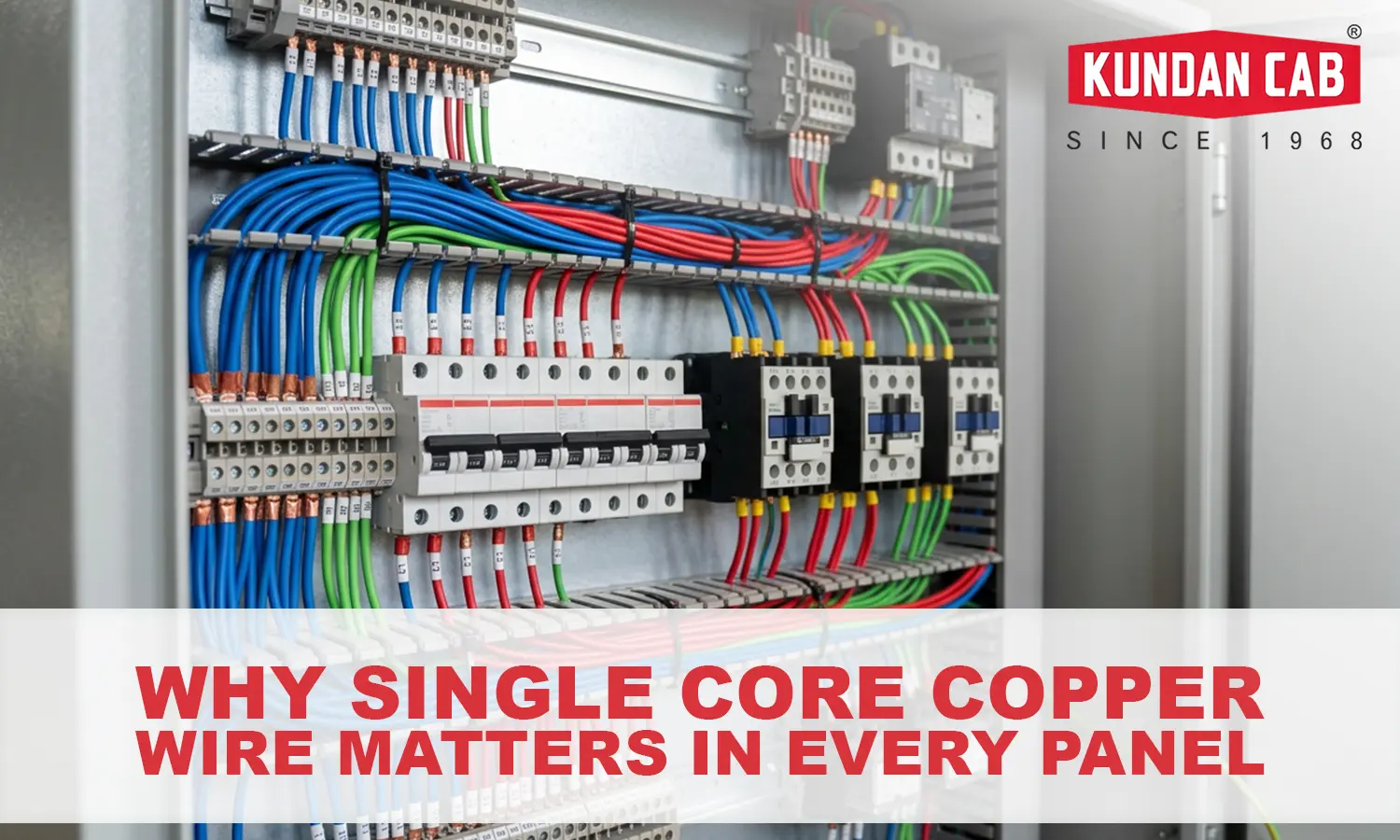
A single-core wire carries one conductor inside its insulation, making it the standard building wire for fixed circuits. It suits concealed conduit runs in homes, offices and panels. This guide explains single-core wire uses, sizes and how it differs from multi-core
What is a single-core Wire?
A single-core wire has one conductor, solid or stranded, inside a layer of insulation. It is the most common building conductor in India, pulled through conduits to run lighting, sockets and appliance points. A single-core copper wire carries current efficiently and lasts for decades when correctly sized. Kundan Cab builds its VIR copper range in exactly this form for industrial and fixed wiring work.
Where Single-Core Wire Is Used
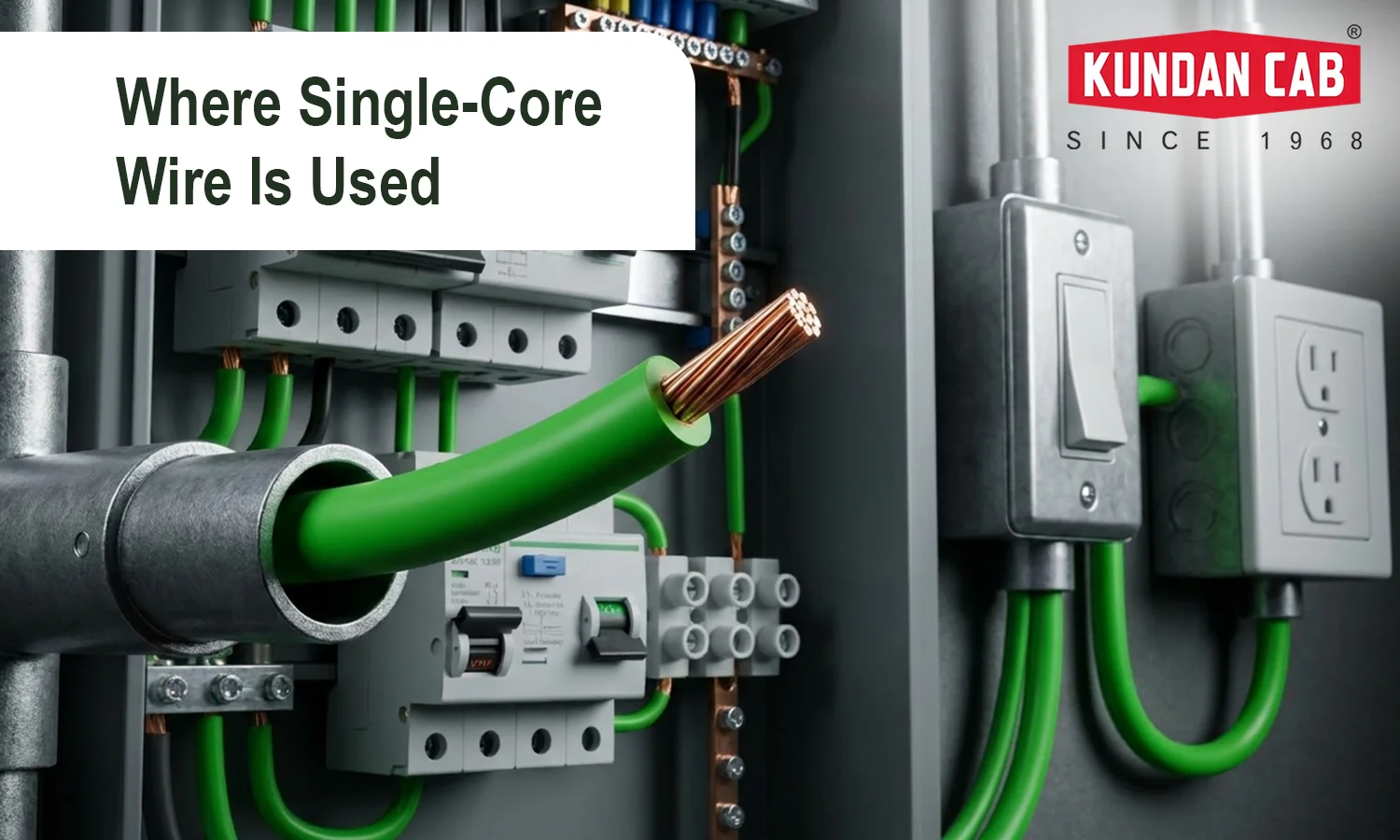
Single-core suits fixed circuits that do not move. It is pulled separately through conduit, one conductor for live, one for neutral and one for earth, which keeps a circuit easy to trace and repair. A single-core panel wire is also used inside distribution boards and control panels where neat, fixed runs matter. Because each conductor runs on its own, a single-core panel wire setup makes fault finding straightforward.
Single-core versus multi-core
The single-core vs multi-core wire choice comes down to the job. A single-core conductor is stiffer and holds its shape, which suits fixed concealed runs. A multi-core cable groups several conductors in one sheath, which suits control wiring, machines and tidy grouped runs. Kundan Cab builds FR-LSH multicore cables for that work. When comparing single-core wire vs multi-core, neither is better overall, since one favours fixed installations and the other favours grouped or moving connections.
Solid and Stranded single-core
Within a single core, there are two builds. A solid conductor is one thick strand, simple and rigid. A single-core multi-strand wire uses several strands twisted together in one conductor, which bends more easily while still counting as single-core. This makes a single-core multi-strand wire easier to pull through a long conduit without losing the simplicity of one conductor per circuit.
Single-core Wire Sizes
Sizes are measured by the cross-sectional area in square millimetres. A single-core wire 1mm size suits lighting circuits, while a 1.5 mm single-core wire covers light and fan points. Sockets and small air conditioners use 2.5 square millimetres, and geysers step up to 4.0 square millimetres. Main lines run heavier still. Buyers often compare the 1.5 sq mm single-core copper wire price and the 2.5 mm single-core wire price when planning a job, since these are the two most used sizes in a home. Choosing the right size keeps a single-core wire 1mm lighting run or any heavier circuit cool and safe.
Choosing the Right Grade

Grade decides fire safety. Kundan Cab builds four house wire grades on high-purity electrolytic copper at around 99.97 percent. Safety Pro FR resists flame in general rooms. Flexy Plus FR-LSH adds low-smoke and halogen safety for closed and high-rise spaces. Power Plus PFFR is a premium flexible grade. Green Wire, the GREEN+ HR-FR-LSH-LF grade, adds heat resistance and a lead-free build. Matching the grade to the space is as important as choosing the right conductor.
Trusted single-core Wire From Kundan Cab
Kundan Cab has built wire for India since 1968. Its IS 694-compliant house wires and IS 1554 VIR copper cables serve fixed circuits from lighting points to industrial runs, all on high-purity copper. For a genuine single-core copper wire at an honest value, buy from a trusted maker rather than the cheapest coil. Visit kundancab.in to find the right size and grade for your installation.
FAQs
1. What is a single-core wire used for?
A single-core wire is used for fixed circuits pulled through conduit, such as lighting, sockets and appliance points. It is the standard building conductor in India. A single-core panel wire is also common inside distribution boards and control panels.
2. Single-core or multi-core, which is better?
Neither is better overall. The single-core vs multi-core wire choice depends on the job. Single-core suits fixed concealed runs, while multi-core suits grouped control wiring and machines. Comparing single-core wire vs multi-core by application gives the right answer.
3. What size single-core wire do I need?
A single-core wire 1mm size suits lighting, a 1.5 mm single-core wire covers light and fan points, 2.5 square millimetre suits sockets, and 4.0 square millimetre suits geysers. Match the size to the circuit load, and confirm with a licensed electrician.
Key Takeaways
- A single-core wire has one conductor and is the standard building wire for fixed circuits.
- It suits concealed conduit runs, distribution boards and control panels.
- The single-core vs multi-core wire choice depends on fixed versus grouped runs.
- A single-core multi-strand wire bends more easily while staying one conductor.
- Match the size to the load, from a single-core wire 1 mm for upward lighting.
Conclusion
A single-core wire is the workhorse of Indian wiring, quietly running most fixed circuits in every building. Genuine copper, the right size, and a certified grade keep it safe. Kundan Cab has supplied trusted copper since 1968.