Overview
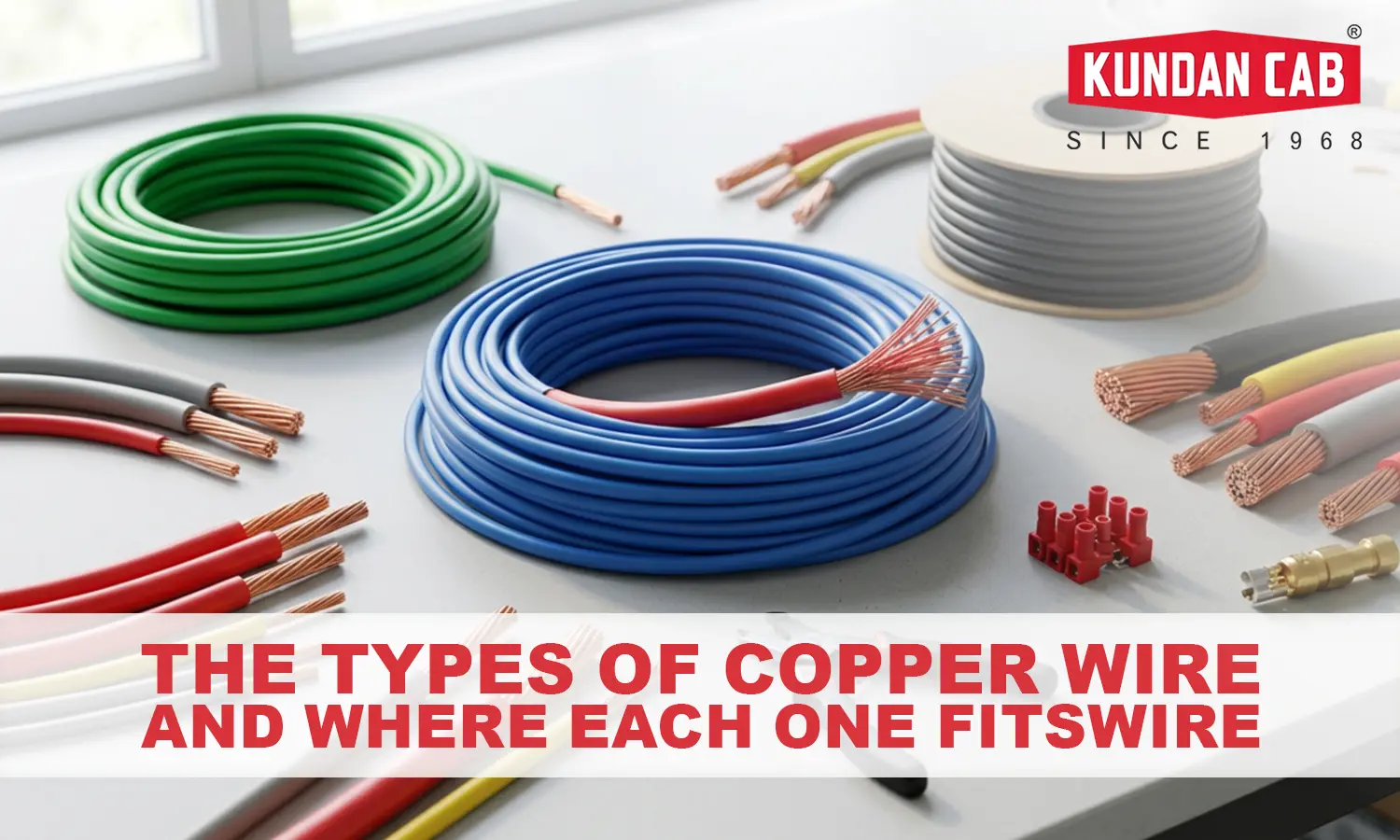
The main types of copper wire include bare, insulated, solid, stranded, flexible, single core and multi core. Each suits a different job, from earthing to house wiring to heavy industry. This overview explains the categories so you can match the right wire to your application with confidence.
Introduction
Walk into any electrical shop and the sheer choice of copper wire can be confusing. Yet the many types of copper wire sort neatly into a few families once you know what to look for. Picking the right one is not about the most expensive coil, but the one built for your job, be it earthing a panel or wiring a bedroom. This resource explains the main categories, using the real Kundan Cab range.
By Insulation Bare or Covered
The first split is simple. A bare copper wire has no insulation and is used where a direct metal path is needed, most often for earthing. An insulated copper wire is wrapped in PVC so it can carry live current safely, which covers almost all house and industrial wiring. You may also hear of a tinned copper wire, where copper is coated with tin for extra corrosion resistance in special settings, though kundan Cab focuses on bright annealed high purity copper for its range.
By Conductor Solid or Stranded
The next split is about the conductor itself.
- A solid copper wire uses one thick strand, ideal for fixed wiring in conduits.
- A stranded copper wire bundles several strands for a balance of strength and flexibility.
- A flexible copper wire uses many fine strands for appliances and moving connections.
All of these begin as an annealed copper wire, since kundan Cab heat softens its copper before forming it into the right class. The choice between them comes down to how much the wire must bend once it is installed.
By Application and Build
Copper wire is also grouped by the job it does. House wires carry lighting and socket circuits, single core wires feed panels, and multi core cables run appliances and pumps. For heavier duty, industrial ranges serve machinery. Understanding these copper wire types helps you shortlist quickly, and knowing the common copper conductor types, from solid Class 2 to flexible Class 5, tells you how each will behave. Even the electrical copper wire types used in a single home vary from room to room.
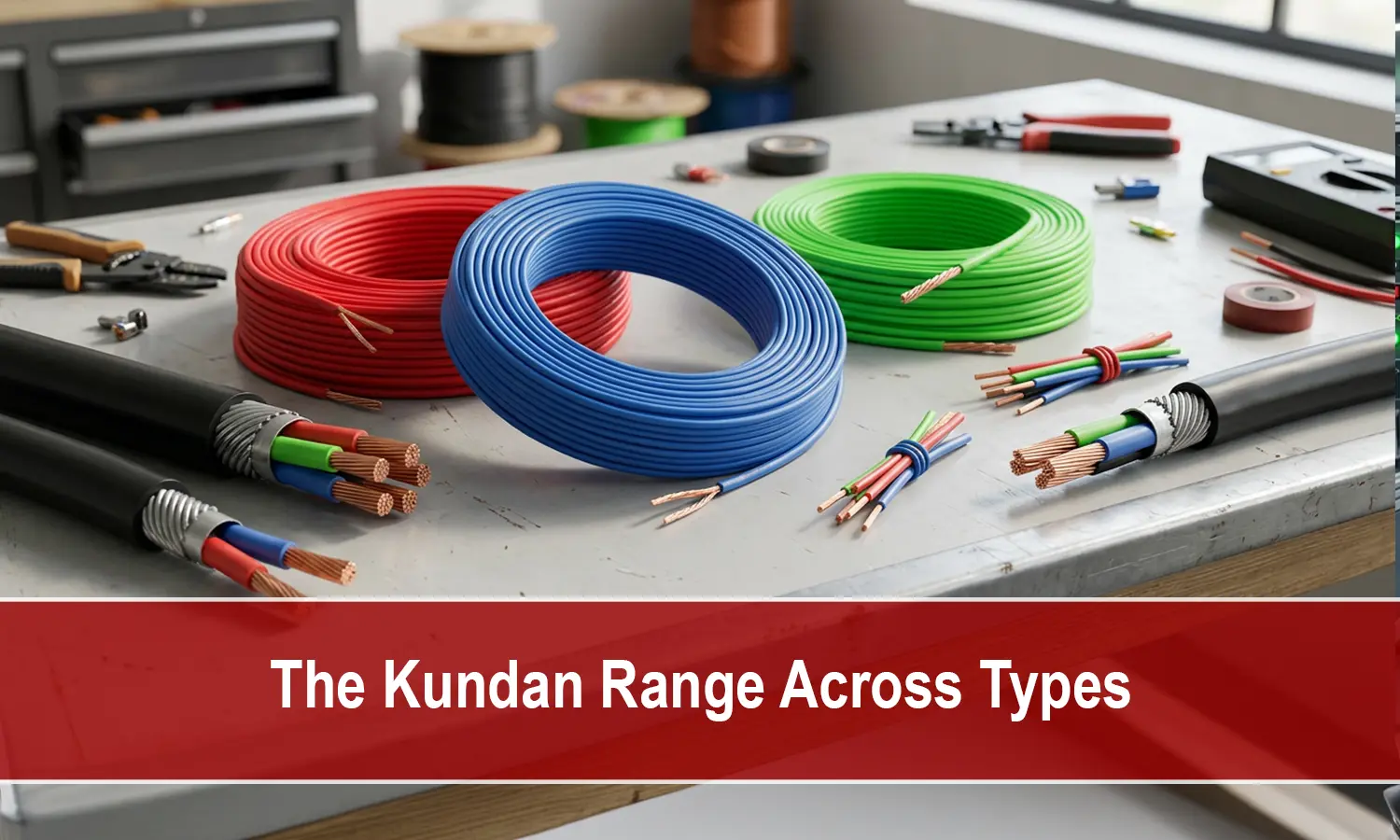
The kundan Cab Range Across Types
Things to Consider Before Buying
With so many families to choose from, a short checklist keeps the decision simple. Start with the job the wire must do, then work through the form, the insulation and the standard. This stops you paying for features a circuit does not need, or worse, under specifying one that does.
- Application. Earthing, house wiring, flexible lead or industrial run.
- Conductor form. Solid for fixed runs, stranded or flexible for movement.
- Insulation grade. FR, FR-LSH or heat resistant to suit the space.
- Certification. Clear IS 694 marking and stated copper purity.
A quick example shows how the choices stack up. Earthing a new distribution board calls for bare copper, the sockets in the same room need insulated 2.5 sq mm house wire, and a nearby workshop motor wants a flexible industrial cable. Three different families, all copper, each matched to its own task. Seeing the wire as a set of choices rather than one product is what leads to a safe, well specified installation.
Key Takeaways
- The main types of copper wire split by insulation, conductor form and application.
- A bare copper wire suits earthing, while an insulated copper wire carries live current safely.
- A solid copper wire suits fixed wiring and a flexible copper wire suits movement.
- Know the copper conductor types, from solid Class 2 to flexible Class 5, to predict behaviour.
- kundan Cab covers every family from house wires to industrial cables to IS 694:2010.
FAQs
1. What are the main types of copper wire?
The main types of copper wire are bare and insulated, solid and stranded and flexible, and single core and multi core, grouped further by application such as house, industrial and earthing. Each suits a different job. kundan Cab covers these families from GREEN+ house wires to industrial CTS and VIR ranges, all built to IS 694:2010.
2. What is the difference between solid and flexible copper wire?
A solid copper wire uses one thick strand and suits fixed conduit wiring, while a flexible copper wire uses many fine strands for appliances and moving parts. Both start as an annealed copper wire that Kundan wires and Cables softens before stranding. The right pick depends on how much the wire must bend once installed.
3. Which type of copper wire is used for earthing?
Earthing usually uses a bare copper wire, since a direct metal path matters more than insulation there. For live circuits you need an insulated copper wire instead. Knowing the copper wire types and where each belongs keeps an installation both safe and correctly specified from panel to point.
Find the Right Type With Kundan Cab
Once you know the families, choosing copper wire becomes simple, and Kundan Cab makes every type you are likely to need. From bare earthing copper to flexible leads and industrial cables, each is drawn from 99.97 percent copper and built to IS 694:2010. Match the type to the job, and the rest of the installation falls into place.
Not sure which type you need? Browse the full Kundan Cab range across all the types of copper wire and match one to your job. Visit kundancab.in or contact a Kundan Cab dealer for help.