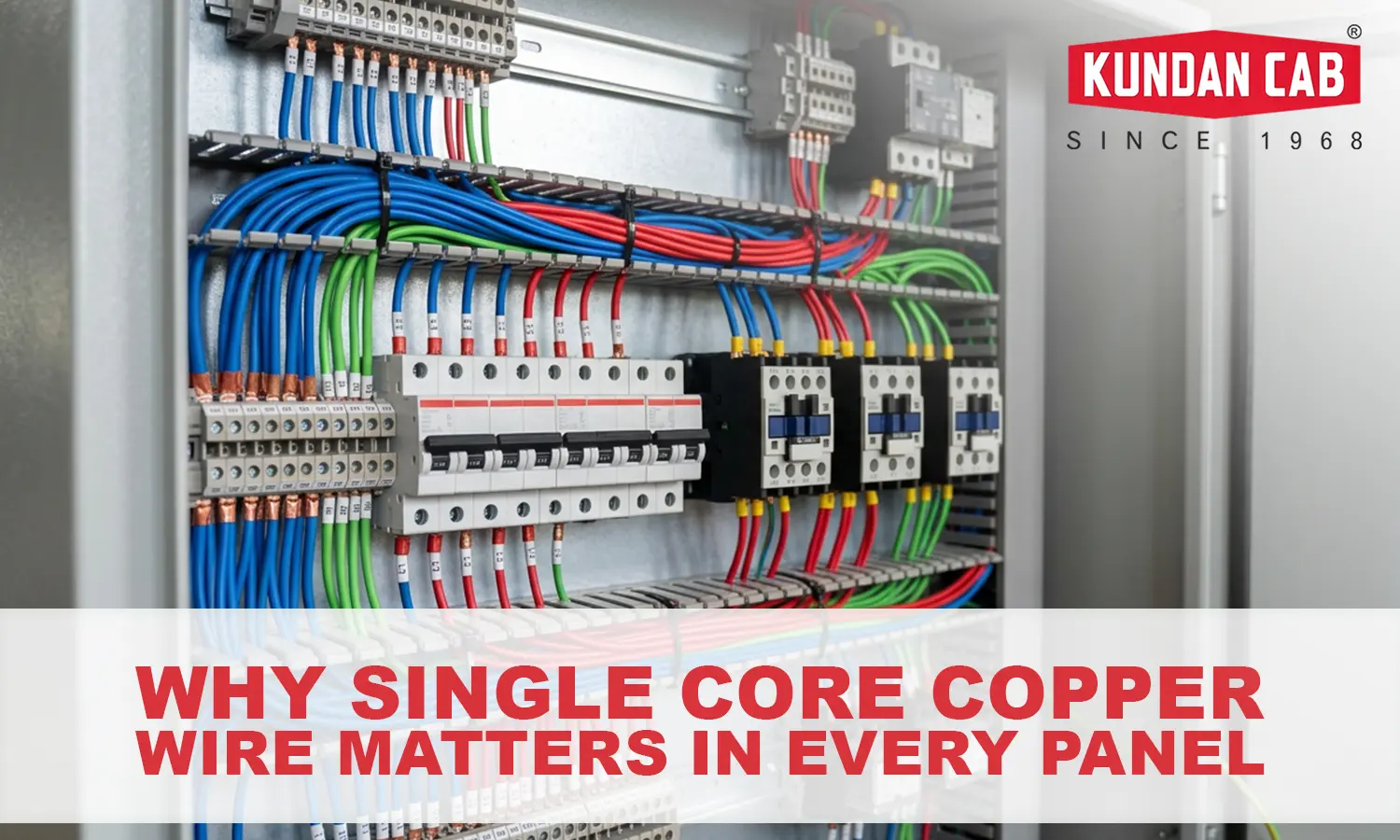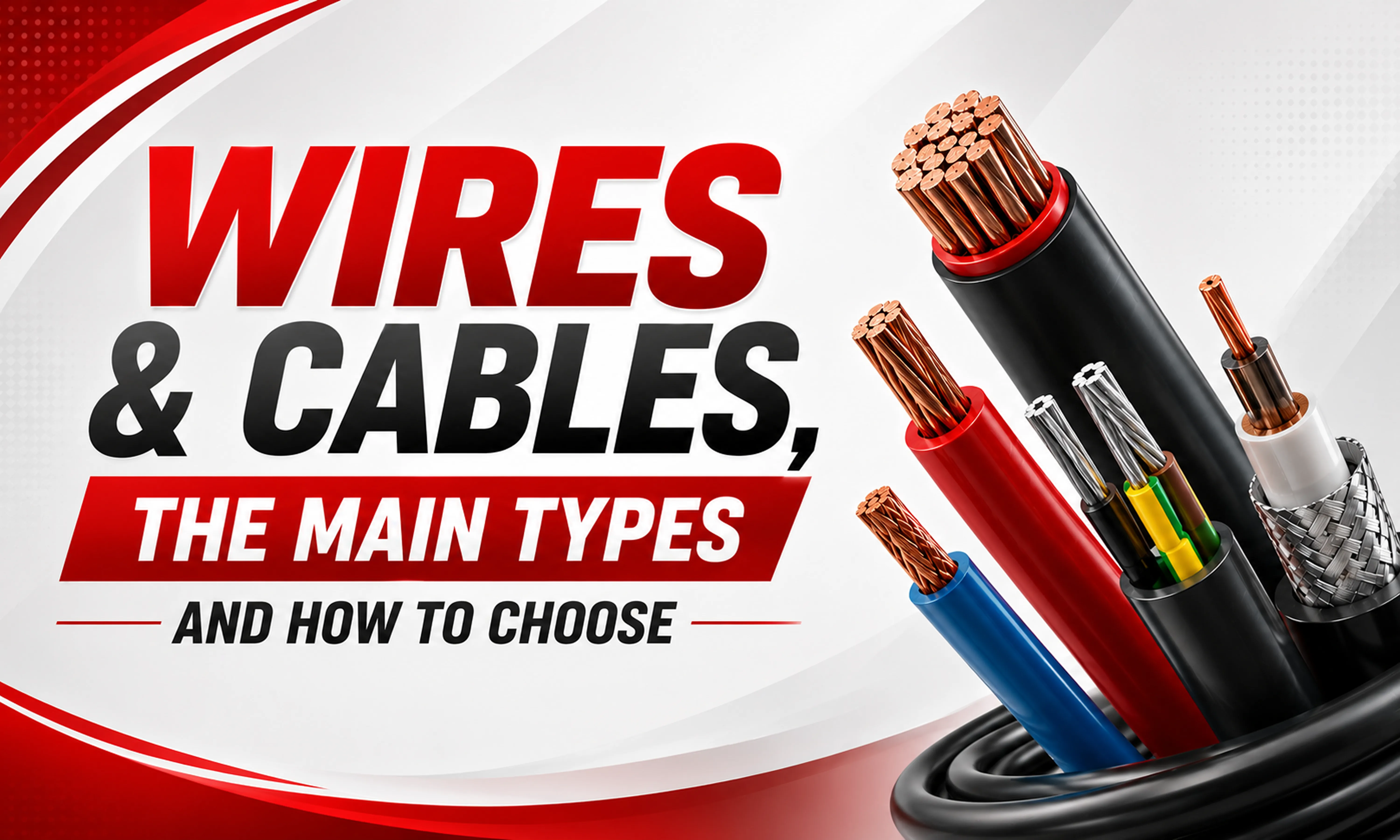
Overview
Wires and cables cover every insulated conductor that carries power or signals, from a thin lighting wire to a heavy multicore run. Each type is built for a purpose, and the right pick depends on the load, the location and the grade. This guide explains the main types for buyers in India.
Understanding Wires and Cables
The family of wires and cables includes every insulated conductor used to carry current. A wire is a single conductor, while a cable groups several inside a sheath, though the words overlap in daily use. Together, cables and wires form the backbone of every home, office and factory. Knowing the types of wires and cables makes choosing straightforward, since each is built for a job.
The Main Types of Wire
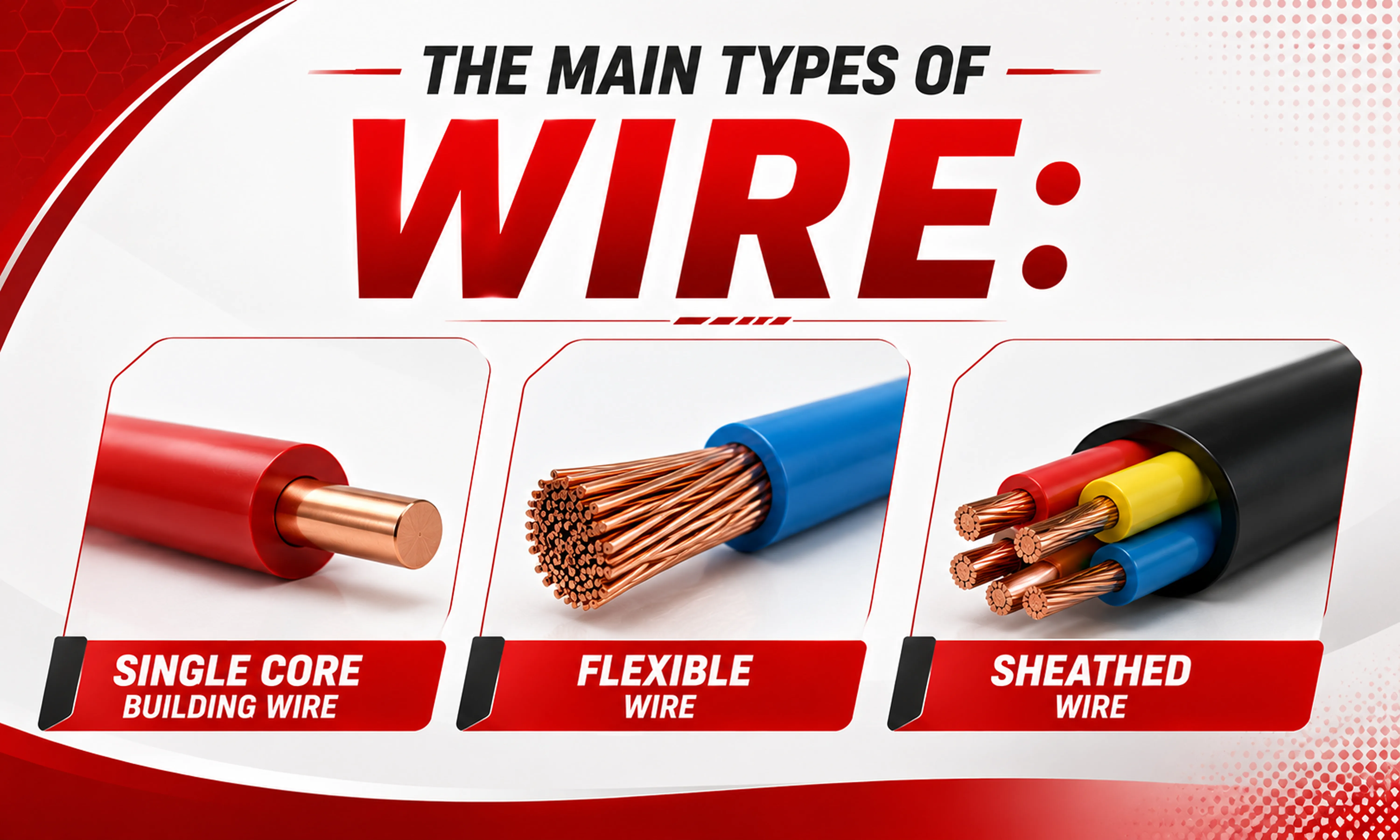
Building conductors come in a few clear forms, and knowing the types of wire helps at the counter.
Single Core Building Wire
One conductor inside insulation is used for fixed circuits in homes and industry. This is the most common of all electrical wires, running lighting, sockets, and appliance points across a building.
Flexible Wire
Many fine strands that bend easily, suited to panels, machines and appliances. It handles movement and pulls easily through long conduits.
Sheathed Wire
A conductor with an outer protective sheath for surface runs and tougher spots. Kundan Cab builds CTS copper cables in this form for industrial use.
The Main Types of Cables
Beyond single conductors, several types of cables serve specific jobs. A multicore cable carries several insulated conductors inside one sheath, keeping control wiring neat inside panels and machines. Kundan Cab builds this in a low-smoke FR-LSH grade for added safety. A submersible cable is engineered for pump motors in wet, demanding conditions, resisting moisture and abrasion. Industrial power cables carry heavier loads for mains and machinery, and Kundan Cab supplies VIR and CTS copper cables for this work.
The Difference Between Wires and Cables
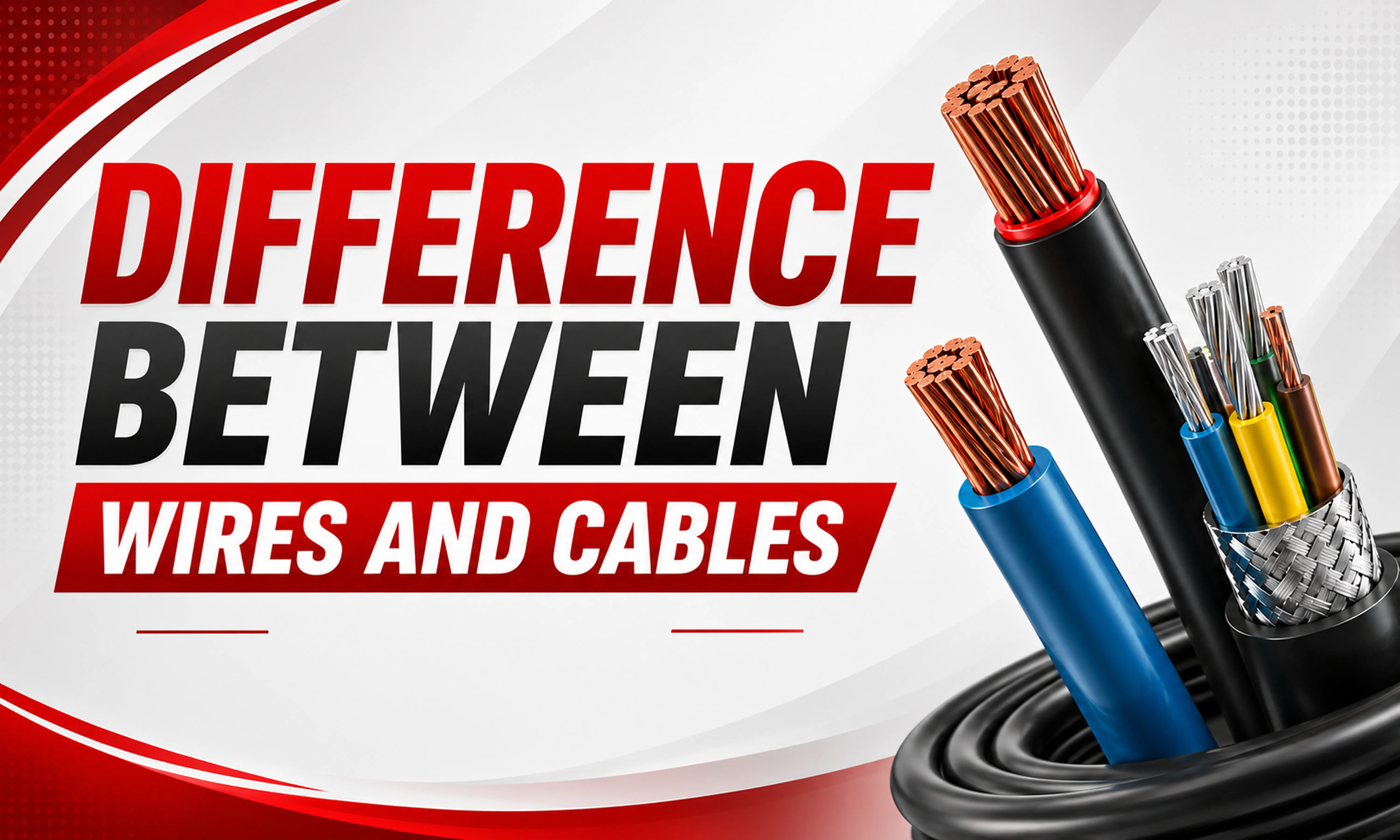
The difference between wires and cables is in construction. A wire has one conductor, while a cable groups several under a common sheath, usually with extra protection. In practice, many electrical wires and cables sit between the two, so what matters most is the copper inside, the insulation grade and the certification. These decide safety far more than the label on the box, which is why quality electrical wires and cables always list them clearly.
Choosing the Right Grade
Grade decides fire safety, and Kundan Cab builds four house wire grades on high-purity electrolytic copper at around 99.97 percent. Safety Pro FR resists flame for general rooms. Flexy Plus FR-LSH adds low-smoke and halogen safety for closed and high-rise spaces. Power Plus PFFR is a premium flexible grade for demanding installs. Green Wire, the GREEN+ HR-FR-LSH-LF grade, adds heat resistance and a lead-free build for the highest protection. Matching the grade to the space is the core of a safe choice.
How to Choose for Your Project
Choosing well comes down to four questions. What load will the conductor carry, so the size can be matched? Where will it run, since closed and high-rise spaces need a low-smoke grade? Does it need to bend or stay fixed, which decides flexible against single core. And is it certified, with the standard and BIS mark printed on the insulation? Answering these four covers almost every project, from a single lighting point to a full industrial panel, and it turns a confusing shelf of products into a clear choice.
Trusted Wires and Cables From Kundan Cab
Kundan Cab has manufactured wires and cables for India since 1968. Its IS 694 compliant house wires, FR-LSH multicore cables, submersible cables and IS 1554 industrial copper range all share the same high purity copper and tested quality. Whatever the job, choose cables and wires from a maker with a clear record rather than the cheapest coil. Visit kundancab.in to find the right type, size and grade for your project.
FAQs
1. What are the main types of wires and cables?
The main types of wires and cables are single-core building wire, flexible wire, sheathed wire, multicore cable, submersible cable and industrial power cable. Each is built for a job, from lighting circuits to pump motors. Choosing by load and location gives the safest result.
2. What is the difference between wires and cables?
The difference between wires and cables is that a wire is one insulated conductor, while a cable groups several conductors inside a sheath. Many products sit between the two, so the copper, the grade and the certification matter more than the name.
3. Which wires and cables are best for a home?
For a home, a copper building wire in an FR or FR-LSH grade is the safest choice, with a thicker size on dedicated appliance circuits. Genuine electrical wires in a certified grade carry the load without heat and last for decades.
Key Takeaways
- Wires and cables cover every insulated conductor, from lighting wire to multicore runs.
- The difference between wires and cables is one conductor versus several in a sheath.
- Know the types of wire and the types of cables before choosing by load and location.
- Kundan Cab offers FR, FR-LSH, PFFR and Green Wire grades on high-purity copper.
- Match the grade and size to the space for safe electrical wires and cables.
Conclusion
The world of wires and cables is simple once the types are clear. Genuine copper, the right grade and honest certification keep every conductor safe. Kundan Cab has supplied trusted cables and wires since 1968.