Overview
Wire price in India depends on the copper content, the conductor size, the coil length and the market copper rate. Larger sizes hold more copper and cost more. Comparing price per metre for the same size is the honest way to judge value before buying.
What Decides Wire Price
The biggest factor behind any wire price is the amount of copper inside the cable. A thicker conductor holds more metal, so its cost rises with size. This is why a 4 mm wire price sits well above a thinner size, and why the 1 mm wire price is the lowest of the common home sizes. Copper content, not branding, sets the floor for what a coil should cost.
Wire Price by Size
Sizes drive the market, and buyers search for them constantly. The 2.5 mm wire price is the most looked up figure in India, because 2.5 square millimetre is the everyday socket size in nearly every home. The 1.5 mm wire price follows close behind for lighting and fan points. Heavier circuits push buyers toward the 6mm wire price for appliance runs. Each step up in size means more copper, so each step raises the electric wire price accordingly.
Copper Rate Moves Every Price
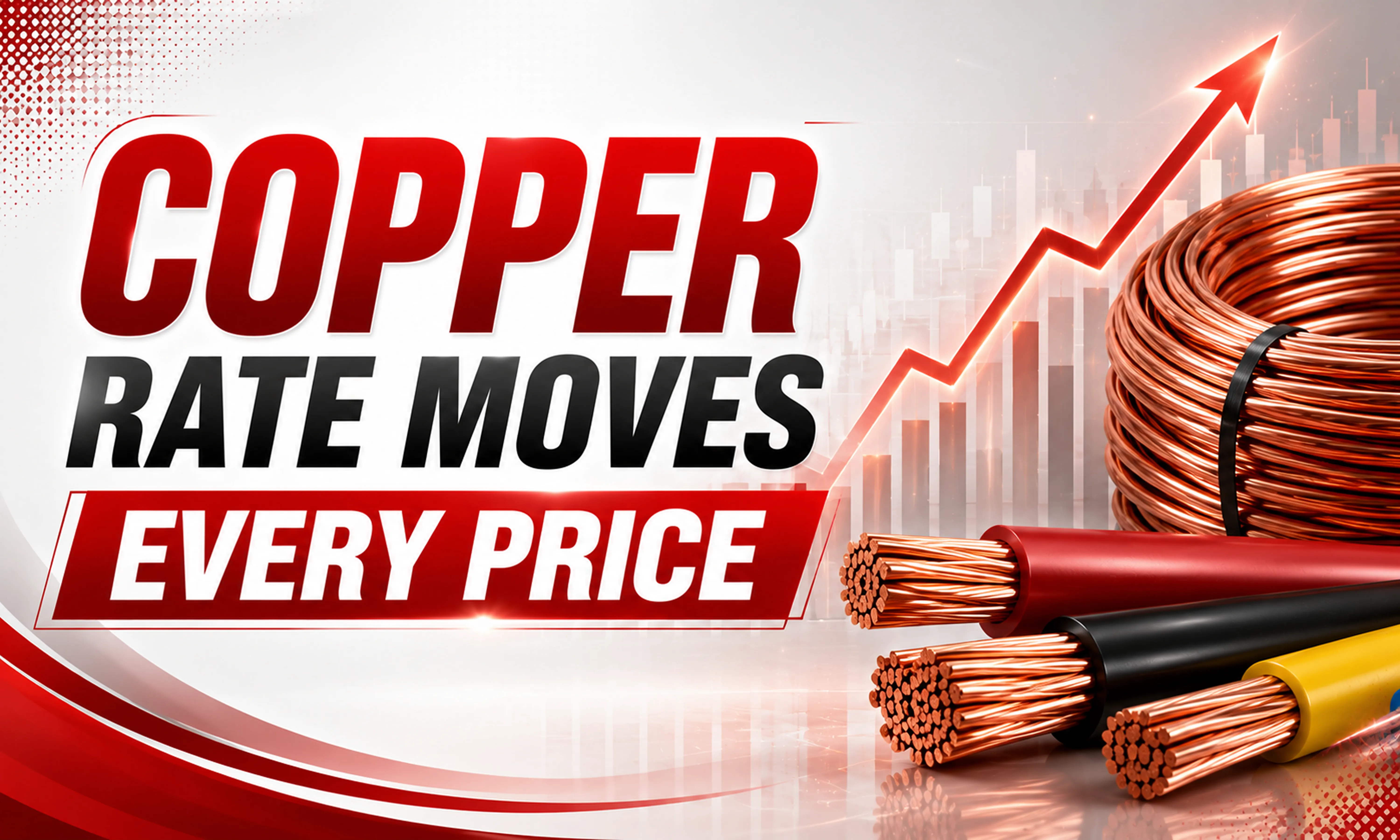
Copper is traded on global and Indian commodity exchanges, so its rate changes daily. When copper rises, the copper wire price across every genuine brand rises with it. This affects all honest manufacturers equally, which is why the copper wire price per kg is a useful reference point for buyers. A dealer offering copper far below the market rate is usually selling under weight or lower purity, which raises the true cost once faults begin.
Coil Length Changes the Number
Wire is sold by coil, most commonly 90 metres and 45 metres, with larger drums for bigger jobs. A 90-metre coil naturally costs more than a 45-metre coil of the same size, simply because it holds more wire. When comparing quotes between shops, check that both are for the same size and the same coil length. Otherwise, the comparison is meaningless, and a cheaper-looking coil may just be a shorter one.
How to Compare Wire Price Fairly
The honest way to compare is per metre, not per coil. Divide the coil price by its length and compare like with like. Do this across brands for the same size, and the real value becomes clear immediately. Checking a 4mm wire price for a geyser circuit or a 2.5mm wire price for sockets, the per-metre figure strips away the marketing and shows what you are actually paying for copper.
The Sizes Buyers Ask About Most
A few figures dominate every enquiry. The 1.5 mm wire price covers lighting and fan points in most homes. The 1 mm wire price is the entry size for light circuits. For sockets, buyers weigh the 2.5mm wire price against the load. For a geyser or a larger air conditioner, the 4 mm wire price and the 4mm wire price for the same conductor come up constantly, since both spellings describe the 4.0 square millimetre size. Heavy appliance circuits push toward the 6 mm wire price, and the 6mm wire price rises again with the extra copper it holds. Each figure moves with the copper rate, so quotes should always be dated.
Why the Cheapest Coil Costs More
A very low price usually means one of two things. Thinner copper than the size printed on the label, or lower purity, which raises resistance and heat. Either way, the savings disappear the moment the wire fails, since rewiring a wall costs far more than the cable itself. A fair wire price for genuine full-weight copper protects both the building and the budget across the life of the installation.
Ask for the Current Price List
Before buying, ask for the current Kundan Cab price list and compare by size and coil length. Kundan Cab has built copper wire for India since 1968, with IS 694-compliant house wires in Safety Pro FR, Flexy Plus FR-LSH, Power Plus PFFR and Green Wire grades. Genuine certified copper gives honest value for money rather than a low number that hides a thin conductor. Visit kundancab.in to request an up-to-date electric wire price for your project.
FAQs
1. Why does wire price change so often?
Wire price changes because copper is a globally traded metal with a daily market rate. When that rate rises, every genuine brand's price rises too. Checking the copper wire price per kg gives a useful reference point for judging if a quote is fair.
2. How do I compare wire prices between shops?
Compare the price per metre for the exact same size and coil length. A 90-metre coil and a 45-metre coil cannot be compared directly. This applies to a 2.5 mm wire price for sockets and to a 6 mm wire price for a heavy circuit alike.
3. Is cheaper wire worth buying?
Rarely. A very low price often means thinner or lower-purity copper, which raises the real cost through faults and rewiring. A fair electric wire price for genuine full weight copper is the safer long term choice for any building.
Key Takeaways
- Wire price depends on copper content, conductor size, coil length and the market copper rate.
- The 2.5 mm wire price is the most searched, since 2.5 sq mm is the standard socket size.
- Compare price per metre for the same size and coil length, never per coil.
- A price far below the market usually means underweight or low-purity copper.
- Ask for the current price list and buy certified copper from a trusted brand.
Conclusion
A fair wire price is not the lowest number on the shelf. It reflects real copper, honest weight and genuine certification. Understanding what drives the price helps a buyer choose wire that protects the building and the budget. Kundan Cab has offered trusted copper since 1968.