A wire price in India depends on the metal inside, the size, the insulation and the length, not on the size alone. Copper costs more than aluminium, and a low smoke grade costs more than plain PVC. The fair way to judge any price is to compare the full specification, not just the number on the label.
Two wires can look the same and still cost very differently. The reason is usually hidden. It sits in the copper inside, the grade of the cover around it and the length wound on the coil.
Once you know what moves the number, a price list is easy to read. The goal is simple. Pick the right wire for the job first, then compare two fair options on price.
Price is where most buyers start, but it should not be where the choice ends. The pages that follow this one look at each size and type in detail. This one steps back and explains the whole picture, so any figure you see later makes sense.
A wire price is really the sum of a few choices. People search for what determines wire price hoping for one figure, but the label never tells the whole story. The conductor, the size, the insulation, the build, the length and the standard all play a part. Change any one and the number changes with it, which is why two similar electric wire price different amounts. Seven things matter most, and each is worth a quick look.
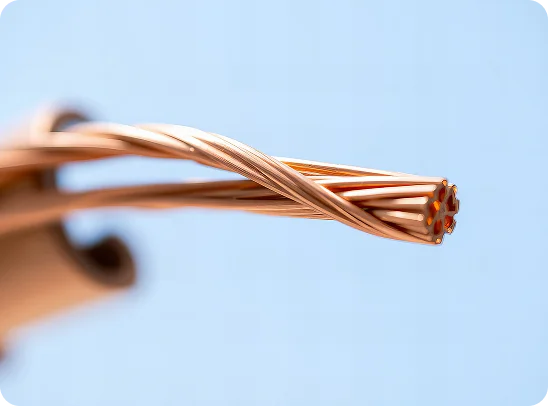
The metal inside the wire is the biggest single cost, because most of what you pay for is the copper or aluminium in the conductor. Copper carries more current in a smaller wire and holds its joints well over the years. Aluminium is cheaper and lighter, but it has to be made thicker to carry the same load. That is why aluminium suits long overhead lines more than the wiring inside a home.
Wire size is the area of the copper, written in square millimetres. A bigger size holds more metal, so it costs more, and it also carries a heavier load safely. This is why a thin lighting wire and a thick air conditioner wire never share a price. Getting the size right for the load comes first, and the price follows from there.
The cover around the metal moves the price too. Plain PVC is the base grade and the cheapest. An FR grade resists the spread of flame. An FR-LSH grade goes further and gives off far less smoke in a fire, which matters where people need to get out safely. Each step up adds a little cost because it adds real safety, so it helps to know what an FR-LSH wire price gives you before treating two wires as equal.
Two wires of the same size can be built in different ways inside. A solid or lightly stranded wire is stiff and suits fixed wiring that stays in place. A flexible wire uses many fine strands, so it bends easily and pulls neatly through conduit. The finer build takes a little more work, so it costs a touch more than a stiff wire of the same size.
Wire is sold on a coil, and the coil length decides the total. A longer coil holds more metres, so it costs more overall, even when the rate for each metre is the same. This is why a cheaper looking coil is not always the better buy, since it may simply hold less wire. Always check the metres behind the figure.
A light house wire, a bundled multi core cable and a heavy industrial cable are built for very different jobs. Because of that, they are never priced alike. The type of product sets the rough level of the price, and the size and grade fine tune it. Knowing which type the job needs keeps the comparison sensible.
A wire built to a known standard such as IS 694:2010 has been tested and proven, and that testing has a cost behind it. A cheap wire with no standard may look the same on the outside but is not the same product. So a certified wire and an uncertified one were never a fair comparison. Always check the standard before the price.
The metal is the biggest lever on the number, so it helps to see the two side by side. Copper carries current far better, close to the full international standard. Aluminium reaches only about sixty one percent of that, so it must be made thicker for the same load. It is cheaper per kilogram and much lighter, which is why it stays in long overhead runs. For home and building wiring, copper wins, and that is why a copper wire price and an aluminium wire price for the same rating are never the same.
For most wiring inside a home or a building, copper is the sensible choice, because it carries more current in a slimmer wire and holds its connections for years. Aluminium earns its place on long outdoor spans, where light weight and lower cost matter more than staying compact. So the two are not simply cheaper and dearer versions of the same thing. They are built for different jobs, and it is worth seeing how aluminium compares with copper before the size is fixed.
As the size goes up, both the safe load and the amount of copper go up, and the price follows the metal. The table below shows the sizes Kundan Cab works across, from 1.0 sq mm up to 95 sq mm, with a rough current for each. These currents are a guide only, since the real figure depends on how the wire is installed.
1.0
1.5
2.5
4.0
6.0
10
16
25
35
50
70
95
11 A
14 A
20 A
26 A
33 A
45 A
61 A
80 A
100 A
120 A
150 A
180 A
Lighting and low load points
Lighting and general wiring
Power sockets and small appliances
Geysers and heavier points
Air conditioners and heavy loads
Sub mains and small distribution
Mains and distribution feeds
Service mains and larger feeds
Industrial sub mains
Industrial distribution
Heavy industrial feeds
Large industrial mains
Reading down the table, the pattern is simple. As the size rises, the wire carries more load and holds more copper, and the price climbs with the metal. A home uses a mix of these sizes, small ones for lights and larger ones for sockets and heavy appliances. Each common size has its own page, from a 1 mm wire price and a 1.5 mm wire price through a 2.5 mm wire price , a 4 mm wire price and a 6 mm wire price .
It helps to know which figure you are looking at. An electric cable price per meter looks small on its own, but it says nothing about how much wire the job will use. Wire is sold on a coil, so a wire coil price depends on the metres wound on it. A short coil can look cheaper when it simply holds less, so how coil length changes the total often explains a gap between two figures. When a run needs several cores together, the way a cable is priced works a little differently again. The figure that matters in the end is the total for the wire your job needs, in the right size and grade.
A quick example makes it clear. Say two shops quote the same wire. One gives an electric cable price per meter and the other gives a full wire coil price for a ninety metre coil. To compare them, work out the total metres your job needs, then bring both figures to the same basis. Once both are for the same size, grade and length, the cheaper one is truly cheaper. Without that step, a low per metre rate or a low coil figure can easily mislead.
A whole job is far more than one wire. The electrical wiring cost of a home adds up the wire for every circuit, in different sizes, along with the work to install it. Lighting circuits use a small size, socket circuits a larger one and heavy points like a geyser or an air conditioner larger still. Add the number of circuits, the total length of each and the labour, and the real figure appears. This is why a single rate cannot cover a full house, and why the cost of a full wiring job is built from the real circuits and lengths rather than one number.
A few simple mistakes lead people to the wrong wire. The most common is judging on the number alone and ignoring the wire pricing factors behind it. Another is comparing a short coil with a long one, or a thin wire with a thicker one, without noticing the difference. It also helps to remember that the factors affecting wire price, the metal, the size, the cover and the length, all move together. Check them side by side and the cheaper wire is often simply a lower grade one.
A fair comparison holds everything steady except the price. Before you weigh one number against another, check these off the specification.
Run two wires through that list and the reason for a price gap usually shows up. More often than not the cheaper wire is thinner, uses a lower grade cover or comes on a shorter coil.
A full range shows how these choices play out. Kundan Cab has made wires and cables since 1968, all built to Indian standards such as IS 694:2010 and IS 1554, with high purity copper throughout. Its work reaches homes, large buildings, public projects and industry across the country, which is a strong sign of reliable quality.
The Kundan Cab wires sit in three simple families. The house wires are Green Wire, Safety Pro, Flexy Plus and Power Plus, covering everyday wiring from FR grade up to the low smoke FR-LSH and HR-FR-LSH-LF grades. The Multi Core FR-LSH covers bundled runs. The Copper CTS 4 X and Copper VIR ranges cover heavier industrial work.
For a job that uses several sizes and grades, one trusted range keeps things simple. Because the Kundan Cab wires and cables are all copper and all built to the same standards, an estimate can sit on one brand rather than a patchwork. Fix the sizes and grades the job needs, then match them to the full Kundan Cab range .
A wire price comes from the conductor, size, insulation, build, length and standard, not the size alone.
Copper costs more than aluminium but carries more current in a smaller wire, so it suits most home wiring.
Insulation moves the figure, from plain PVC to FR and FR-LSH, each adding safety and cost.
Compare the same size, grade, standard and coil length before weighing two prices.
Kundan Cab builds to IS 694:2010 and IS 1554 in copper, so match the product to the job then ask for the current price.