Wire: The Complete Buyer and Safety Guide for Indian Homes and Industry

A wire is a single metallic conductor, usually copper or aluminium, that carries electric current through homes, buildings and machines. The right wire depends on load, length, insulation grade and Indian standards such as IS 694. Correct sizing prevents overheating, voltage drop and fire. The current-carrying capacity of a wire is fundamentally determined by the conductor's cross-sectional area (mm²) and resistance, making conductor selection the foundation of every safe electrical installation.

Introduction

This pillar page brings together everything an electrician, builder, industrial buyer or homeowner needs to choose the correct wire. It covers what a conductor actually is, the copper and aluminium options, insulation grades, sizing by gauge and square millimetre, colour coding under Indian standards, pricing logic and the most common mistakes seen on site. Each section links to a detailed cluster article so you can go deeper on copper wire, aluminium wire, earthing, gauge charts, pricing and HSN codes. The goal is simple. Help you buy the safe, compliant and correctly rated product the first time.

Every switchboard, motor, pump and ceiling fan in India depends on one quiet component that most people never think about until something goes wrong. That component is the wire. It carries current from the meter to the load, and the quality of that conductor decides if a circuit runs cool for thirty years or fails within three. A poorly chosen electric wire runs hot, wastes energy as heat and becomes a silent fire risk. A correctly rated one pays for itself many times over in safety and lower running cost.

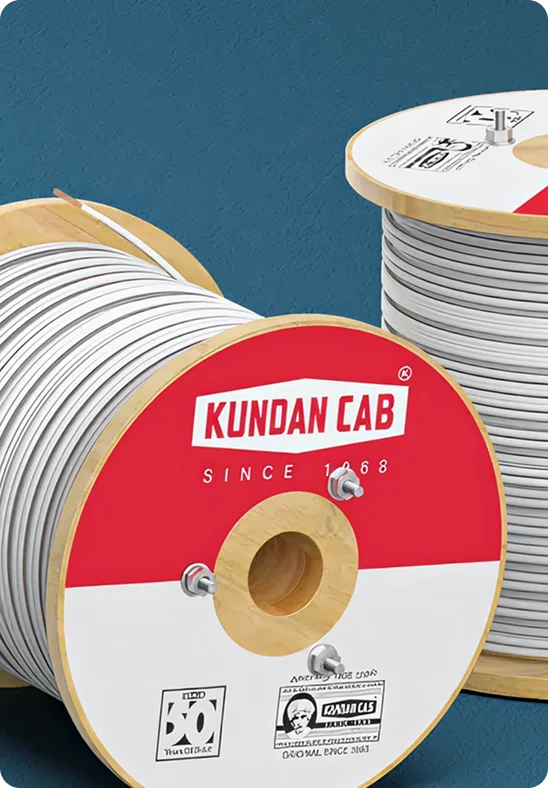
Kundan Cab has manufactured wires and cables since 1968, and across those decades one lesson repeats on every project. Buyers who understand conductor basics make far better purchasing decisions than those who shop on sticker price alone. This page is built to give you that understanding, plainly and accurately.
Kundan Cab has manufactured wires and cables since 1968, and across those decades one lesson repeats on every project. Buyers who understand conductor basics make far better purchasing decisions than those who shop on sticker price alone. This page is built to give you that understanding, plainly and accurately.

What Exactly Is a Wire?

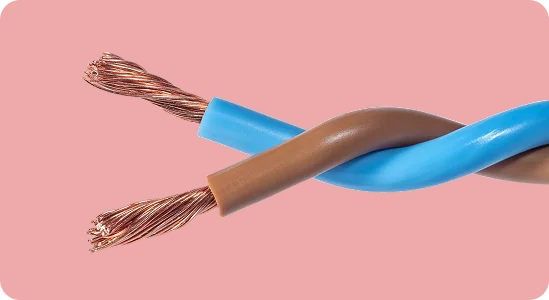
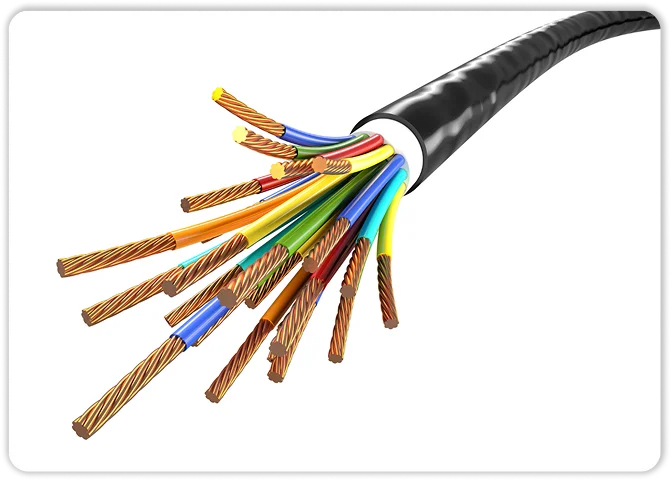
A wire is a single-strand or multi-strand electrical conductor, typically made of copper or aluminium, designed to carry electrical current safely from one point to another. The conductor is protected by insulation to prevent leakage and accidental contact.  When several insulated conductors are bound together inside a common sheath, the product becomes a cable. That single distinction sits at the heart of the whole wire cable category. The conductor moves the electrons. The insulation keeps that current safely contained and away from people, walls and other conductors.

The Indian market separates this family into building wires for homes and offices, power cable products for distribution and industry, and specialised lines such as submersible and communication cables. A house wire feeding a bedroom socket and a heavy multicore cable feeding a factory panel are cousins in the same family, built on the same principle of conductor plus insulation.

Quick fact: wire versus cable
A wire is a single conductor. A cable is two or more insulated conductors grouped together. Both are classified for tax under HSN 8544 when insulated, which carries 18 percent GST in India.

Copper Wire or Aluminium Wire: The First Real Decision

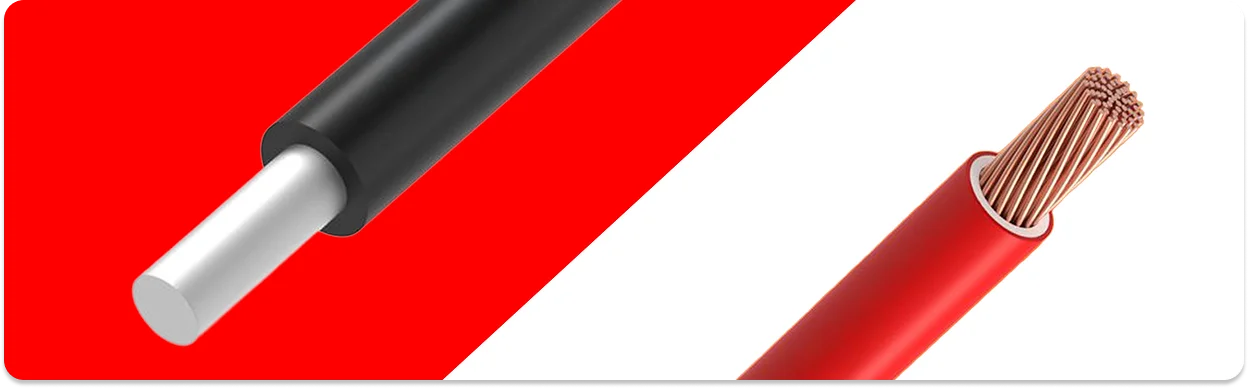
The biggest choice any buyer faces is the conductor metal. Copper wire and aluminium wire behave very differently, and picking the wrong one for the application is the most expensive mistake in the category. Copper conducts electricity better. On the international standard scale, copper sits at 100 percent IACS conductivity while aluminium reaches about 61 percent. To carry the same current, an aluminium conductor must be roughly one and a half to two sizes larger in cross section.

Aluminium wins on weight and cost. Aluminium has a density of approximately 2.91 g/cm³ compared to around 8.89 g/cm³ for copper. This makes aluminium significantly lighter than copper and generally more economical per kilogram, although copper continues to offer superior conductivity and compact sizing advantages.  That is exactly why long overhead transmission lines lean on aluminium based conductors. For electric power transmission copper or aluminium wire is used depending on distance, with aluminium dominating the long spans where weight and price matter most. Inside buildings, where space is tight and reliability is paramount, insulated copper wire remains the trusted default.

Property

Conductivity (IACS)

Relative size for same load

Weight

Typical cost per kg

Common use

Copper

100 percent

Smaller

Heavier

Higher

House wiring, motors, panels

Aluminium

About 61 percent

Larger by 1 to 2 sizes

Lighter (about one third)

Lower

Service mains, overhead lines

For most homes, the safe answer is copper. Copper joints stay tighter over time, resist the slow loosening that aluminium can show at terminals, and pack more current into a slimmer conduit. Industrial buyers running long service mains often select aluminium to control budget on bulk runs. The deeper trade off is covered in the dedicated articles on copper and aluminium, including pricing per kilogram and load capacity.

Insulation Grades That Decide Safety

The metal carries current, but the insulation decides how safely it does so under stress. Indian building wires are commonly manufactured in accordance with IS 694:2010, the standard governing PVC insulated copper and aluminium conductors for working voltages up to and including 1100 volts. Two grades matter most to buyers today. FR, meaning flame retardant, slows the spread of fire along the conductor. FRLSH, meaning flame retardant low smoke, does the same while releasing far less toxic smoke, which protects people during evacuation.

Kundan Cab manufactures its HomeGuard house wire range to IS 694 in both FR and FRLSH grades, available across the standard colour set used in Indian wiring. For industrial and high voltage work the relevant standard shifts to IS 1554 and IS 7098, which cover power cable and armoured constructions for tougher service. Matching the insulation grade to the environment is as important as matching the conductor size.

  • House wiring for living spaces typically uses FR or FRLSH PVC insulated copper conductors manufactured in accordance with IS 694:2010.
  • Kitchens, hospitals and crowded buildings : FRLSH for lower smoke during a fire.
  • Industrial applications typically use multicore industrial cables designed for higher mechanical reliability and continuous operation in demanding environments.
  • Borewell and pump duty : purpose built submersible cable rated for water immersion.

Sizing a Wire: Gauge and Square Millimetre

A conductor that is too thin for its load is the classic cause of overheating. Sizing rests on two systems. The older wire gauge approach, the Standard Wire Gauge or SWG, numbers conductors so that a higher number means a thinner strand. The modern approach states the wire size directly as the cross sectional area in square millimetres, which is the value printed on every IS 694 reel sold today.

As a reference, 8 SWG equals 4.064 mm in diameter, 14 SWG equals 2.032 mm and 20 SWG equals 0.914 mm. For installation work, the square millimetre (mm²) figure is what matters. Common wire sizes used across residential, commercial and industrial applications include 1.0, 1.5, 2.5, 4, 6, 10, 16, 25, 35, 50, 70 and 95 sq.mm, with larger sizes selected as current requirements increase. The full SWG to millimetre conversion and the complete cable size chart are detailed in the gauge and size articles.

Cross section

1.0 sq mm

1.5 sq mm

2.5 sq mm

4.0 sq mm

6.0 sq mm

10 sq.mm

16 sq.mm

25 sq.mm

35 sq.mm

50 sq.mm

70 sq.mm

95 sq.mm

Typical home use

Lighting circuits

Lighting and fans

Power sockets, 5 to 15 A points

Geysers, small ACs

Large ACs, ovens

Distribution circuits

Heavy domestic loads

Industrial feeders

Industrial feeders

Large industrial loads

Industrial power distribution

Heavy-duty power distribution

Indicative current (copper, IS 694)

About 11 A

About 14 A

About 20 A

About 26 A

About 34 A

About 46 A

About 61 A

About 80 A

About 99 A

About 119 A

About 151 A

About 182 A

Important sizing note

The currents above are indicative reference values. Actual ratings change with ambient temperature, grouping, installation method and derating factors.

Always confirm the final size against IS 694, the product datasheet and a qualified electrician before purchase

Wire Colour Code in India

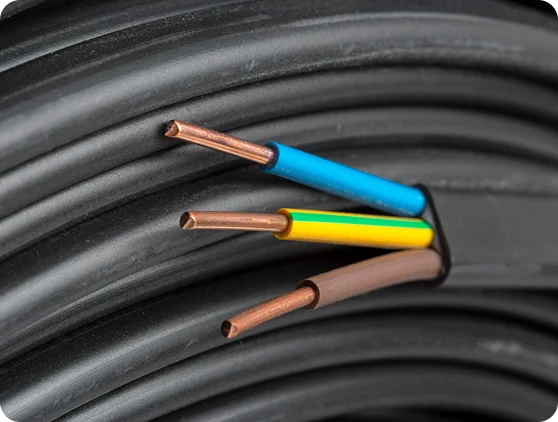
Colour coding lets any electrician read a circuit at a glance and is a core safety practice. Under IS 694:2010 and IS 732:2019, the Indian convention for single phase work is red for the live or phase conductor, black for neutral and green, or green with a yellow stripe, for earth. In three phase systems the phases run red, yellow and blue, with black neutral and green earth.

There is a common point of confusion worth noting. Traditional Indian wiring systems typically use Red for Phase, Black for Neutral and Green for Earth. Some imported equipment follows IEC colour coding, where Brown indicates Phase, Blue indicates Neutral and Green/Yellow indicates Earth. Electricians should always verify conductor identification before making connections.  When the two systems meet on one site, label everything clearly. The earthing article explains the earthing wire colour and connection in full.

Pricing: Why Wire Costs Move Every Week

Buyers are often surprised that wire price is not fixed for long. The reason is the conductor metal. Copper and aluminium trade on global commodity exchanges, and their daily movement flows straight into the cost of finished goods. When the metal rises, so does the copper wire price and the price of every reel that uses it. A genuine quote for 2.5 mm wire price or any size is therefore a live number tied to the day of order.

This is also why a price that looks too good usually signals a compromise on conductor purity, conductor weight or insulation grade. A thin underweight conductor sold as full size is the most common trick in the unorganised segment, which still controls a large share of the low voltage market. The price articles break down 2.5 mm, 4 mm and per kilogram costs, along with what to verify before paying.

  • Conductor metal cost is the largest single driver of any wire price.
  • Conductor weight per coil, not just the printed size, decides real value.
  • Insulation grade, FR versus FRLSH, changes both safety and cost.
  • Brand, certification and consistency justify a fair premium over loose stock.

The India Wire and Cable Market in Context

The category is large and growing. Industry estimates place the organised India wires and cables market in the order of several billion dollars in 2025, with housing wire standing as the single largest product type at close to a third of the market and copper accounting for roughly two thirds of conductor demand. Growth is driven by housing, renewable energy build out and the rapid expansion of telecom and data infrastructure across the country

A meaningful portion of low voltage supply still comes from unorganised makers, often cited around a third of that segment, where standards and conductor weight can be inconsistent. That gap is precisely why ISI certification and a verifiable BIS licence matter so much when you select a supplier. The best wire company in india for your project is the one that proves compliance on every reel, not the one that simply quotes the lowest figure.

Common Wiring Mistakes Kundan Cab Engineers See Most

  • Undersizing the conductor to save money, then running heavy loads through it.
  • Mixing copper and aluminium at a single terminal, which loosens over time.
  • Ignoring the earthing wire, the conductor that protects life during a fault.
  • Using ordinary PVC where an FRLSH grade was needed for crowded interiors.
  • Buying loose unbranded stock with no ISI mark or traceable licence number.

Each of these errors is avoidable with a little planning. The cluster articles linked from this page address every one of them, from choosing the right single core wire for a panel to reading a complete cable size chart for a distribution board.

The Full Wire Knowledge Cluster

This pillar is your map. Each topic below has a dedicated article with charts, sizing tables and buying advice tuned to Indian standards and the Kundan Cab product range.

  • Electrical wiring basics, types and home wiring layout.
  • Copper wire grades, uses and copper wire price per kilogram.
  • Aluminium wire, load capacity and aluminium versus copper.
  • Flexible wire for appliances, panels and movable connections.
  • Multicore industrial cables for control panels, machinery, and industrial power distribution.
  • Wire and cable difference, plus how to read both correctly.
  • Earthing wire colour, size and safe connection.
  • Wire gauge charts and SWG to millimetre conversion.
  • Cable size chart and gland sizing for installers.
  • Wire price, 2.5 mm pricing and HSN codes for billing.

Key Takeaways

  • A wire is a single conductor. Conductor metal, size and insulation grade decide its safety and cost.
  • Copper suits homes and panels. Aluminium suits long service mains and overhead runs where weight and price lead.
  • Size by square millimetre to the load, and treat indicative current ratings as a starting point, not a final figure.
  • Follow the Indian colour code, red yellow blue for phases, black for neutral, green for earth, and never skip earthing.
  • Buy ISI certified product with a traceable BIS licence to avoid underweight conductors from the unorganised market.

Wire Your Project With Kundan Cab

Building a home, a tower or a factory line, the conductor you choose today sets your safety and energy bill for the next three decades. Kundan Cab has engineered ISI-certified wires and cables since 1968, including House Wires, FR Wires, FR-LSH Wires, Multicore Cables, Submersible Cables and Industrial Cables designed to meet the electrical requirements of homes, commercial buildings and industrial installations across India. 

Browse the full range at kundancab.in/products or speak with our team for project sizing and dealer supply. Choose the wire that proves its quality on every metre.

Frequently Asked Questions