Overview
A bare copper wire is a copper conductor with no insulation, used where a direct metal path is needed such as earthing. Its conductivity and corrosion resistance make it ideal for grounding, but it must never carry live current uncovered. This overview explains bare copper, its uses and its limits.
Introduction
Most wire is wrapped in colourful insulation, so a plain metal strand can look unfinished. Yet uncovered copper is exactly right for certain jobs, where a direct metal path matters more than a protective layer. The catch is knowing where it belongs and, just as importantly, where it does not. Used wrongly on a live circuit, exposed copper is dangerous. This resource explains what it is and where it fits, using the real Kundan Cab range.
What Bare Copper Means
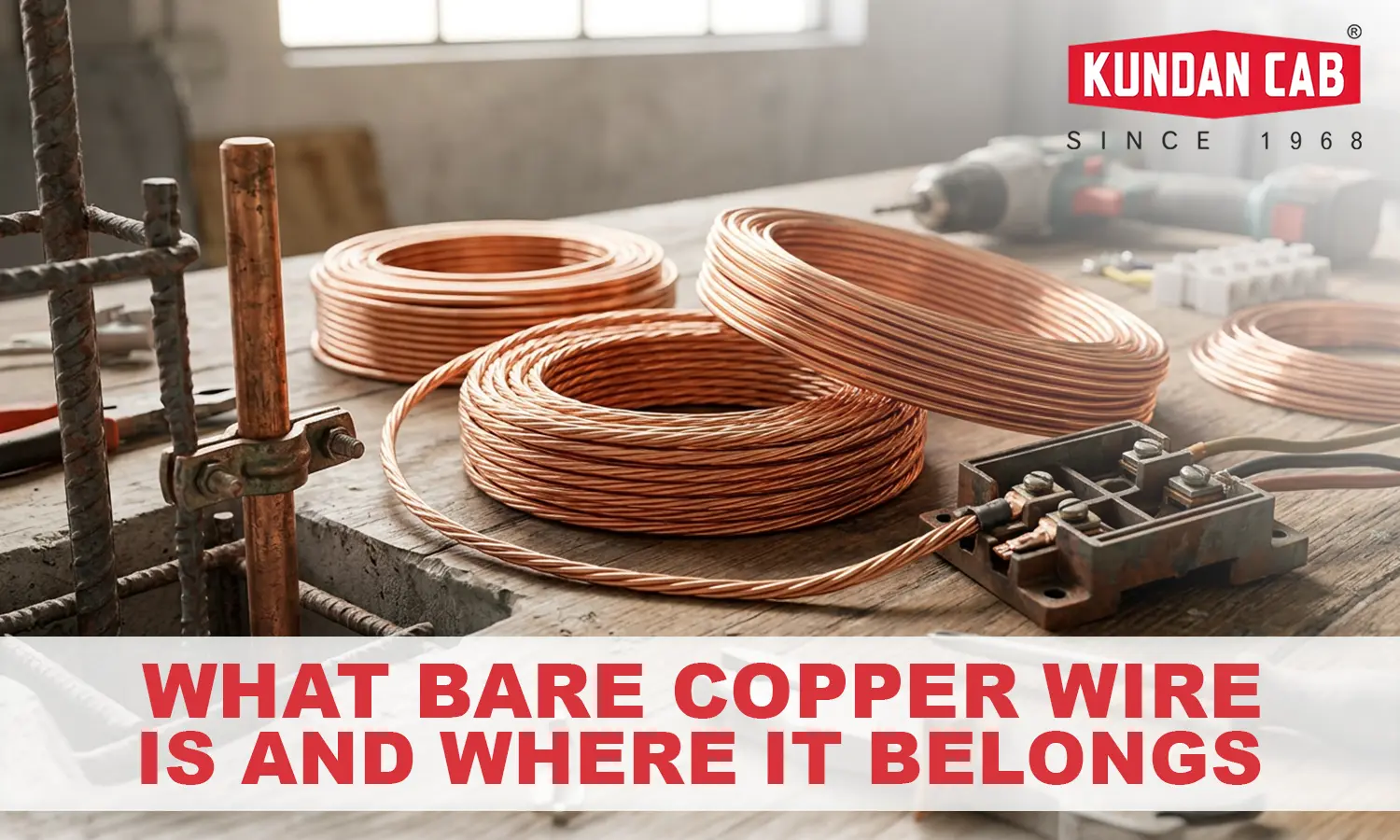
The bare copper wire meaning is simple. It is a copper conductor supplied without any insulation around it, so the metal is exposed along its length. As a bare conductor, it relies on copper’s natural conductivity and corrosion resistance rather than a covering. It may be a single thick strand or several twisted together, and an uninsulated copper wire of this kind is chosen precisely because it needs to make direct metal contact where it is used. That direct contact is the whole reason it exists, and it is also the reason it must be kept well away from live parts.
Where Bare Copper Is Used
Bare copper has a few clear homes.
- Earthing and grounding, where fault current needs a direct path to ground.
- Bonding of metal parts to keep them at the same safe potential.
- Overhead and busbar links where a rigid metal connection is wanted.
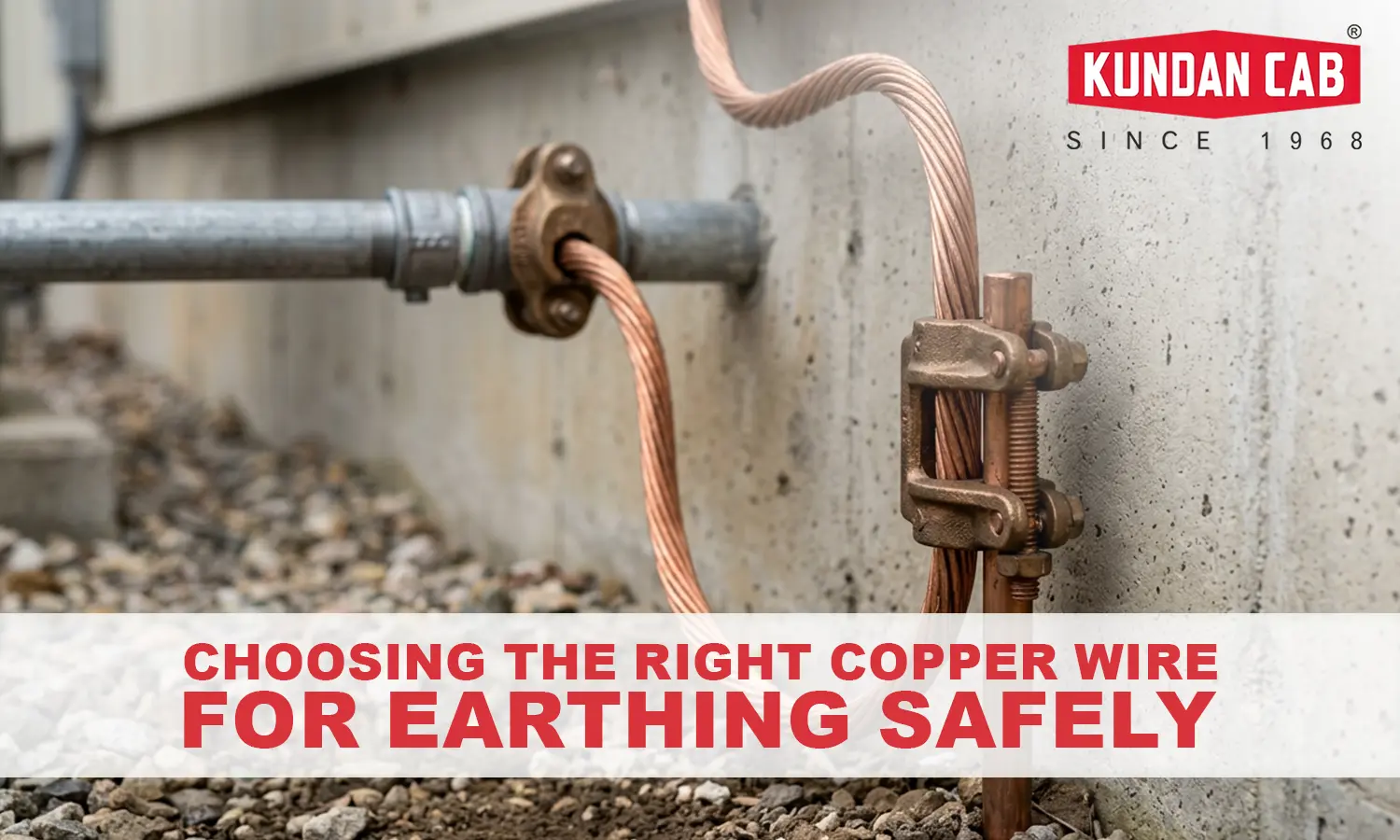
A solid bare copper wire is common for earthing runs because it is firm and easy to clamp, while stranded bare copper is used where some flex helps. If you have ever seen the thick copper strip or strand running to an earth pit, you have seen bare copper doing its quiet, vital job.
Where Insulation Is a Must
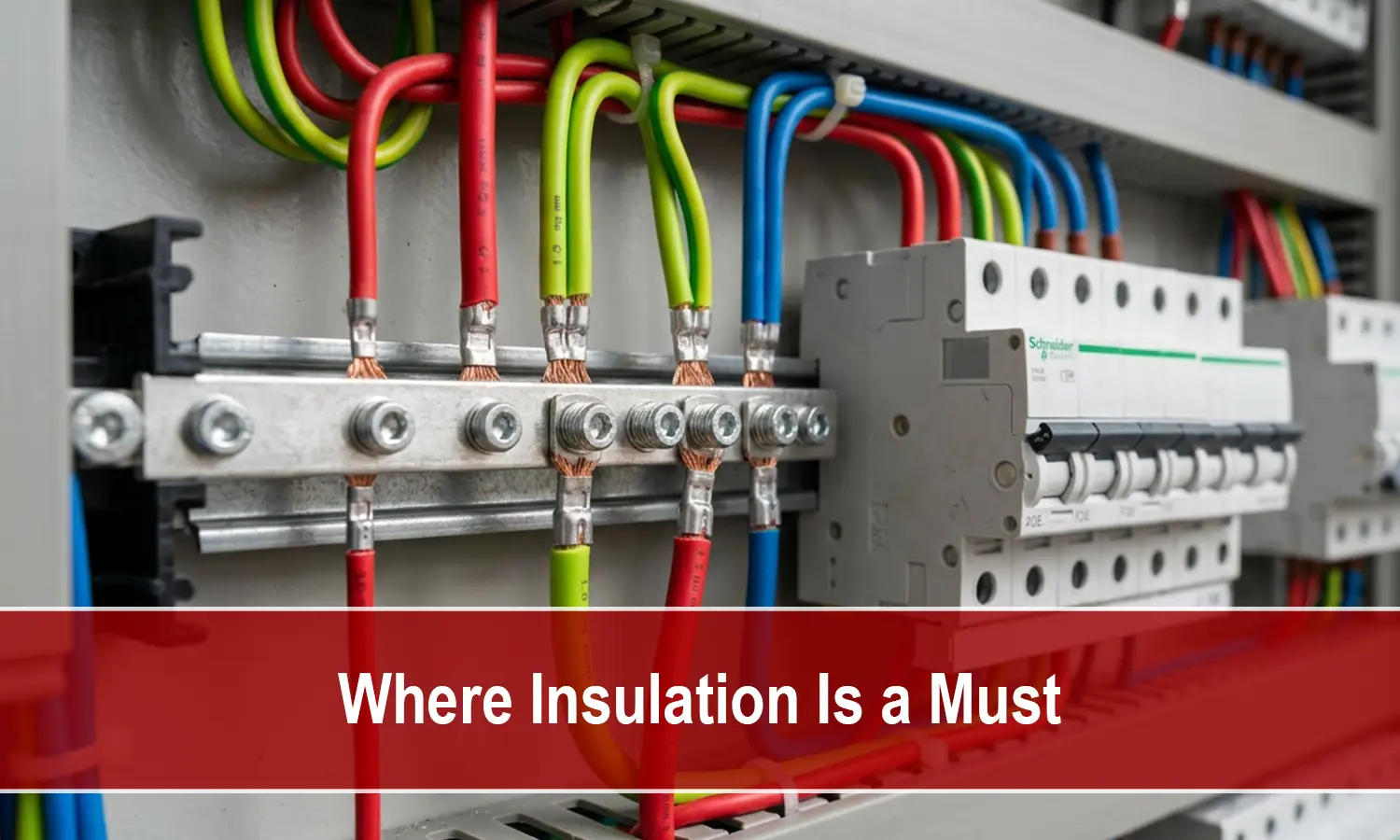
The limit is just as important as the use. Bare copper must never be used for a live circuit, since exposed metal there is a direct shock and short circuit risk. Anywhere current is carried around people, an insulated wire is essential. Picture the difference between the earthing strand safely clamped in a distribution board and the live wires beside it, which are always covered. A solid copper wire with insulation belongs in those live runs, while bare copper stays with earthing and bonding.
Choosing Quality Bare Copper
Even without insulation, quality still matters. High purity copper resists corrosion and keeps a low resistance path to ground, which is the whole point of an earth connection. This is where a stranded copper conductor or solid bare strand from a trusted maker pays off, since a cheap, impure earth wire can corrode and lose its protective value over time. Because copper is a traded metal, the copper wire price for bare copper tracks the copper rate, but the real value lies in purity and a dependable earth path. Kundan Cab draws its copper to 99.97 percent purity, which matters as much for a copper cable as for a bare earth run.
Key Takeaways
- Uninsulated copper is used where a direct metal path is needed, such as earthing.
- It carries no covering, so the bright metal is exposed along its whole length.
- Use a solid bare copper wire for earthing and bonding, never for live circuits.
- Live runs always need a solid copper wire with insulation, not bare copper.
- High purity copper keeps a low resistance earth path that resists corrosion.
FAQs
1. What is bare copper wire?
A bare copper wire is a copper conductor with no insulation, so the metal is exposed along its length. As an uninsulated copper wire, it is used where a direct metal path matters, most often for earthing and bonding, rather than for carrying live current. Its value lies in making clean, direct contact with metalwork and the earth.
2. Where should you use bare copper?
Bare copper is used for earthing, grounding and bonding, where fault current needs a direct path to ground. A firm solid strand is common because it clamps tightly to metalwork. It should never be used for a live circuit, since exposed metal there is a shock and short circuit risk that only insulation can prevent.
3. Does copper purity matter for a bare earth wire?
Very much, because an earth connection must stay low in resistance for years. A high purity bare conductor resists corrosion and keeps that path dependable, while cheap, impure copper can degrade. Kundan Cab draws its copper to 99.97 percent purity, so a bare earth run performs as reliably as an insulated copper cable from the same metal.
Earth Safely With Kundan Copper wires and cables
A good earth connection is invisible until the day it saves you, so it deserves quality copper. Kundan Cab draws its copper to 99.97 percent purity, giving bare earthing runs a low resistance, corrosion resistant path to ground. Use bare copper where it belongs, insulate every live run, and build a system that is safe by design.
Planning earthing for a site? Choose a high purity bare copper wire and the right insulated cables from the Kundan Cab range. Visit kundancab.in or contact a Kundan Cab dealer to specify safely.