Overview
A copper conductor is the metal core of a cable that actually carries the current. Its purity, temper and construction decide how safely and efficiently power flows. This overview explains solid and stranded conductors, annealed copper and bare types, and why conductor quality shapes the performance of every cable.
Every cable is judged by its core, because that is where the current flows. A copper conductor carries power with very low resistance, and its quality decides how safe and efficient the whole cable will be. Copper leads Indian wiring for good reason, conducting at about 100 percent IACS against roughly 61 percent for aluminium. This resource explains how conductors are built and why quality matters, using the real Kundan Cab range.
What a Conductor Does
An electrical conductor is any material that lets current flow easily, and copper is the benchmark for building wiring. As a conductor material it combines high conductivity, ductility and corrosion resistance, so it carries load, bends without cracking and lasts for decades. The choice of core is the first quality decision in any cable, since even perfect insulation cannot fix a poor conductor. Kundan uses electrolytic copper at 99.97 percent purity for exactly this reason.
Solid Versus Stranded Conductors
Conductors come in two main forms, and each has a natural home.
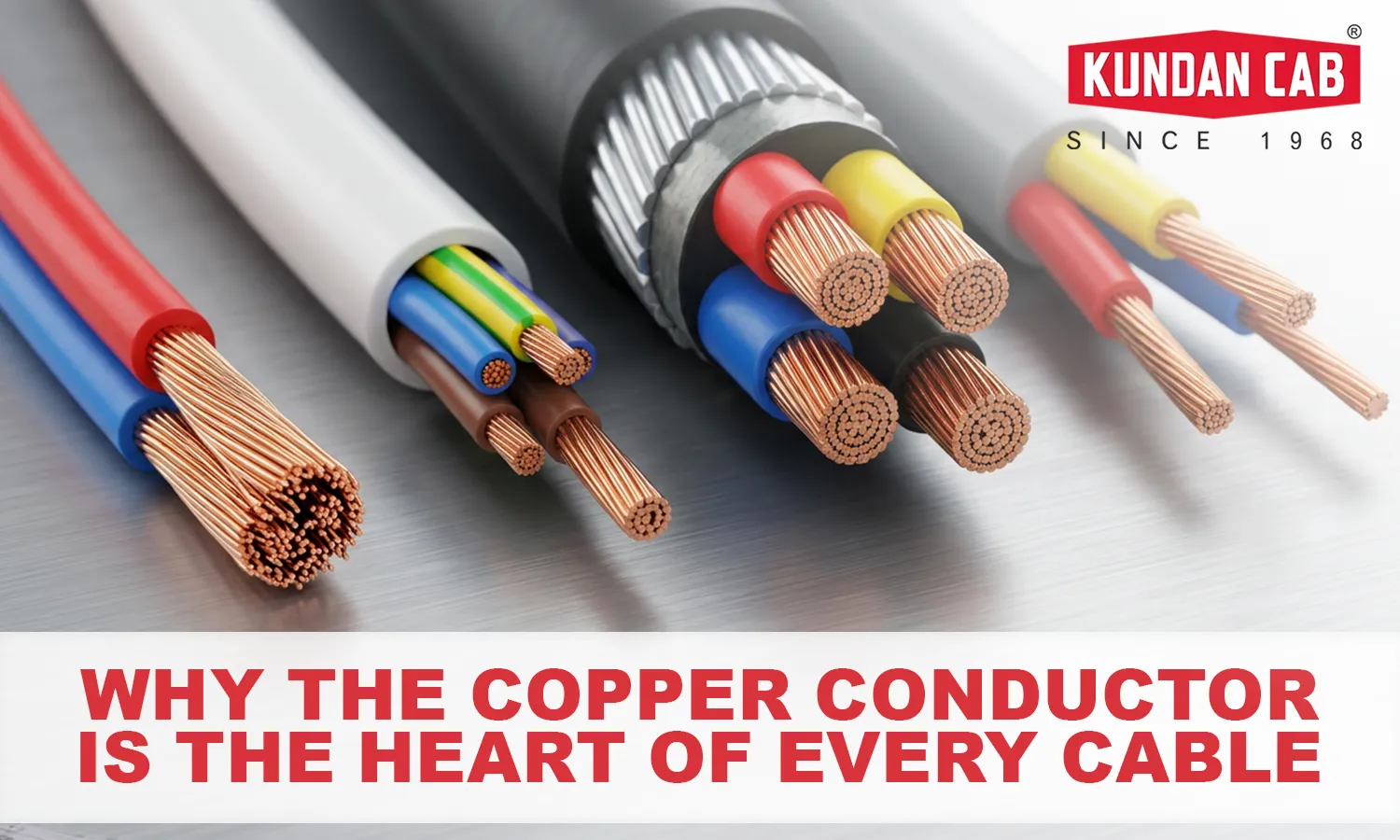
- A solid copper conductor is a single strand, stiff and compact, ideal for fixed wiring in conduits.
- A stranded copper conductor bundles many fine wires, adding the flexibility an appliance lead or panel wiring needs.
Kundan forms both Class 2 and Class 5 conductors under IS 8130 and IEC 60228, so the right form is available for the job. Picture a stiff single strand run neatly along a conduit against a soft, flexible bundle feeding a moving machine, and the difference is easy to feel in the hand.
Annealed and Bare Copper
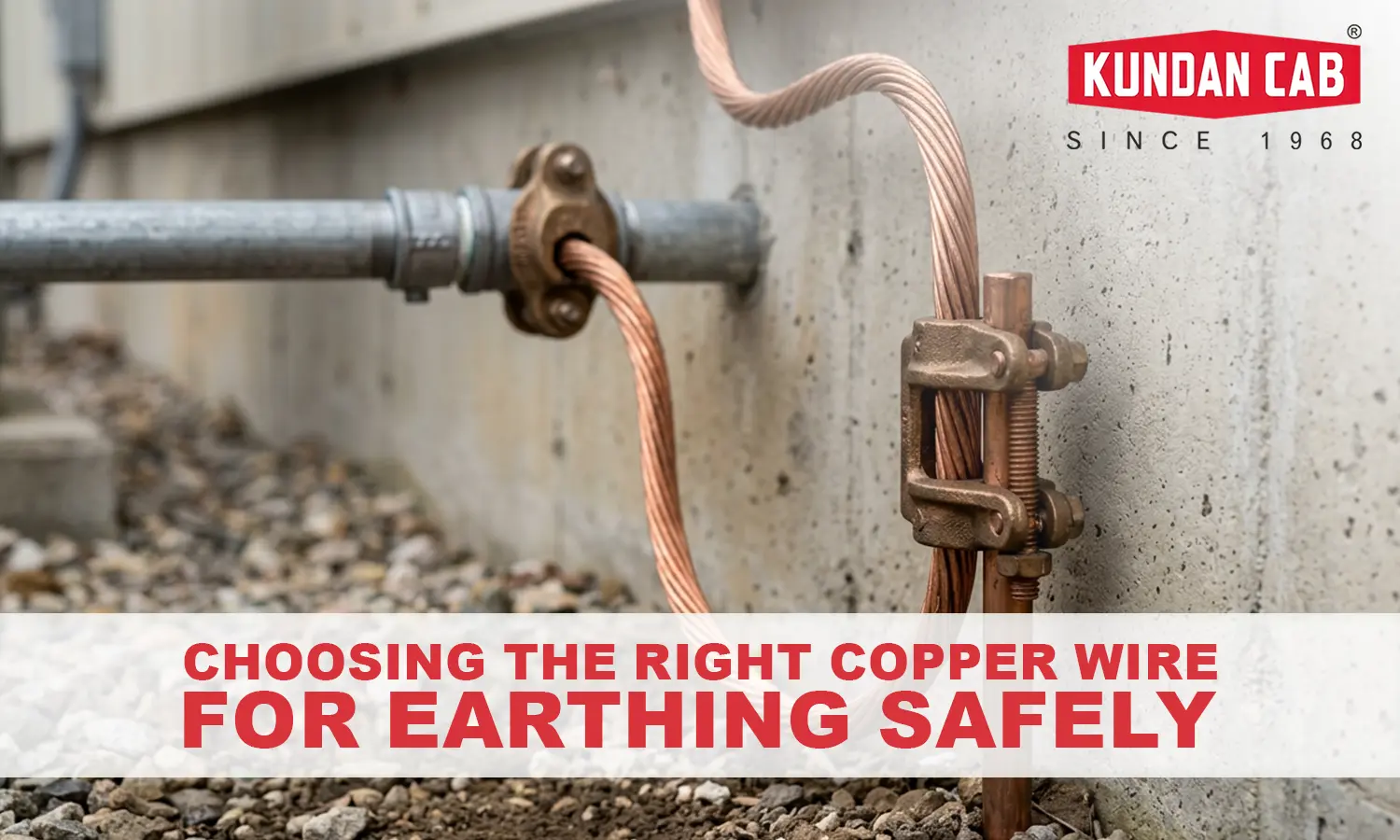
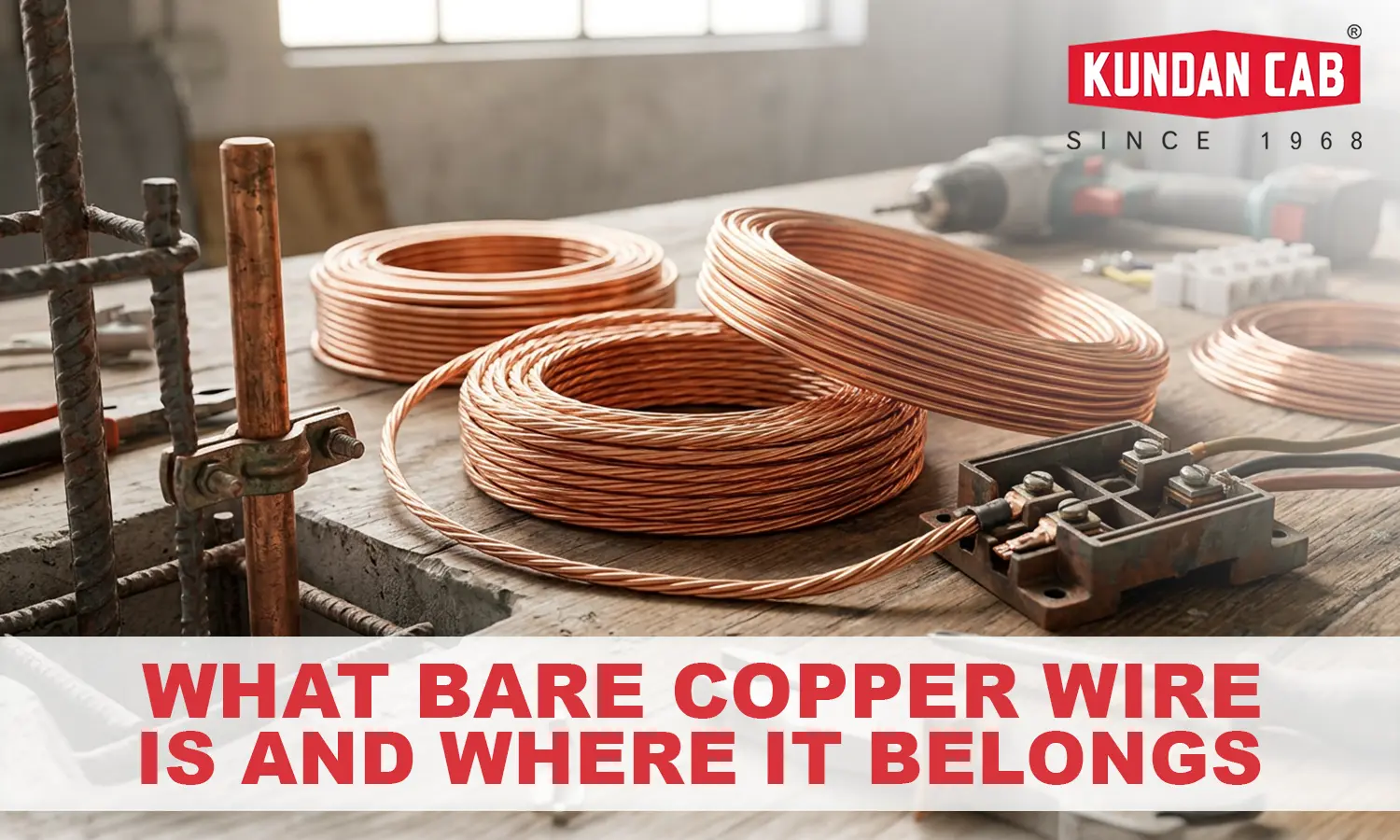
Freshly drawn copper is hard, so it is annealed, or heat softened, to make it flexible and easy to work. An annealed copper conductor bends readily and holds its shape, which is why Kundan anneals all its copper before stranding. A bare copper conductor has no insulation and is used where a metal path is needed directly, most often for earthing. The same high purity applies in bare or insulated form, since purity drives conductivity every time.
How Conductor Quality Affects Performance
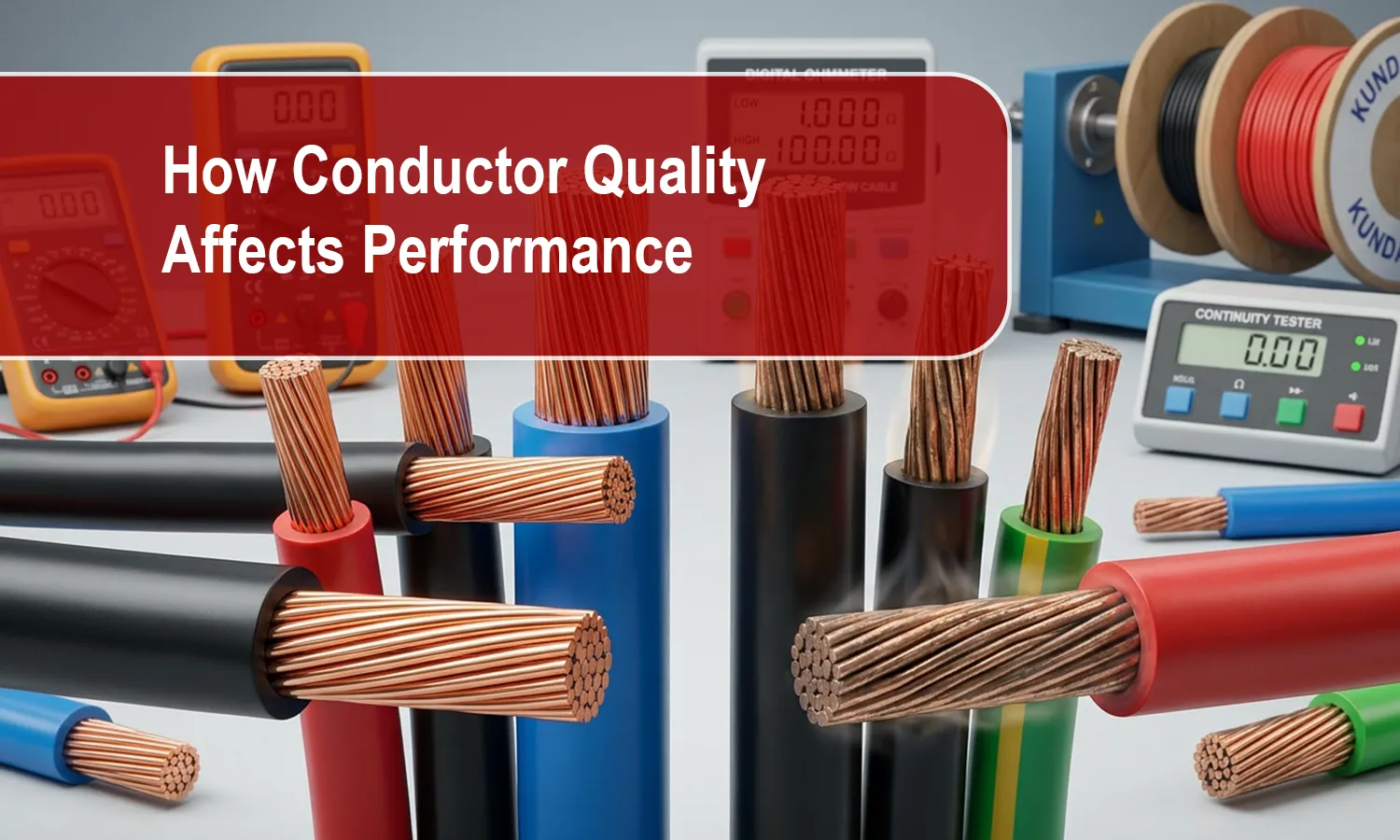
Conductor quality shows up in daily use. Higher purity means lower resistance, which means less heat, less energy loss and a longer life. A well made copper conductor wire runs cooler under load and resists the ageing that cheap, impure copper suffers. A certified copper conductor cable built to a known standard outperforms an unmarked coil even at the same size. It is a little like comparing two wires that look identical on the shelf, where only the one with genuine 99.97 percent copper stays cool behind the wall for decades.
Conductor Standards to Look For
Standards keep conductor quality consistent, and they are worth knowing.
- IS 8130 defines conductor construction and classes for Indian cables.
- IEC 60228 sets the international classes, so a Class 2 or Class 5 conductor means the same everywhere.
- IS 694:2010 covers PVC insulated cables up to 1100 volts, the standard Kundan builds to.
A good electrical conductor meets these on purity, resistance and stranding, so buyers can compare like for like rather than trusting a claim on the label.
Choosing the Right Conductor for the Job
Matching the conductor to the work is mostly common sense once you know the forms. Fixed wiring hidden in a wall or conduit rarely moves, so a firmer conductor is fine and even preferred for a neat run. Anything that flexes, from an appliance lead to a machine that shifts on its mounts, needs the give of many fine strands. Earthing and bonding, where a direct metal path matters more than flexibility, often use plain uninsulated copper.
Kundan covers each of these needs across its house and industrial ranges, all drawn from the same 99.97 percent copper. That shared purity means the choice comes down to form and size for the job, not a compromise on the metal itself. Getting the form right the first time saves rework and keeps the finished wiring tidy and safe.
Key Takeaways
- A copper conductor is the current carrying core, and its quality decides a cable’s safety and life.
- Copper is the benchmark conductor material for its conductivity, flexibility and corrosion resistance.
- Use a solid conductor for fixed wiring and a stranded one for flexible needs.
- Annealed copper bends easily, while bare copper suits earthing.
- Higher purity means lower resistance, less heat and a longer service life.
FAQs
1. What is a copper conductor and why does it matter?
A copper conductor is the metal core of a cable that carries the current. It matters because its purity and construction decide resistance, heat and life. As a conductor material, copper offers high conductivity and flexibility, and Kundan uses 99.97 percent electrolytic copper so its cables run cool and last for decades.
2. What is the difference between solid and stranded copper conductors?
A solid copper conductor is one strand, stiff and ideal for fixed conduit wiring, while a stranded copper conductor bundles many fine wires for flexibility in appliances and panels. Kundan makes both as Class 2 and Class 5 conductors, so you can match the form to how much the cable must bend in use.
3. Where is a bare copper conductor used?
A bare copper conductor has no insulation and is used where a direct metal path is needed, most often for earthing. It relies on copper’s conductivity and corrosion resistance. The same purity that makes a good insulated copper conductor wire also makes a dependable bare conductor, which is why quality copper matters in every form.
Build on a Better Conductor With Kundan
Great wiring starts with a great core, and that is where Kundan Cab focuses. Every copper conductor it makes uses 99.97 percent electrolytic copper, properly annealed and formed to IS and IEC classes, so the cable runs cool and lasts. Choose a conductor built to a real standard, and the rest of the installation follows.
Want wiring that starts with a better core? Browse the Kundan Cab range built on a high purity copper conductor to IS 694:2010. Visit kundancab.in or contact a Kundan dealer to specify the right cable.