Overview
A copper wire for earthing gives fault current a safe path to ground, protecting people and equipment from shock and fire. Choosing the right conductor and size keeps that protection dependable. This overview explains earthing basics, conductor choice and safe practice, using the real Kundan Cab range.
Introduction
Earthing is the safety system you hope never to need, yet it works silently every day to keep a fault from becoming a tragedy. A good earth conductor sits at its heart, giving stray current a safe path to ground instead of through a person. Picture a fault in a metal bodied geyser, where good earthing carries the current away in an instant rather than waiting for someone to touch it. This resource explains how to choose the right earthing conductor and size, using the real Kundan Cab range.
What Earthing Does
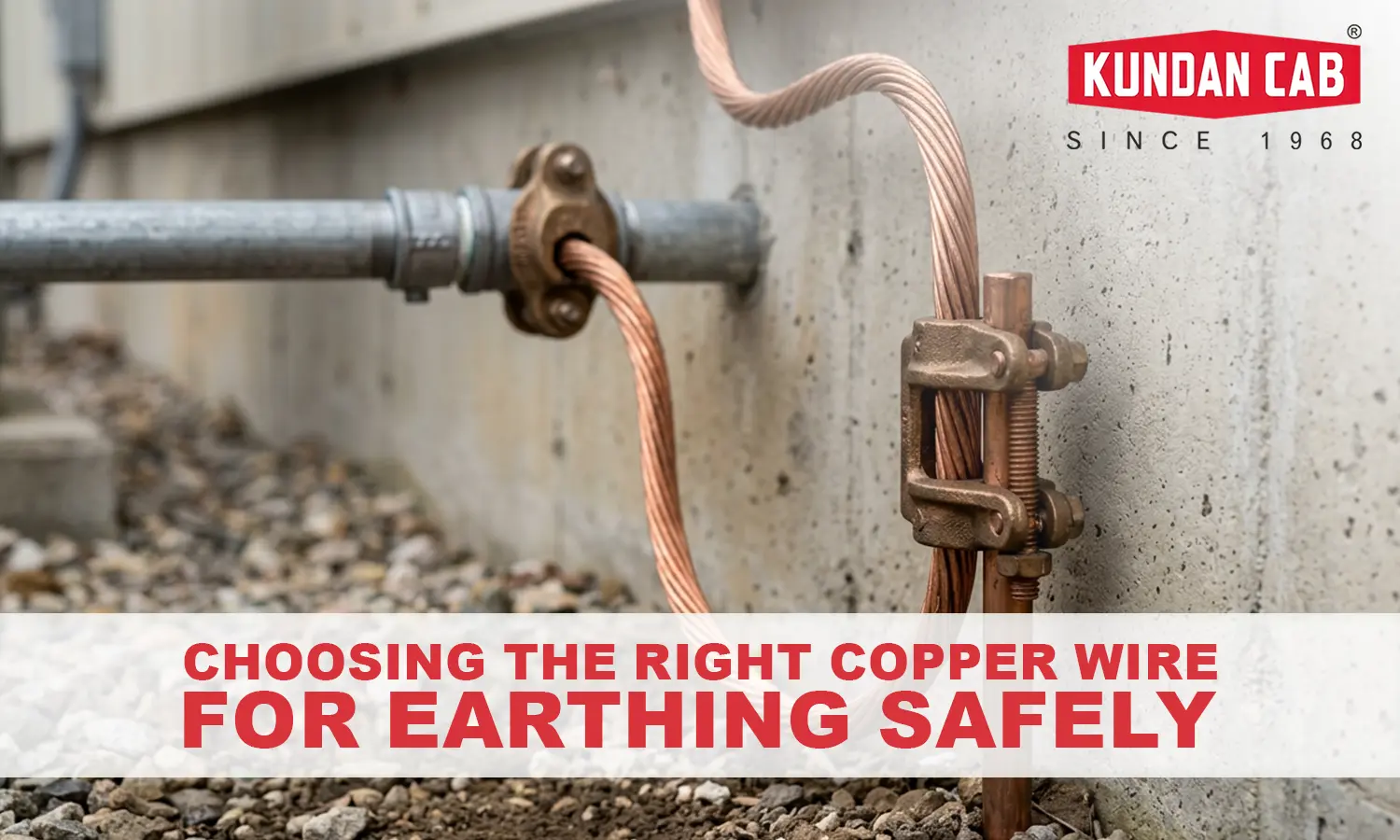
Earthing, also called grounding, connects the metal parts of an installation to the ground so a fault has a low resistance path to follow. An earthing wire carries that fault current safely away, which trips the protection and cuts the danger. A grounding wire performs the same role by another name. Without it, a single insulation failure could leave an appliance body live, so this quiet connection is one of the most important safety features in any building.
Why Copper Suits Earthing
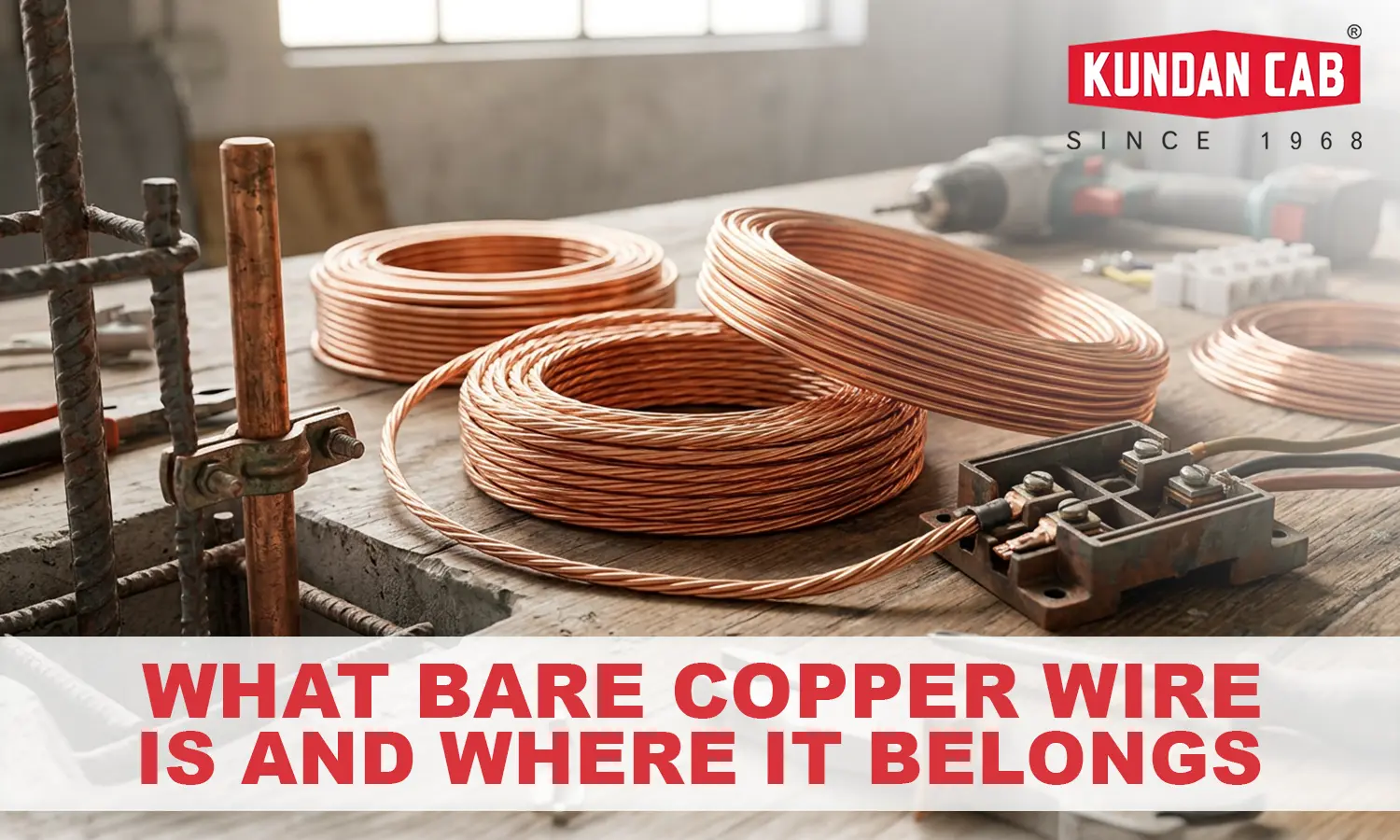
Copper is the natural choice for an earth path. Its high conductivity keeps resistance low, so fault current flows freely to ground, and its corrosion resistance keeps that path dependable for years, even underground. A copper earthing wire therefore holds its protective value far longer than a cheaper metal. Earthing runs often use a bare conductor, and a bare copper wire for earthing is common because it makes direct contact at the earth pit and clamps firmly to metalwork.
Choosing the Right Earthing Conductor
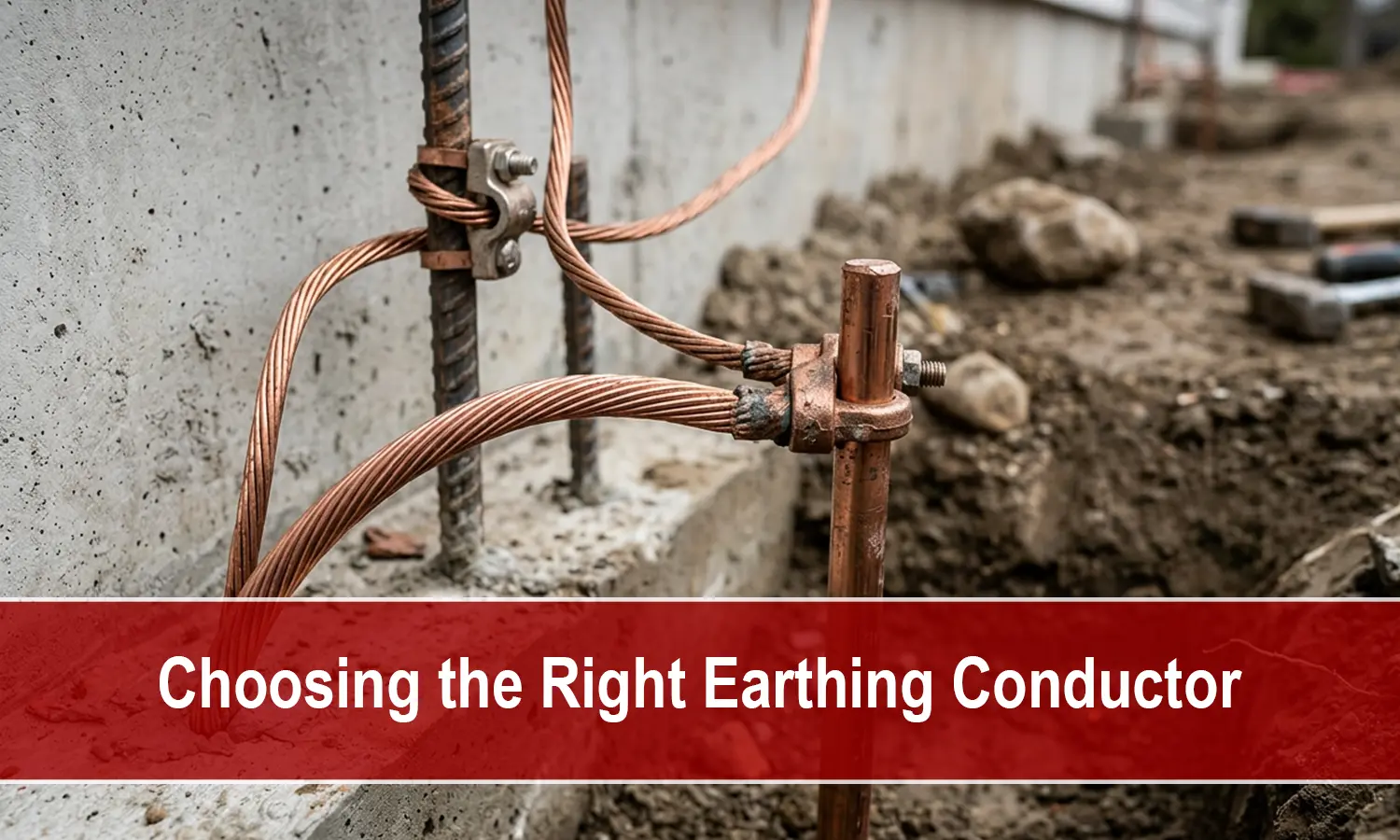
A few points guide the choice of an earthing conductor.
- Material. High purity copper for low resistance and corrosion resistance.
- Size. Match the earth wire to the circuit it protects, since a bigger circuit needs a bigger earth.
- Form. Solid bare copper for firm earth runs, stranded where some flex helps.
- Connections. Clean, tight clamps that will not loosen or corrode.
The earth wire size should never be an afterthought, since an undersized earth cannot carry a large fault safely. As a rule, the earth conductor is sized in step with the live conductors it protects, and a heavier circuit calls for a heavier earthing cable.
Safe Practice and Maintenance
Earthing rewards a little care over time. Connections should be checked for tightness and corrosion during any electrical maintenance, and the earth pit kept in good condition. Because a fault may strike years after installation, the earth path must be dependable the whole time, which is why quality copper matters so much here. Detailed earth pit work is best left to a licensed electrician, but knowing the conductor is high purity copper gives you confidence the system will hold when it is needed.
A simple example shows why this matters. Imagine a workshop where a motor develops an insulation fault after a decade of use, sending current into its metal frame. A sound earth path drains that current away in a fraction of a second and trips the breaker, so the worker who leans on the frame feels nothing at all. A corroded or undersized earth would fail that test at the worst possible moment, which is why the conductor and its connections deserve real attention from the very first day.
Key Takeaways
- A good earth conductor gives fault current a safe path to ground and protects people.
- An earthing wire carries the fault away, tripping protection and cutting the danger.
- Copper suits earthing for its low resistance and long corrosion resistance.
- Match the earth wire size to the circuit, since a bigger circuit needs a bigger earth.
- Keep connections clean and tight, and use high purity copper for a dependable path.
FAQs
1. What is a copper wire for earthing?
A copper wire for earthing connects the metal parts of an installation to the ground, giving fault current a safe, low resistance path. This trips the protection and prevents shock. Copper suits the job for its conductivity and corrosion resistance, and a copper earthing wire made from high purity copper keeps that protection dependable for years.
2. Should an earthing wire be bare or insulated?
Both are used. A bare copper wire for earthing is common at the earth pit and for bonding, where direct metal contact and firm clamping help. Insulated earth conductors are used within wiring and colour coded runs. The key point is that the earthing conductor must be high purity copper, correctly sized, be it bare or covered.
3. How do I choose the right earth wire size?
The earth wire size should match the circuit it protects, so a heavier circuit needs a heavier earth conductor. An undersized earth cannot carry a large fault safely. Size the earthing cable in step with the live conductors, use high purity copper, and have the earth pit and connections set up by a licensed electrician.
Protect Every Home With Kundan Copper Wires and Cables
Earthing is the safety net behind every socket and appliance, so it deserves copper you can trust. Kundan Cab draws its copper to 99.97 percent purity, giving earthing runs a low resistance, corrosion resistant path that holds for years. Choose quality copper for your earth, and give every circuit the protection it depends on.
Setting up earthing for a home or site? Choose a dependable copper wire for earthing from the Kundan Cab range. Visit kundancab.in or contact a Kundan Cab dealer to specify the right conductor and size.