Overview
An earthing wire is the green safety conductor that carries fault current into the ground instead of through a person. It does nothing in normal use, yet it is the single conductor that prevents a fatal shock when a fault occurs. This guide explains its function, colour, size and connection.
What Is an Earthing Wire
An earthing wire is the conductor that connects the metal body of an appliance and the distribution board to the earth below the building. Understanding what an earth wire is is simple once the purpose is clear, and what an earth wire really asks is what protects a person during a fault. It carries no current in normal working conditions. It waits. When a live conductor touches a metal body, the fault current rushes down this path into the ground rather than through the person touching the appliance. That is the whole job, and it is why an earthing wire matters more than any other conductor in the system.
The Function of an Earth Wire
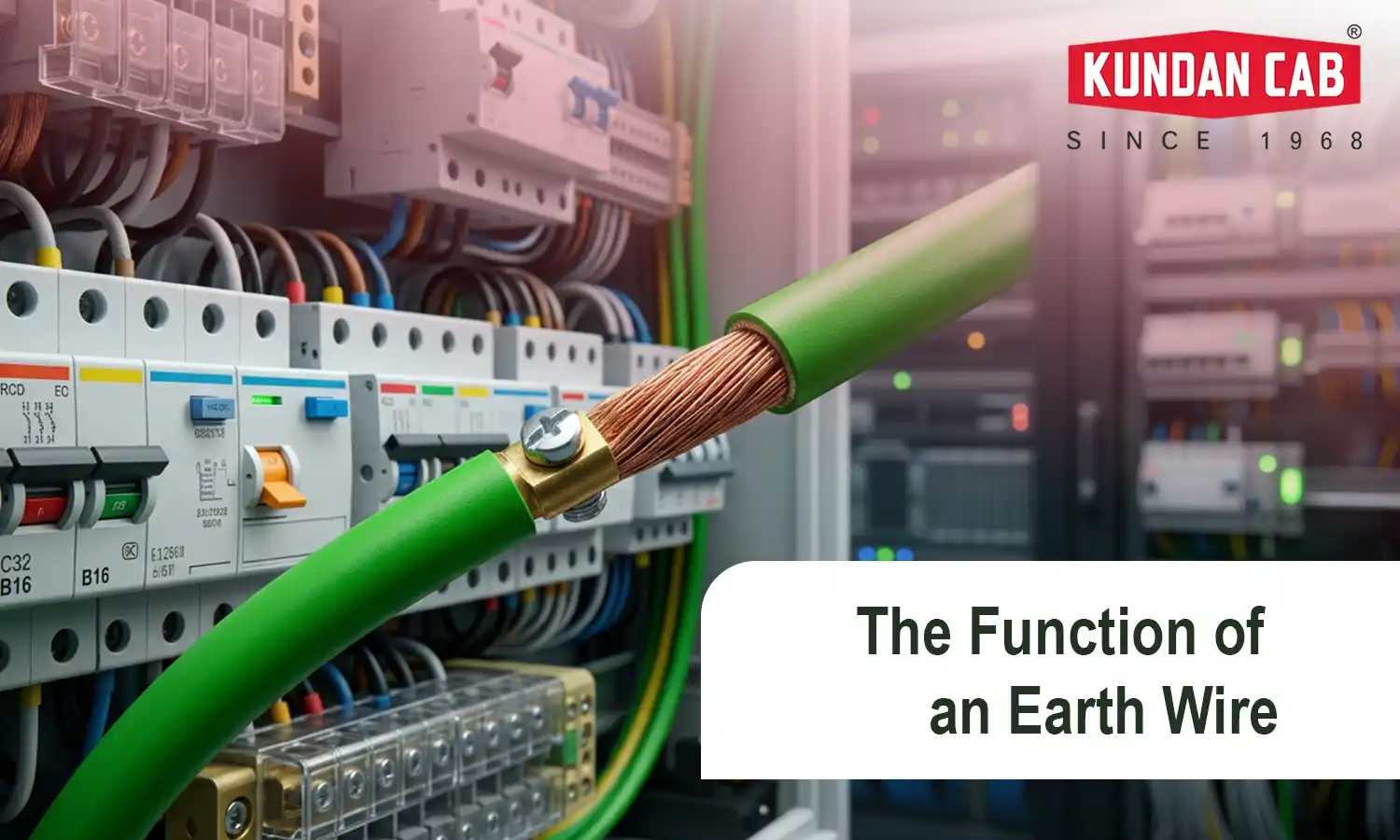
Many people ask what is the function of an earth wire is and assume it helps carry power. It does not. Its function is protection. By offering a very low resistance path to the ground, it does two things at once. It keeps the metal body of an appliance at a safe potential, and it lets a large fault current flow, which trips the MCB or fuse and cuts the supply. The use of earth wire is therefore both to protect the person and to force the protective device to act quickly. Without it, a faulty geyser or washing machine can hold a dangerous voltage on its casing with nothing to trip.
Live, Neutral and Earth
A circuit has three conductors, and knowing the roles of live, neutral, and earth wires keeps work safe. The live conductor carries current to the appliance. The neutral completes the return path. The earth stays idle until a fault occurs. In the modern scheme, live is brown, neutral is blue and earth is green. Older Indian setups use red for live and black for neutral. Confusing the roles of live, neutral and earth wire is dangerous, so colours must stay consistent across the whole building.
Earthing Wire Colour
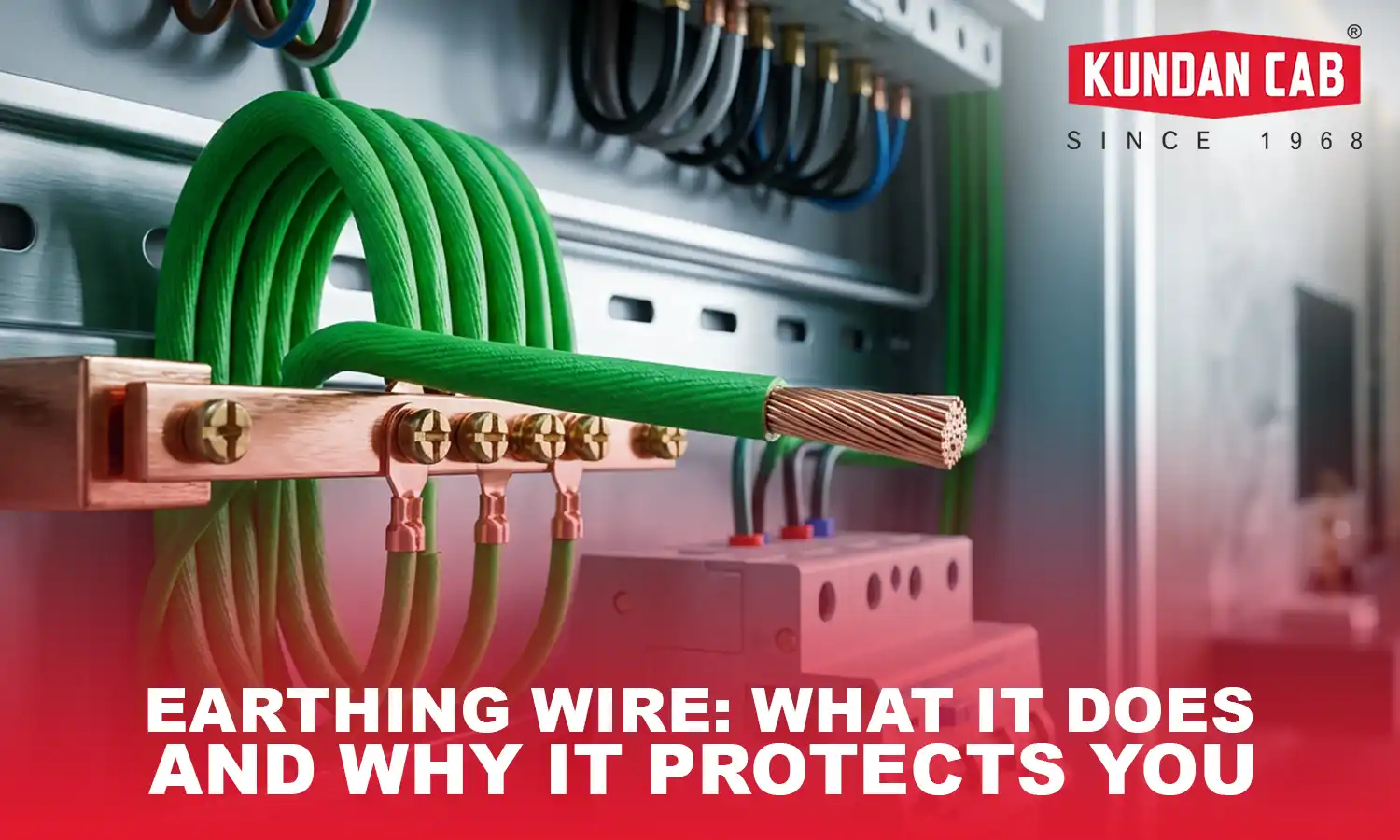
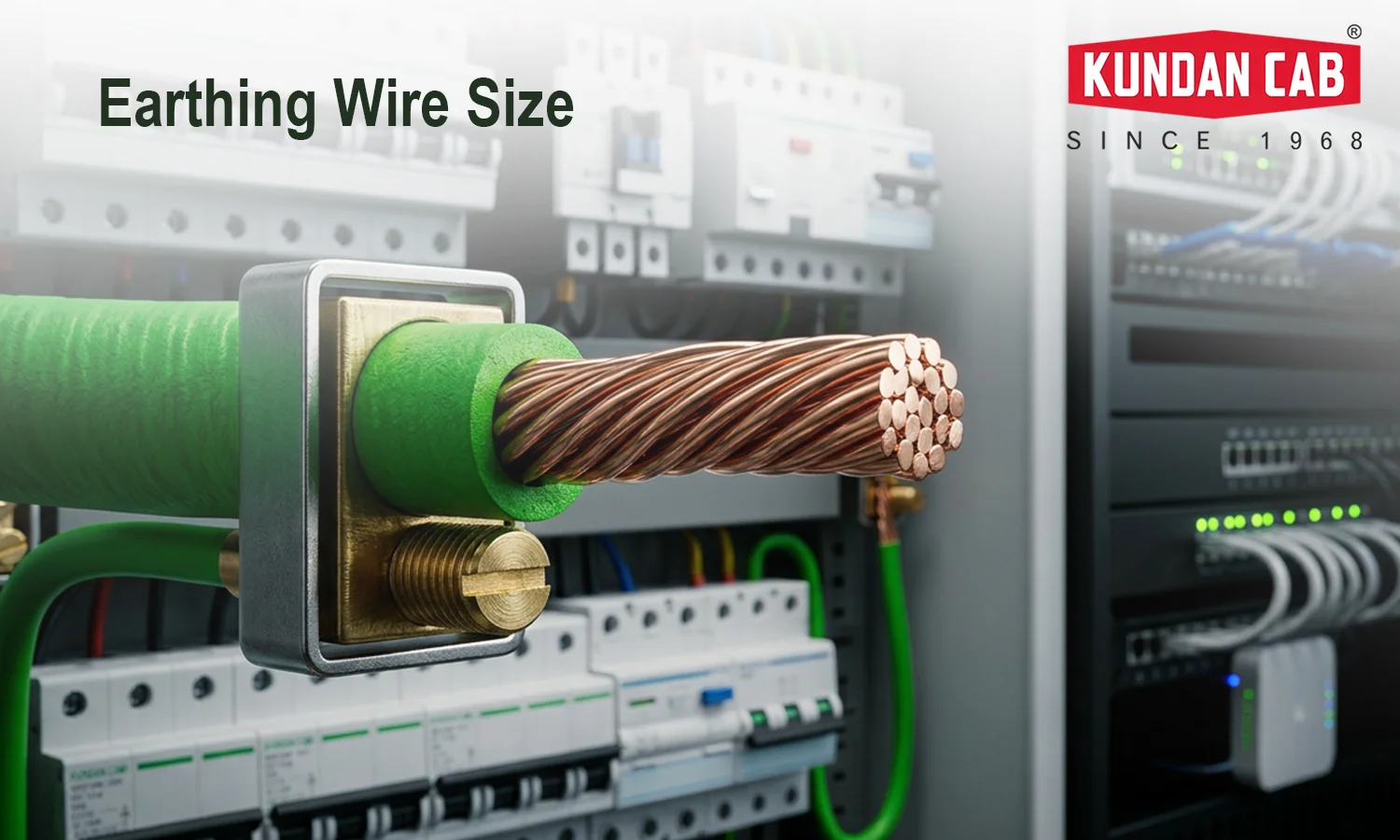
The earthing wire colour is green, or green with a yellow stripe. This is the universal signal that the conductor is a safety earth and carries no load. The earthing wire colour in India follows the same convention, so an electrician anywhere can identify it instantly. Never use a green conductor for anything else, and never run a circuit without one. The colour of earthing wire is the fastest safety check anyone can make at a board, and the colour of earthing wire never changes across a building.
Earthing Wire Size
The earthing wire size depends on the circuit it protects. As a working guide, the earth conductor is often the same size as the live conductor on smaller circuits, and at least half the size on heavier ones. The earthing wire size in mm for common home circuits is set out below.
                Circuit
                Live Conductor (sq mm)
                Typical Earth (sq mm)


                Lighting
                1.0 to 1.5
                1.5


                Sockets
                2.5
                2.5


                Geyser or Large AC
                4.0
                4.0


                Sub Main
                6.0 to 10
                6.0


                Main Incoming
                16 and above
                As per load and standard
This earthing wire size chart is indicative, and any good earthing wire size chart should be read alongside the real load. Final sizing should follow the actual load, the earthing system and a licensed electrician, since requirements shift with the installation. Getting the earthing wire size in mm right matters because an undersized earth cannot carry a heavy fault current safely.
Earthing Wire for Home Use
An earthing wire for home work should always be copper. A copper earthing wire offers low resistance and holds its connection reliably over years, which is exactly what a safety path needs. Every socket feeding a metal-bodied appliance, such as a geyser, a washing machine or a refrigerator, needs a solid earth connection. An earthing wire for home circuits is not optional, and skipping it to save a little cable is the most dangerous shortcut in any installation.
Copper Earthing Wire and Cost
A copper earthing wire is the right choice for a safety path because copper offers low resistance and keeps a stable connection over the years. A copper earthing wire also resists corrosion at joints better than cheaper alternatives, which matters for a conductor that must work perfectly on the one day it is needed. The earthing wire price is a small part of any project, and set against the protection it gives, a fair earthing wire price is the easiest money a homeowner spends.
Making the Earth Connection
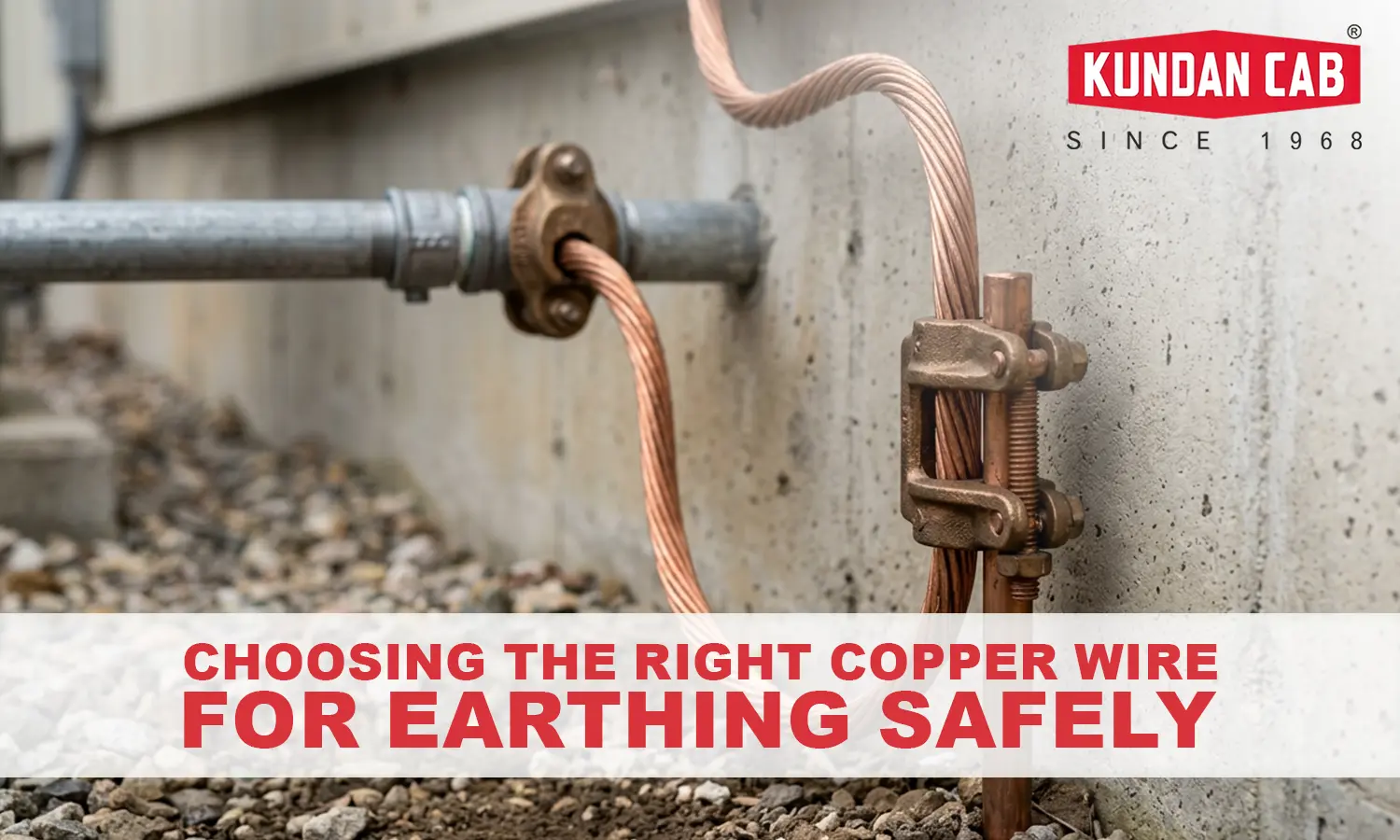
The earth wire connection runs from each point back to the distribution board and then to the earth electrode buried outside. Every joint must be tight and clean, since a loose earth wire connection raises resistance and weakens the protection. The earthing wire price is small compared to the safety it buys, so it is never the place to economise. A qualified electrician should test the earth resistance after installation, because an earth that is present but poorly connected gives false confidence.
Choose Copper You Can Trust
The safety of an earth path depends on the quality of the conductor running it. Kundan Cab has built high-purity electrolytic copper wire for Indian homes and industry since 1968, in Safety Pro FR, Flexy Plus FR-LSH, Power Plus PFFR and Green Wire grades, all IS 694 compliant. Use genuine copper for every conductor in the circuit, live, neutral and earth alike, and never compromise on the one wire that protects a life. Visit kundancab.in to find the right copper wire and size for your installation.
FAQs
1. What is the function of an earth wire?
The use of the earth wire is for protection. It carries fault current safely to the ground instead of through a person, and it lets enough current flow to trip the MCB and cut the supply. It carries no current in normal use, which is why many people wrongly think it is optional.
2. What is the earthing wire colour in India?
The earthing wire colour in India is green, or green with a yellow stripe. This is a universal convention, so any electrician can identify the safety conductor instantly. Never use a green conductor for a live or neutral role.
3. What earthing wire size should I use?
The earthing wire size usually matches the live conductor on smaller circuits and is at least half the size on heavier ones. A 2.5 square millimetre socket circuit typically uses a 2.5 square millimetre earth. A licensed electrician should confirm the final size for your load and earthing system.
Key Takeaways
- An earthing wire carries fault current to the ground instead of through a person.
- It carries no current in normal use, yet it is the conductor that prevents a fatal shock.
- The earthing wire colour is green, or green with a yellow stripe.
- Match the earthing wire size to the circuit it protects, and use copper.
- Every metal-bodied appliance needs a solid earth wire connection.
Conclusion
An earthing wire is the quietest conductor in a building and the most important one. It does nothing until the day it saves a life. Use genuine copper, size it correctly and connect it properly. Kundan Cab has supplied trusted copper wire since 1968.