Overview
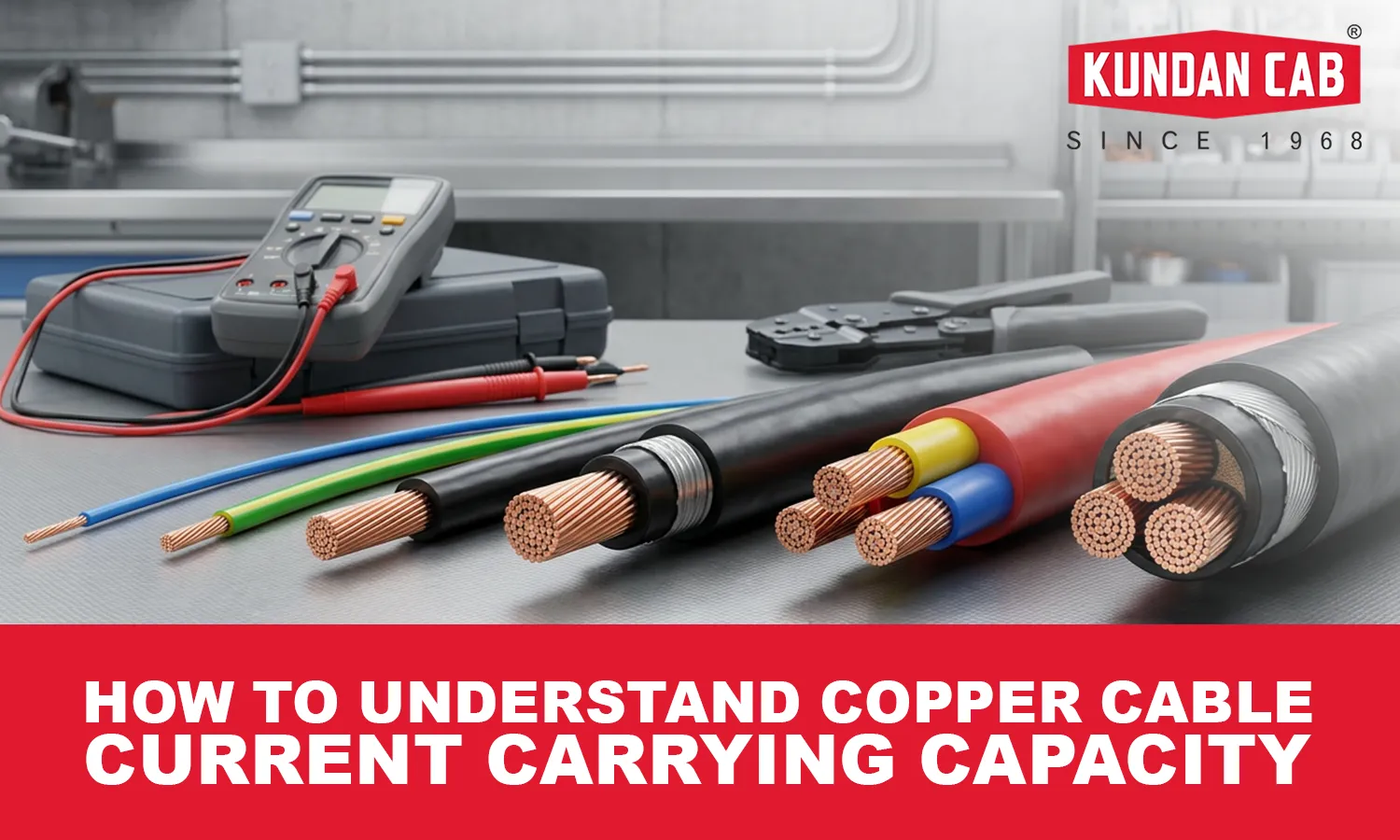
The copper cable current carrying capacity is the maximum current a cable can carry safely without overheating. It depends on conductor size, insulation rating, installation method and ambient heat. This overview explains ampacity, the factors that change it, and why correct sizing protects people and equipment in every installation.
Pushing too much current through a cable is one of the most common causes of electrical faults and fires. Understanding the copper cable current carrying capacity helps you avoid that risk. This value, often called ampacity, sets the safe working limit of a cable. Think of a thin lighting wire asked to feed an air conditioner, and the danger of getting it wrong is easy to picture. This resource explains what affects capacity and how to size correctly, using the Kundan Cab range and IS 694 ratings.
What Ampacity Really Means
Ampacity is the current a cable can carry continuously without its insulation passing a safe temperature. Current creates heat, and insulation can only take so much, so the current capacity of copper wire rises with conductor size and with the insulation temperature rating. Kundan wires are rated for 70 degrees continuous operation, while the HR grade GREEN+ range is rated to 105 degrees, which lifts the safe current for the same size.
Factors That Affect Current Capacity
Several things change the safe load of a cable, so a single number rarely tells the whole story.
- Conductor size. A larger cross section carries more current, the main driver of copper cable load capacity.
- Insulation rating. A higher temperature grade allows a higher copper cable amp rating for the same size.
- Installation method. Cables bunched in conduit run hotter than those in open air, which lowers capacity.
- Ambient temperature. A hot environment reduces how much current a cable can safely carry.
- Voltage drop. Over long runs a bigger size is needed to keep voltage drop within limits.
Using a Reference Chart
Because so many factors apply, a current carrying capacity chart is the practical way to size a cable. It links each conductor size to a safe current under stated conditions, then you adjust for the installation and heat. A good cable ampacity chart always states its assumptions, so read the installation method and temperature before trusting a value. A common everyday guide runs from 1.0 to 1.5 sq mm for lighting, 2.5 sq mm for sockets, 4.0 sq mm for a geyser and 6.0 sq mm and above for a large air conditioner, though these shift with the run and conditions.
Why Installation Method Changes the Answer
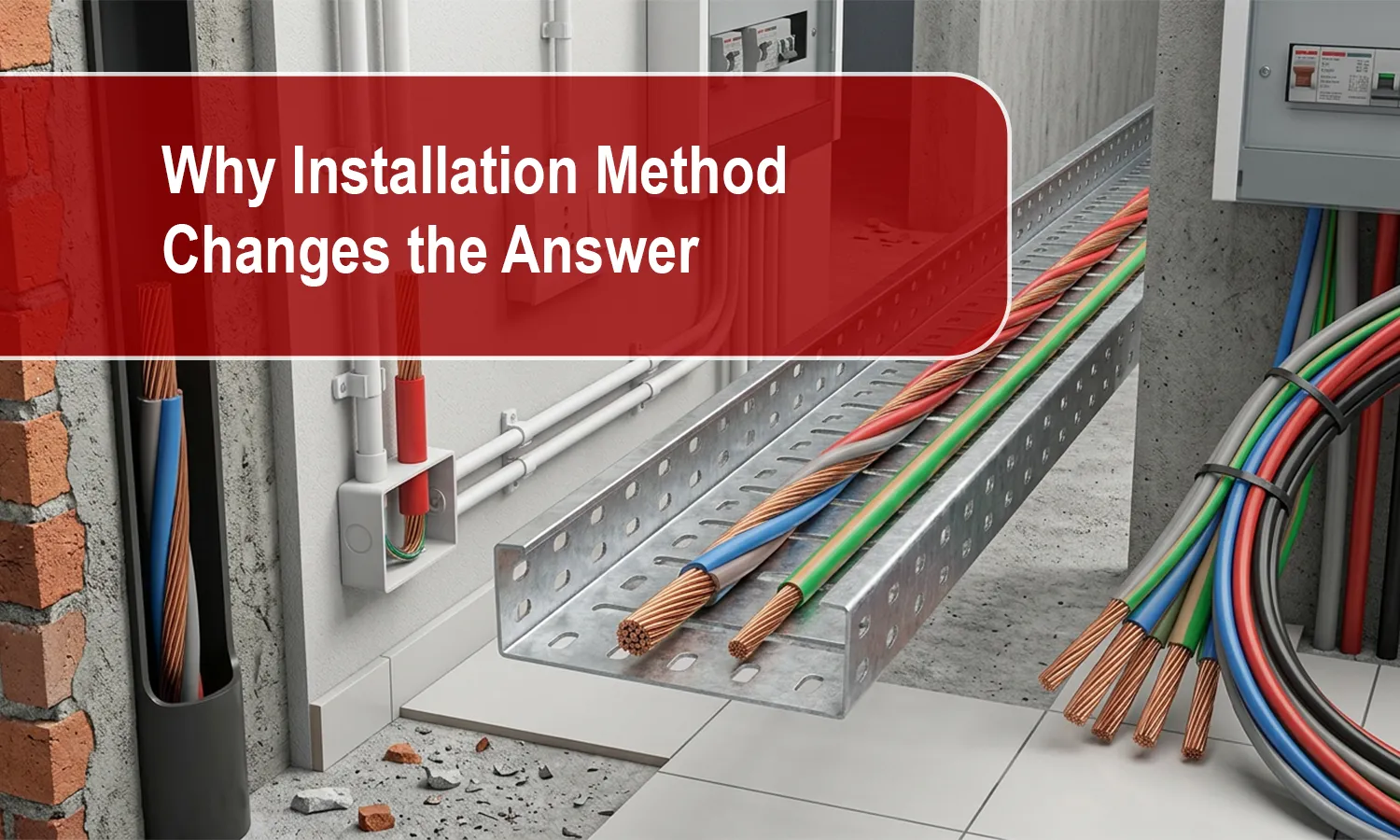
The same wire behaves differently depending on how it is run. A cable clipped to an open wall sheds heat easily, so it carries close to its rated figure. Bundle three or four of the same wires inside a conduit and they warm each other, so each one must be derated. This is why two identical coils can have very different safe loads on site, and why an experienced electrician always looks at the route before trusting a number.
Ambient heat plays the same role. A cable in a cool shaded duct carries more than one run across a hot terrace roof in summer. Kundan wires are rated for 70 degrees continuous operation, with the GREEN+ range going to 105, and those ratings give you headroom to work with once you account for the surroundings. A safe load is always read from a chart and then adjusted for the real world.
It also helps to know the warning signs of a cable working too hard. Insulation that feels warm to the touch, a faint smell of hot plastic, or discolouration near a termination all point to a load beyond the safe limit. Catching these early, and moving the load or upgrading the size, prevents the slow damage that leads to failure. A correctly sized cable, by contrast, runs cool and quietly for decades.
Why Correct Sizing Matters
Both undersizing and oversizing cause problems. An undersized cable overheats, ages its insulation and can start a fire, while an oversized one wastes copper and money. Long runs deserve extra care, since voltage drop can pull the supply low even when the current alone would allow a smaller size, so keeping the drop within roughly three percent is a common target. Checking the copper cable amp rating against the real current, and confirming the copper cable load capacity for the installation method, is the discipline that keeps a system safe for years.
Key Takeaways
- The copper cable current carrying capacity is the safe continuous current before insulation overheats.
- The current capacity of copper wire rises with conductor size and insulation temperature rating.
- Installation method and ambient heat lower the copper cable load capacity, so always adjust for them.
- Use a cable ampacity chart that states its assumptions rather than a single fixed number.
- Size to the real load with a margin, since both undersizing and oversizing carry a cost.
FAQs
1. What is copper cable current carrying capacity?
The copper cable current carrying capacity is the maximum current a cable can carry continuously without its insulation passing a safe temperature. It depends on conductor size, insulation rating, installation method and ambient heat. Kundan wires are rated for 70 degrees continuous operation, with the HR grade GREEN+ range rated to 105 degrees for a higher safe load.
2. What lowers the current capacity of a copper wire?
The current capacity of copper wire falls when cables are bunched in conduit, when the surroundings are hot, or over long runs where voltage drop matters. A higher insulation grade raises the safe copper cable amp rating for the same size. Always adjust a table value for your real installation conditions before finalising the cable.
3. How do I use a cable ampacity chart correctly?
Read the assumptions first, since a cable ampacity chart is stated for a particular installation method and temperature. Match your conductor size to the safe current, then reduce it for bunching and heat. Using a proper current carrying capacity chart and checking the copper cable load capacity for your layout is far safer than guessing a value.
Size Safely With Kundan
Correct sizing is the heart of a safe installation, and it starts with a cable you can trust. Kundan Cab builds its copper wires to IS 694:2010 with clear temperature ratings, so the capacity you design around is real. Size to the load, adjust for the conditions, and wire with confidence.
Sizing cables for a project? Browse the Kundan Cab range and match the copper cable current carrying capacity to your real load. Visit kundancab.in or contact a Kundan dealer for the right size and grade.