Overview
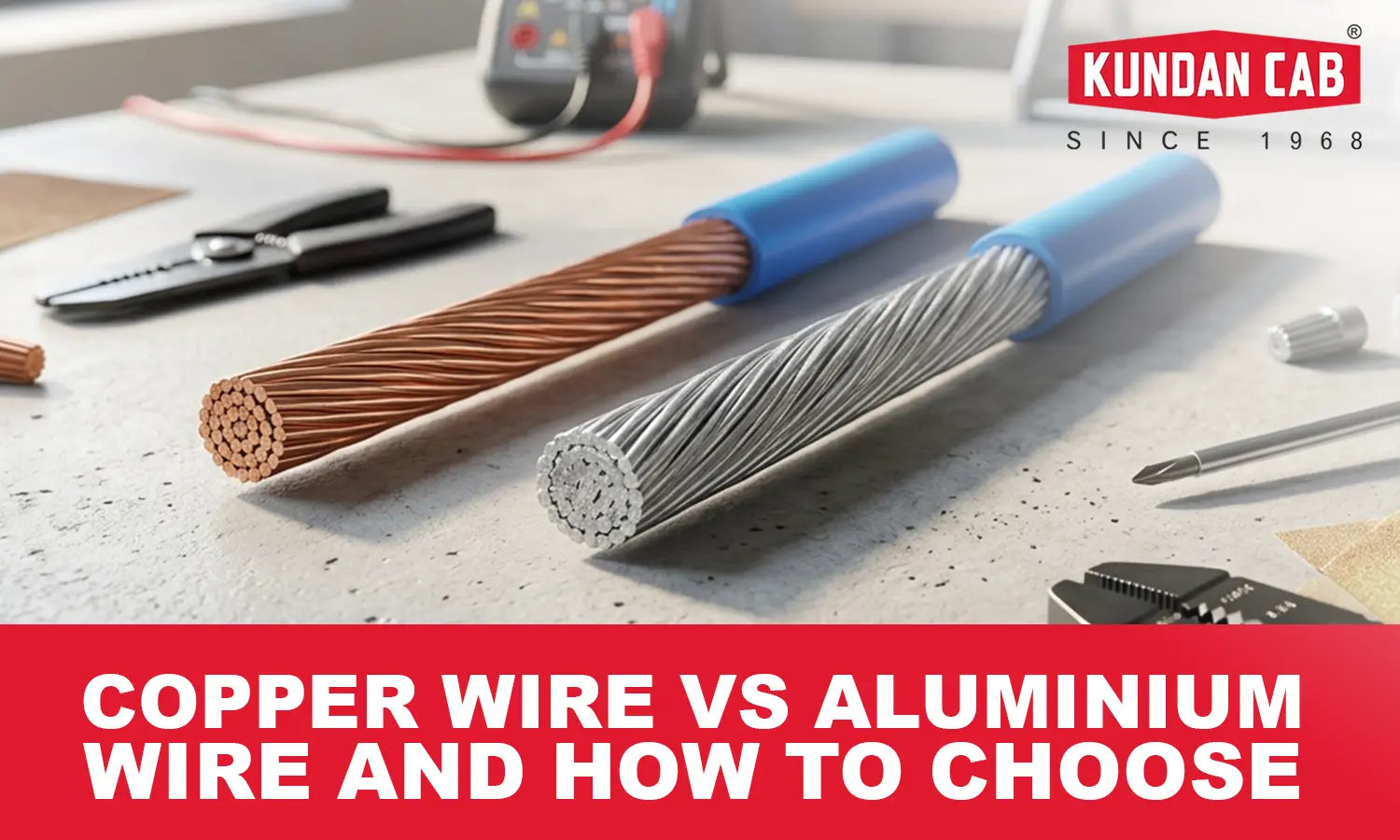
The copper wire vs aluminium wire choice comes down to conductivity, strength, weight and cost. Copper conducts better and lasts longer, while aluminium is lighter and cheaper for some large runs. This overview compares the two fairly so you can choose the right conductor for your wiring.
Introduction
Two metals carry most of the world’s electricity, and choosing between them shapes the safety and life of an installation. The copper wire vs aluminium wire question is really about conductivity and durability against weight and cost. For a homeowner it decides how safely a house is wired, and for an engineer it can decide the cost of a long run. This resource compares them fairly, using the real Kundan Cab copper range where it helps.
Conductivity and Efficiency
The clearest difference is how well each metal conducts. On copper vs aluminium conductivity, copper carries current at about 100 percent IACS against roughly 61 percent for aluminium, so a copper conductor can be thinner for the same load. That efficiency means less heat and less energy lost as warmth in the wall. For the tight, high demand wiring inside a home, this advantage is why the copper choice is so common.
Strength Weight and Corrosion
Beyond conductivity, the metals behave differently in the hand and over time.
- Copper is strong and ductile, so it flexes and takes terminations without cracking.
- Aluminium is much lighter, which helps on long overhead spans.
- Copper resists corrosion well, while bare aluminium forms an oxide that can loosen joints.
This is why a copper or aluminium wire decision often turns on the setting. The lightness that helps aluminium on a utility pole becomes a drawback at a crowded terminal, where copper’s strength and stable joints keep a connection tight for years.
Cost and Where Each Is Used
Aluminium usually costs less by weight, which is why a copper vs aluminium cable debate appears on large projects where quantity matters. Utilities often use aluminium for long overhead and distribution runs where weight and cost dominate. For building wiring, though, the copper cable vs aluminium cable comparison favours copper on safety, durability and stable connections. This is why Kundan Cab builds its house and industrial ranges in high purity copper.
| Factor | Copper | Aluminium |
|---|---|---|
| Conductivity | About 100 percent IACS | About 61 percent IACS |
| Strength | High and ductile | Lower and softer |
| Weight | Heavier | Much lighter |
| Best use | Homes and most industry | Long overhead utility runs |
Installation and Long Term Differences
The two metals also behave differently once they are in the wall. Aluminium expands and contracts more with heat, so its joints can loosen over time unless they are made and checked carefully, an effect electricians know well at older terminals. Copper is more stable, so a well made copper joint tends to stay tight for the life of the installation. For a homeowner who will never reopen a wall, that quiet reliability is worth a great deal.
- Copper joints stay tight, while aluminium joints may need rechecking.
- Copper handles repeated flexing at terminals without cracking.
- Aluminium needs anti oxidant care at connections to avoid resistance.
Cost tells only part of the story too. Aluminium can look cheaper on the day, yet a copper installation often wins over its life through fewer faults, lower losses and less maintenance. Picture two identical homes wired decades ago, where the copper one still runs quietly while the aluminium one has needed its joints tended. For a real project, copper is the safe default for any home or most industrial wiring, and it is what Kundan Cab builds its ranges from. A very long outdoor run where weight and cost dominate may still suit aluminium, but for everything inside the walls people live and work in, copper fits best.
Key Takeaways
- The copper wire vs aluminium wire choice weighs conductivity and durability against weight and cost.
- On copper vs aluminium conductivity, copper leads at about 100 percent IACS versus roughly 61 percent.
- Copper is stronger, holds terminations better and resists corrosion.
- Aluminium suits long overhead runs where weight and cost dominate.
- For home and most industrial wiring, copper is the safer, longer lasting choice.
FAQs
1. Is copper wire better than aluminium wire?
For homes and most industry, the copper wire vs aluminium wire comparison favours copper because it conducts better, flexes without cracking and resists corrosion. Aluminium is lighter and cheaper for some long overhead runs. Kundan Cab builds its house and industrial ranges in high purity copper for exactly these safety and durability reasons.
2. How much better is copper conductivity than aluminium?
On copper vs aluminium conductivity, copper carries current at about 100 percent IACS while aluminium sits around 61 percent. That means a copper conductor can be thinner for the same load, running cooler with less energy lost as heat. For dense home wiring, this efficiency is a real safety advantage.
3. Where is aluminium wire still used?
A copper or aluminium wire choice often favours aluminium on long overhead and utility distribution runs, where its light weight lowers cost and load on structures. For building wiring, the copper cable vs aluminium cable comparison favours copper because of stronger, more stable connections and better corrosion resistance.
Choose Copper With Confidence From Kundan Cab
Both metals have their place, but for the wiring you live with every day, copper is hard to beat on safety and life. Kundan Cab builds its house and industrial ranges from 99.97 percent electrolytic copper to IS 694:2010, so you get the conductivity, strength and durability copper is known for. Wire with the metal that keeps homes safe.
Weighing your conductor choice? Browse the Kundan Cab copper range and see why the copper wire vs aluminium wire decision favours copper for daily wiring. Visit kundancab.in or contact a Kundan Cab dealer to compare.