Overview
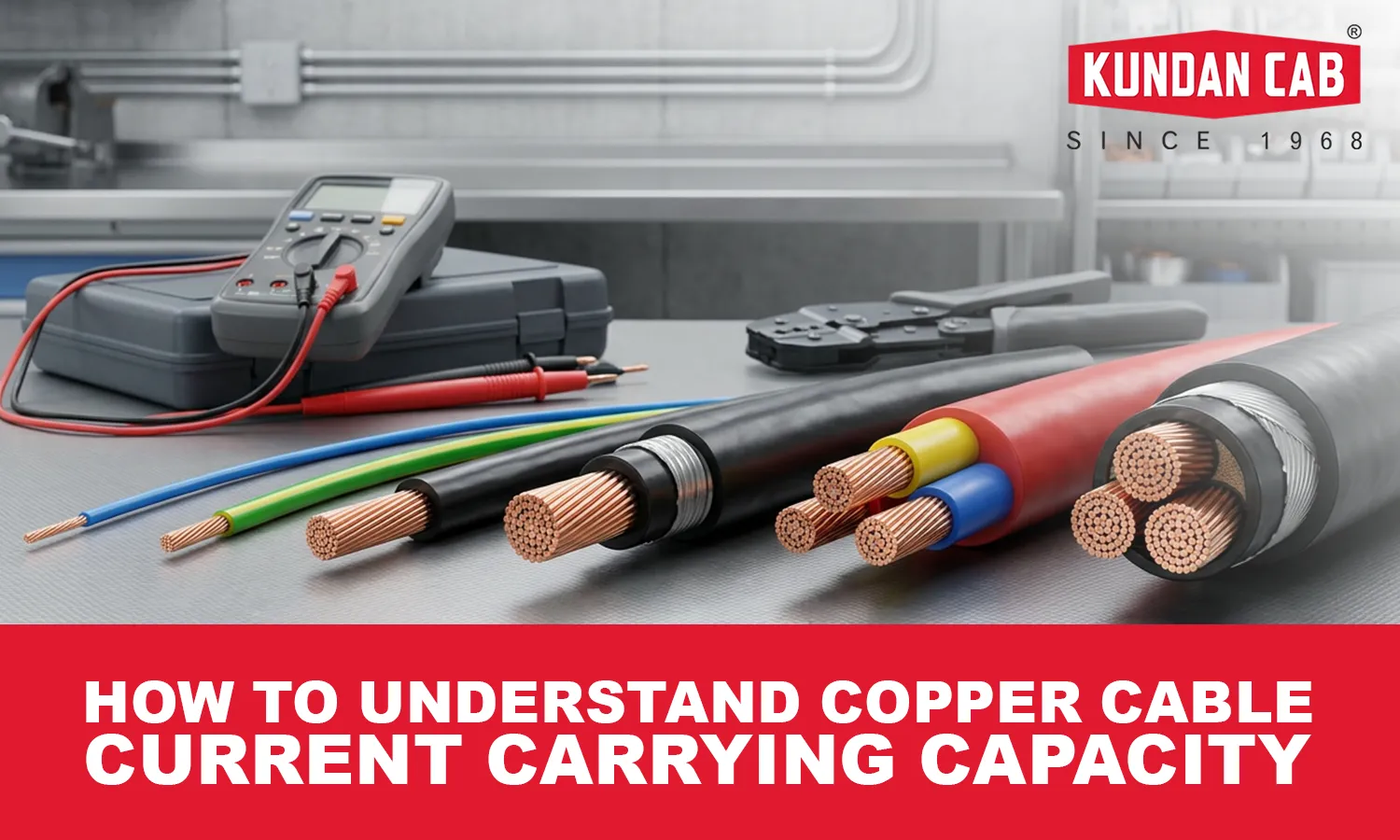
A copper wire size chart links each conductor size in square millimetres to the loads it can safely carry. Reading it correctly helps you avoid undersizing, which overheats, and oversizing, which wastes copper. This overview explains sizes, typical applications and safe selection, using the real Kundan Cab range.
Introduction
Choosing a wire size by eye is one of the easiest ways to build a fault into a home. A clear copper wire size chart removes that guesswork by linking each size to the loads it can safely handle. Picture the thin wire behind a light point against the far heavier coil feeding an air conditioner, and the need for a proper chart becomes obvious. This resource explains how to read one correctly, using the sizes Kundan cab supplies.
How Wire Sizes Work in India
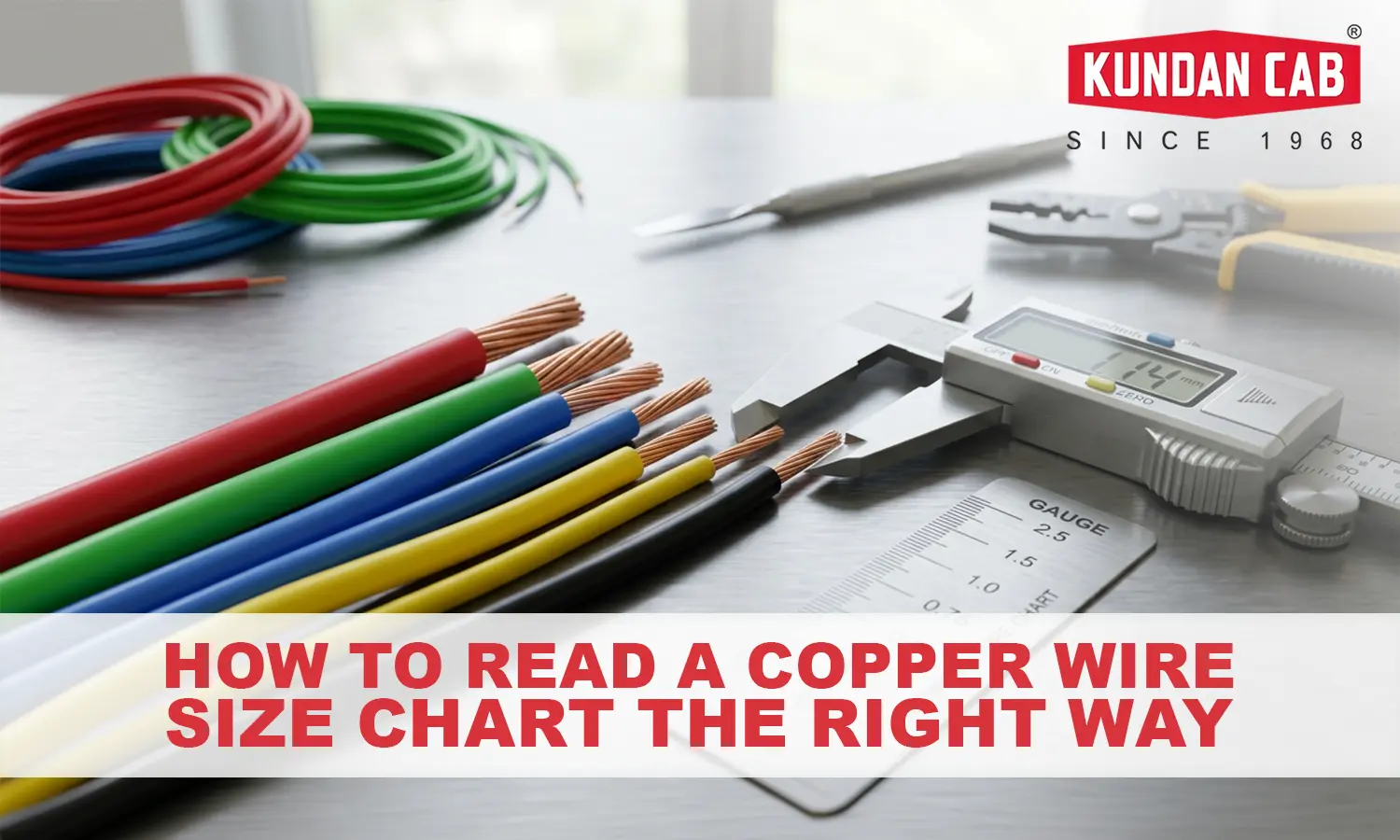
Indian wires are measured by the cross section of the conductor in square millimetres, so a 2.5 sq mm wire has more copper than a 1.5 sq mm one and carries more current. This is the copper wire size the market uses, and it is more precise than an older gauge number. Kundan cab supplies the common house sizes and larger industrial sizes, each printed clearly on the sheath so the house wire size is never in doubt on site.
A Simple Size Guide
The chart below is a practical starting point for common home circuits. Treat it as a guide, since the safe figure also depends on the run length, how the cable is installed and the heat around it.
| Wire Size | Typical Use |
|---|---|
| 1.0 to 1.5 sq mm | Lighting circuits and low load points |
| 2.5 sq mm | General power sockets |
| 4.0 sq mm | Geysers and medium appliances |
| 6.0 sq mm and above | Air conditioners and heavy loads |
This works as a wire size chart for most homes, and the same logic scales up for industry. An electrical wire size chart simply extends the idea to larger conductors and higher loads, so a workshop motor gets a heavier size than a bedroom light.
Reading the Chart Correctly
A chart is only safe when you read its conditions. A published conductor size chart assumes a particular installation method and temperature, so you must adjust for cables bunched in conduit, hot surroundings or long runs. A cable size chart and a cable diameter chart describe the physical build too, which helps confirm a wire fits its conduit and gland. Always adjust a table value for your real conditions rather than taking a single number as final.
- Derate for cables bunched together in conduit.
- Allow for hot surroundings such as a roof space in summer.
- Size up on long runs to keep voltage drop within limits.
Why Correct Sizing Matters
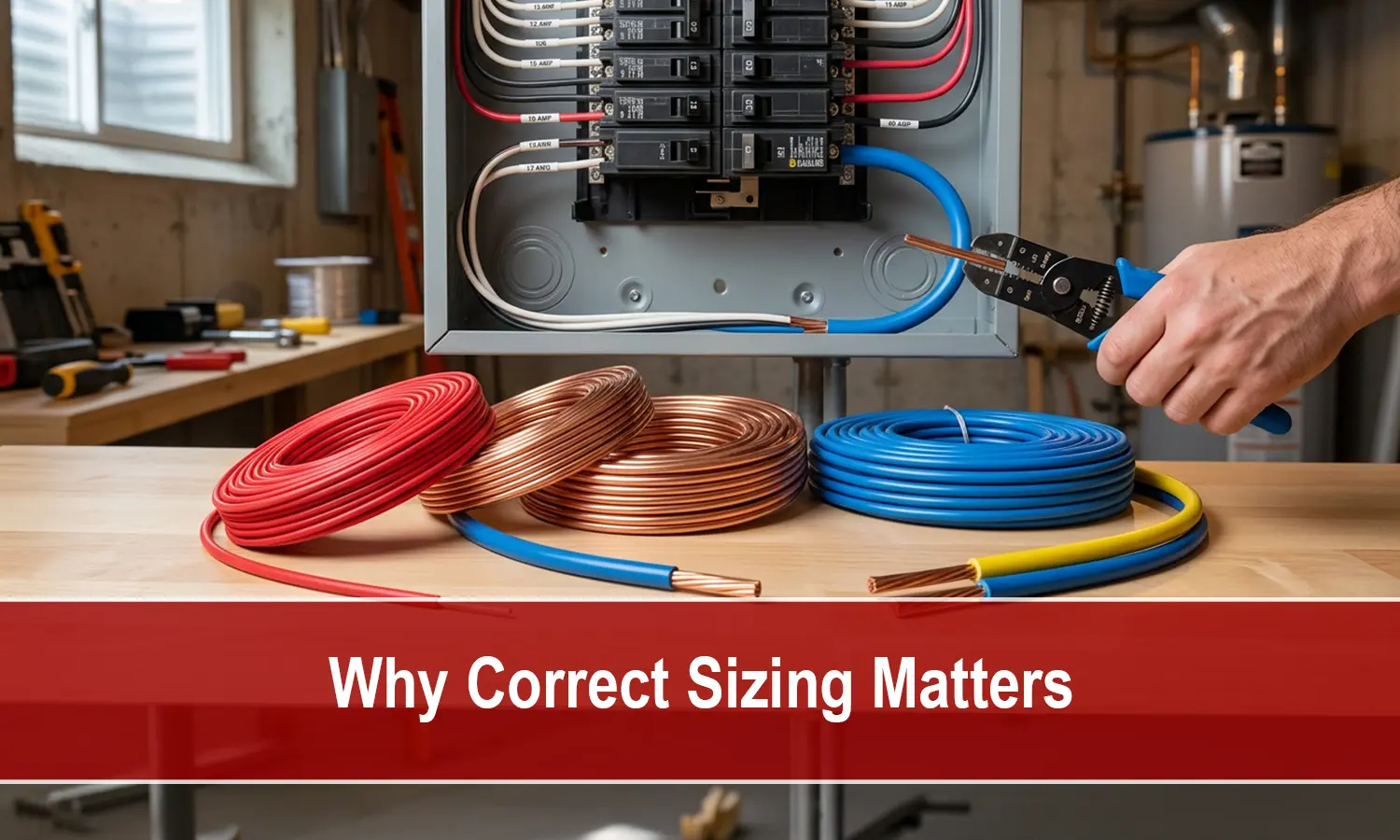
Both mistakes cost you. An undersized wire runs hot, ages its insulation and can start a fire, while an oversized one wastes copper and money. Matching the copper cable size to the real load, with a sensible margin, is the safe middle path. Because Kundan cab prints its sizes and 1100 volt rating clearly, checking a run against the chart on site is quick and certain, which is exactly how a safe installation should feel.
A good example is the point where a homeowner adds a new air conditioner to a room that was wired years ago for lights and a fan. The old thin wire was never meant to feed that load, and running the unit on it would leave the cable warm behind the wall for hours every day. Reading the chart first, and pulling a heavier run to the new point, is the difference between an upgrade that lasts and one that quietly becomes a hazard.
Key Takeaways
- A copper wire size chart links each square millimetre size to the loads it can safely carry.
- Indian wires use the copper wire size in square millimetres, which is more precise than a gauge number.
- Read the conditions on a conductor size chart and derate for bunching, heat and long runs.
- Match the copper cable size to the real load with a margin to avoid overheating or waste.
- Kundan cab prints its sizes and rating clearly, so checking a run is quick and certain.
FAQs
1. How do I read a copper wire size chart?
A copper wire size chart lists each conductor size in square millimetres against the loads it can safely carry. Match your circuit to the right size, then adjust for the installation method, heat and run length. One module of guidance rarely fits every case, so always read the conditions a wire size chart is stated for before trusting a value.
2. What wire size do I need for a socket or a geyser?
As a common guide, sockets use 2.5 sq mm and a geyser uses 4.0 sq mm, while lighting uses 1.0 to 1.5 sq mm and an air conditioner needs 6.0 sq mm or more. This house wire size guide is a starting point, since the safe copper cable size also depends on the run and installation. When unsure, size up slightly and confirm against the load.
3. Why does installation method change the size I need?
Because cables bunched in conduit warm each other and hot surroundings reduce how much current a wire can carry. A published conductor size chart assumes set conditions, so you derate from it for your real layout. Checking a cable diameter chart also confirms the wire fits its conduit, keeping the run both safe and neat.
Size With Confidence Using Kundan cab
Getting the size right is the heart of safe wiring, and it starts with clearly marked cable. Kundan Cab prints its sizes, grade and 1100 volt rating on every coil, so matching a run to the chart is simple and certain. Size to the load, adjust for the conditions, and wire with confidence.
Sizing wires for a project? Browse the Kundan Cab range and match each run to the right copper wire size chart value. Visit kundancab.in or contact a Kundan Cab dealer for the correct size.