Overview
Wire gauge is an older way of describing conductor thickness with a number, where a lower number means a thicker wire. Modern Indian wiring uses the cross section area in square millimetres instead. This guide explains gauge sizes, the conversion to mm and how to pick the right one.
What Wire Gauge Means
Wire gauge describes how thick a conductor is. The system can confuse newcomers because the numbering runs backwards. A lower gauge number means a thicker wire, and a higher number means a thinner one. The standard wire gauge, often shortened to SWG, was the traditional British system used widely in India. Understanding wire gauge sizes matters because thickness decides how much current a conductor can carry safely, and the wire gauge sizes used in India follow this same backwards numbering.
Gauge Wire and the Move to mm
Modern Indian cable is sold by the cross section area in square millimetres, not by gauge. The mm figure is what appears printed on genuine certified wire, so it is the number that counts at the counter. When an electrician mentions gauge wire, it usually maps to a square millimetre size in practice. Anyone asking what gauge wire they need for a circuit is really asking which square millimetre size suits the load. Once that is clear, what gauge wire to buy becomes a question of current, not of numbering.
Wire Gauge Chart and Conversion
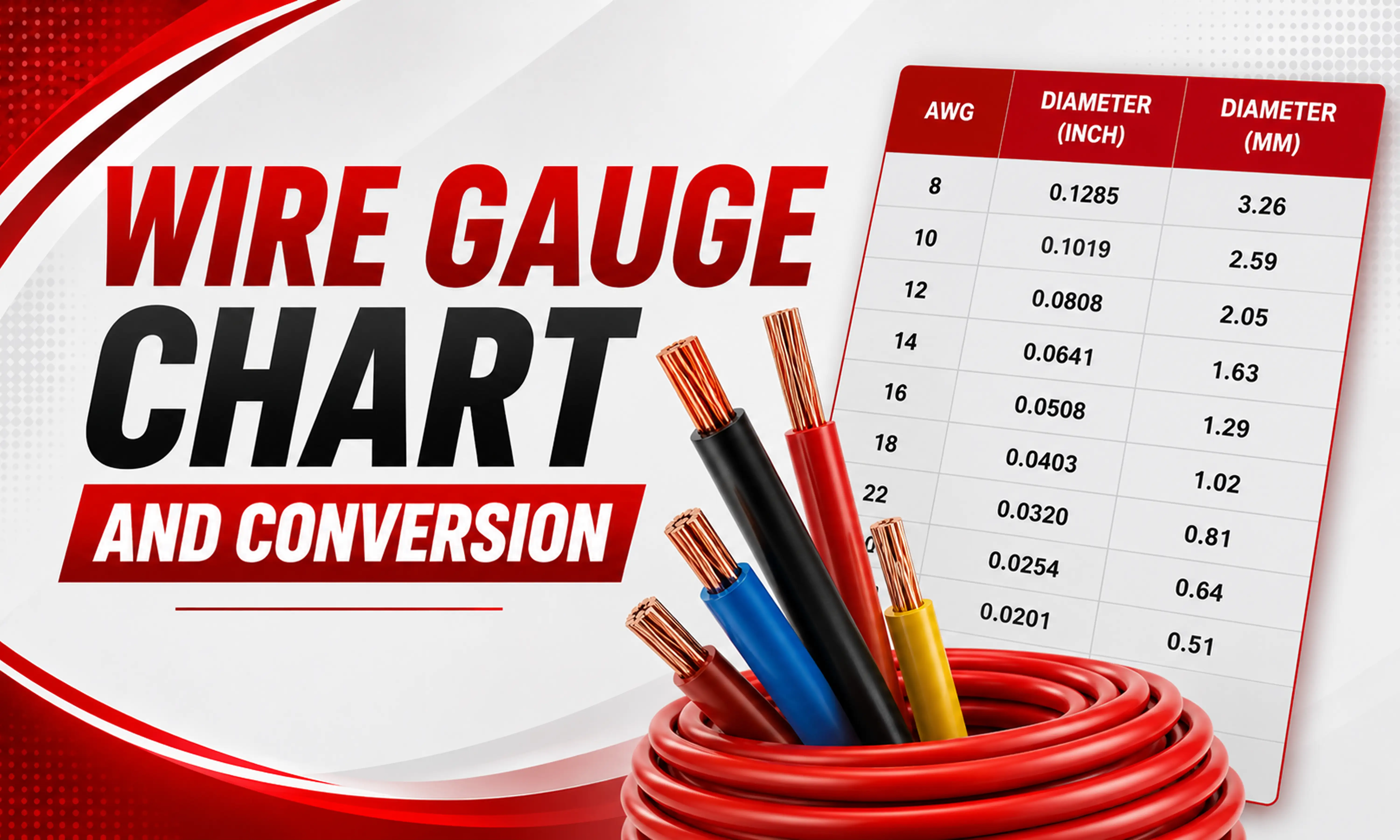
This wire gauge chart shows the rough relationship between gauge and the square millimetre sizes used today. It is the practical wire gauge to mm reference most buyers need.
                Approx. SWG
                Size (sq mm)
                Typical Use


                18
                1.0
                Lighting circuits


                17
                1.5
                Light and fan points


                14
                2.5
                Sockets and small air conditioners


                12
                4.0
                Geyser and larger air conditioners


                10
                6.0
                Heavy appliance circuits


                8
                10
                Sub main lines


                6
                16
                Main incoming lines
This standard wire gauge chart is indicative, since gauge systems and mm sizes do not map exactly. Treat any standard wire gauge chart as a guide rather than a rule. For any real installation, use the square millimetre size printed on the cable rather than converting from a gauge number. An actual-size wire gauge chart is a useful reference, though the mm figure on certified cable is the reliable one. Keep an actual-size wire gauge chart handy for older jobs that still quote gauge numbers.
Copper Wire Gauge in Practice
A copper wire gauge is chosen by the current a circuit carries. A thicker conductor has lower resistance, so it runs cooler under load. A thinner one heats faster. This is why an electrical wire gauge chart always ties a size to a use rather than leaving it abstract. A good copper wire gauge chart shows lighting on the thin end and mains on the thick end, which is exactly how a home is wired. Reading a copper wire gauge chart alongside an electrical wire gauge chart removes most of the guesswork for a buyer.
Common Gauge Questions
Two questions come up constantly. Buyers ask about 12-gauge wire, which sits close to a 4.0 square millimetre conductor and suits a geyser or a larger air conditioner. They also ask about 10-gauge wire in mm, which is roughly 6.0 square millimetre and suits heavy appliance circuits. Knowing 10 gauge wire in mm and where 12 gauge wire fits removes most of the confusion at the shop counter.
Choosing by Load, Not by Guess
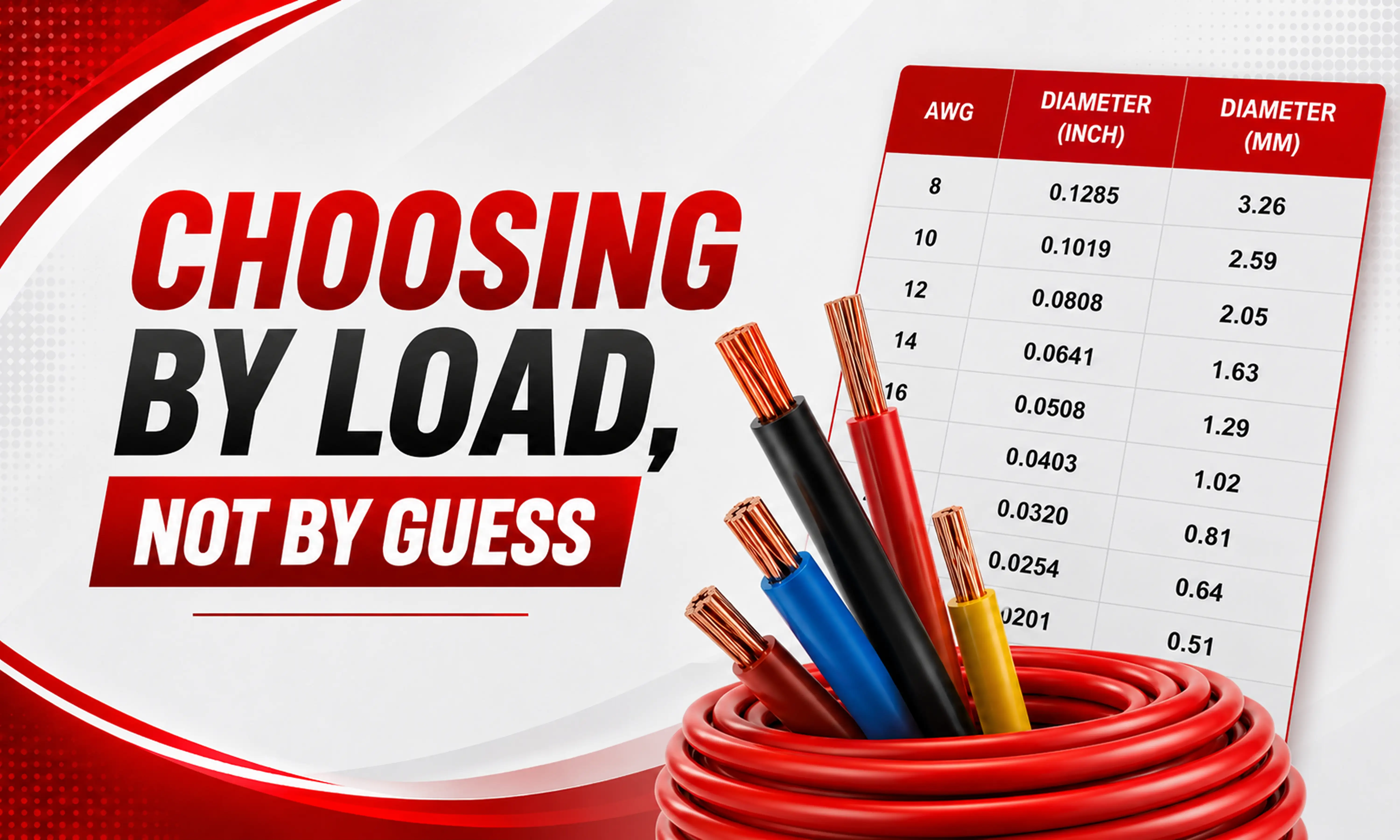
Whatever the unit, the rule is the same. Match the conductor to the current the circuit will actually carry, and step up a size on long runs to cover voltage drop. Undersizing is the main cause of overheating in buildings. A wire gauge diagram or size chart is a useful starting point, though a licensed electrician should confirm the final size for the real load. Reading a wire gauge diagram correctly saves both money and risk.
Trusted Copper Wire From Kundan Cab
Kundan Cab has built copper wire for India since 1968, in sizes covering every home and industrial circuit. Its IS 694-compliant house wires come in Safety Pro FR, Flexy Plus FR-LSH, Power Plus PFFR and Green Wire grades, all on high-purity electrolytic copper. Choose the correct size for each circuit and buy certified cable you can trust. Visit kundancab.in to find the right wire size and grade for your project.
FAQs
1. What does wire gauge mean?
Wire gauge describes conductor thickness with a number, where a lower number means a thicker wire. The standard wire gauge was the traditional system used in India. Modern cable is sold in square millimetres, which is the figure printed on genuine certified wire.
2. How do I convert wire gauge to mm?
A wire gauge to mm conversion is approximate, since the systems do not map exactly. Roughly, 14 SWG is near 2.5 square millimetre and 12 gauge is near 4.0 square millimetre. Always use the mm size printed on the cable for a real installation.
3. What is 10-gauge wire in mm?
10 gauge wire in mm is roughly 6.0 square millimetre, which suits heavy appliance circuits. As with all conversions, treat it as indicative. Choose by the current the circuit carries and confirm the size with a licensed electrician.
Key Takeaways
- Wire gauge numbers run backwards, so a lower number means a thicker conductor.
- Modern Indian cable is sold in square millimetres, not gauge.
- Use a wire gauge chart as a reference, but trust the mm size printed on the cable.
- 12-gauge wire is near 4.0 sq mm and 10-gauge wire in mm is near 6.0 sq mm.
- Choose the size by the circuit load, and step up on long runs.
Conclusion
Wire gauge is an old language for a simple idea, which is how thick the conductor is. Learn the rough conversion, then buy by the square millimetre size printed on the certified cable. Kundan Cab has supplied trusted copper in every size since 1968.