Overview
The right electrical wire for house circuits is a copper conductor built to IS 694:2010 in an FR or FR-LSH grade, sized to the load of each room. Lights, sockets, air conditioners and geysers each need the correct size. Matching wire to its use keeps an Indian home safe.
What to Look for in Electrical Wire for House Use
A good electrical wire for house work does three jobs. It carries current without heat, resists fire and lasts for decades. That depends on the copper inside, the insulation grade and the certification behind it. A quality copper wire with a flame retardant grade and the IS 694:2010 mark meets all three, whichever room it serves.
Wire for Lighting Circuits
Lighting draws a small load, so it uses a thin size. A 1.0 to 1.5 square millimetre copper house wire is enough for lights and fan points in most homes. Because lighting runs across many rooms, using a consistent home electrical wire for these circuits keeps the system tidy and easy to maintain.
Wire for Sockets and Power Points
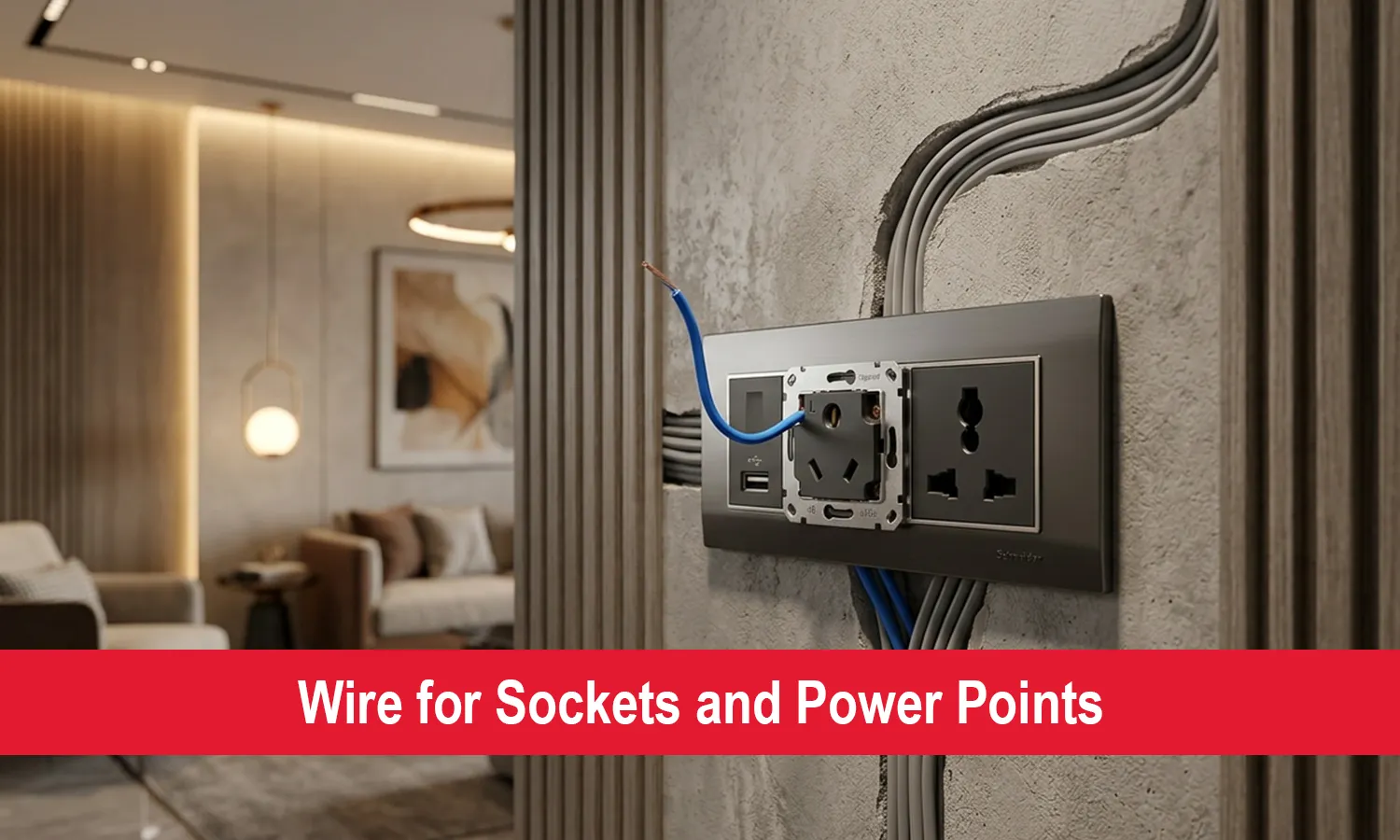
Sockets carry more load than lights, so they use a medium size. A 2.5 square millimetre copper electrical cable suits general power points and small air conditioners up to about 1.5 ton. Choosing the right residential wire for socket circuits prevents heat when several devices run at once.
Wire for Air Conditioners and Geysers
Heavy appliances need their own thicker circuit. A geyser or a larger air conditioner usually needs a 4.0 square millimetre copper wire on a dedicated line. Running such loads on a thin building wire causes heat and voltage drop, so using the correct thicker building wire on a dedicated line prevents this. A correctly sized house wiring cable for each heavy appliance keeps the home safe and efficient.
Wire for the Main and Sub Main Lines
The main incoming line and sub mains carry the whole home's load, so they use the thickest sizes, commonly 10 to 16 square millimetre and above. A strong home wiring wire here feeds every circuit steadily, and undersizing the main line is a common and dangerous mistake. Choosing a slightly larger home wiring wire and a properly rated domestic wire for the main line leaves room for future appliances, so the domestic wire feeding the board should match the total demand.
Grade and Colour for Every Room
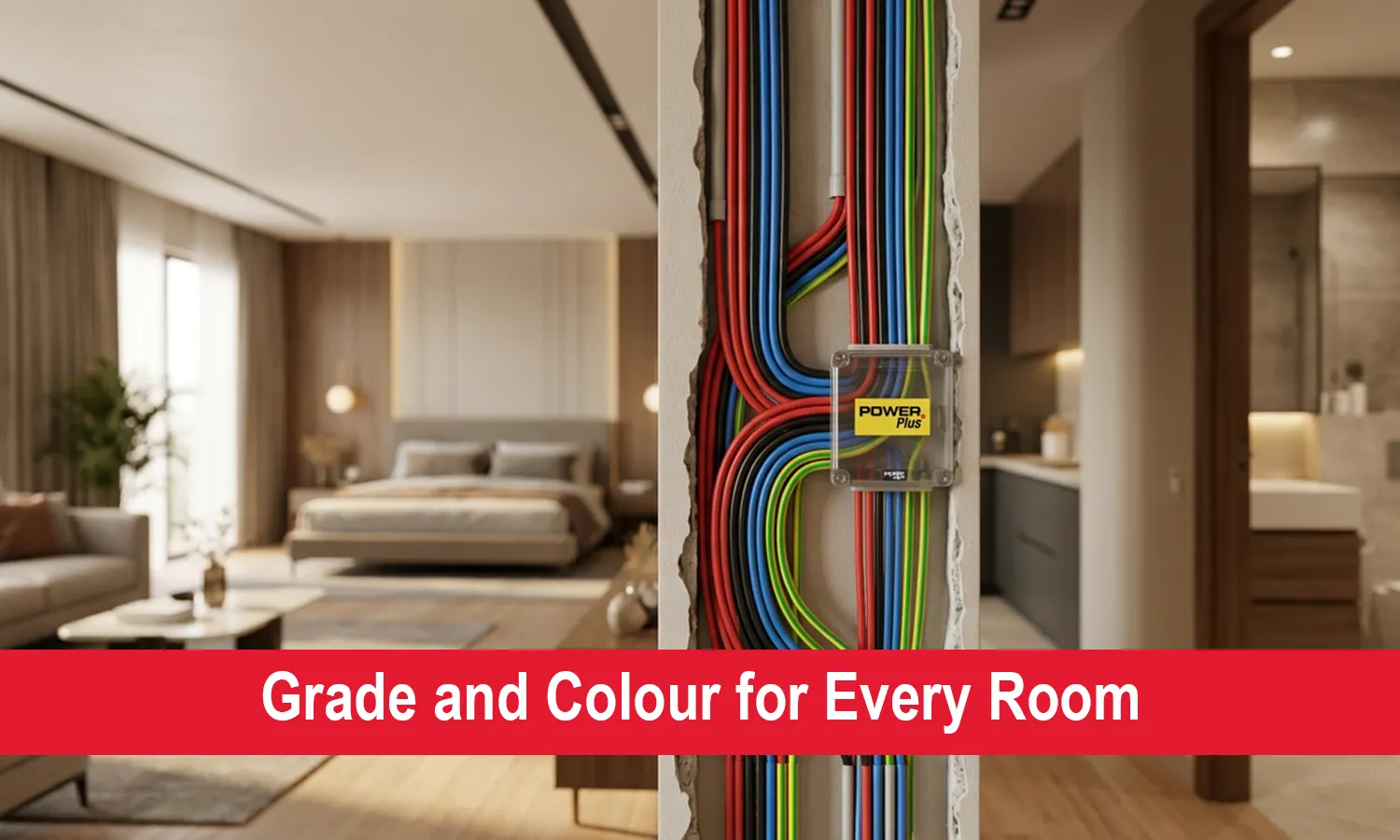
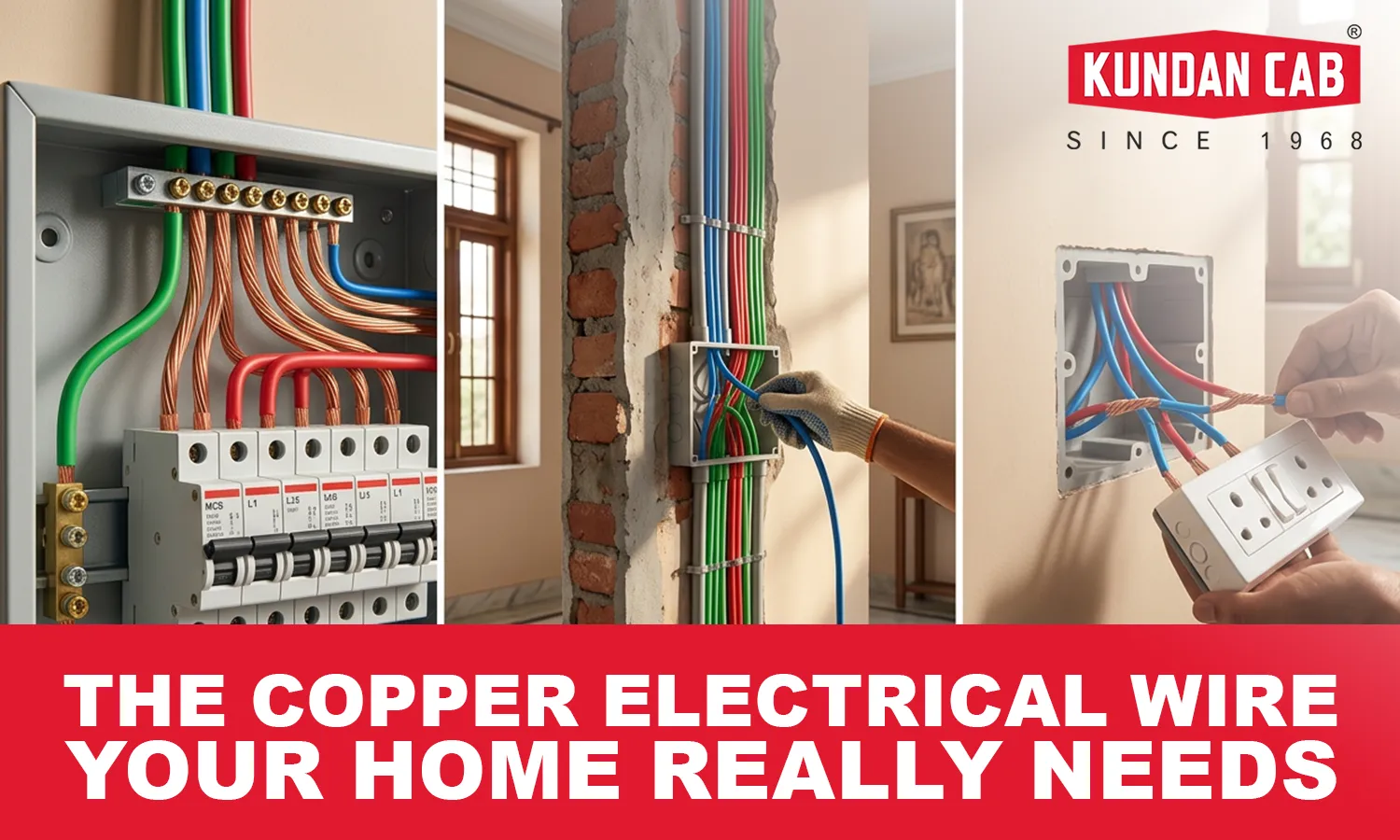
Grade adds fire safety in every room. FR resists flame for general spaces, while FR-LSH adds low smoke safety for closed rooms and high rise flats. Colour also matters, since brown or red marks live, blue or black marks neutral, and green marks earth. A consistent electrical wire for house colour scheme keeps every circuit safe to maintain.
Never Forget the Earth Wire
Every circuit in a home needs a proper earth connection. The green earth wire carries fault current safely to the ground instead of through a person, which makes it one of the most important parts of any installation. Sockets feeding metal-bodied appliances like a geyser or a washing machine especially need a solid earth. A complete electrical wire for house plan always includes the earth conductor for every point, run in a genuine copper house wire alongside the live and neutral.
Choosing Electrical Wire for House From Kundan Cab
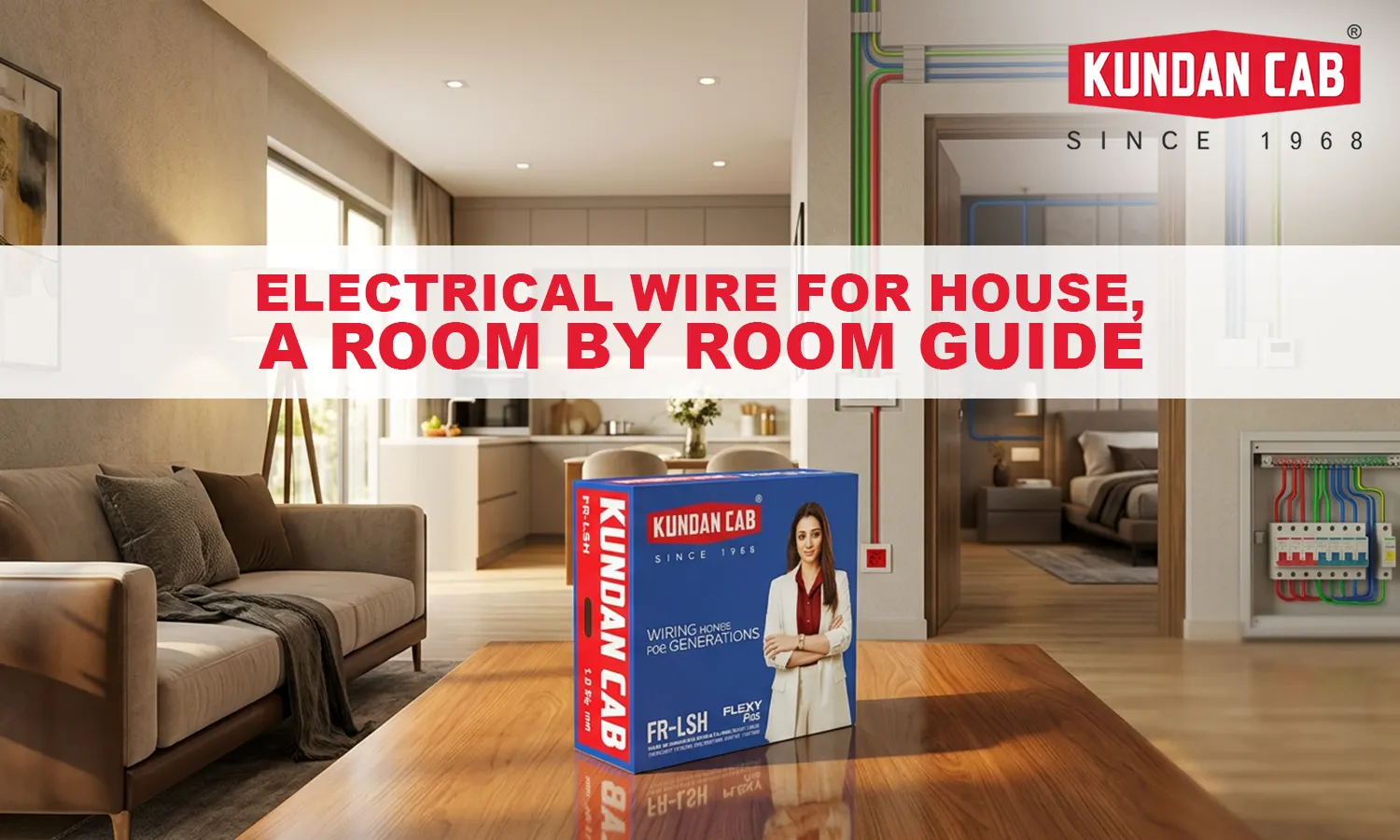
Kundan Cab has built home wire for over 50 years. Its range covers Safety Pro FR, Flexy Plus FR-LSH and Power Plus PFFR, all from high purity electrolytic copper certified to IS 694:2010. For every circuit in the home, choose an electrical wire for house use that you can trust. Visit kundancab.in to find the right house wire size and grade for each room.
FAQs
1. What electrical wire is used for a house?
The electrical wire for house circuits is usually a copper conductor certified to IS 694:2010 in an FR or FR-LSH grade. The size is matched to each circuit, from a thin lighting wire to a thicker house wiring cable for geysers and air conditioners.
2. What size wire for lights, sockets and air conditioners?
Lighting uses 1.0 to 1.5 square millimetre, sockets and small air conditioners use 2.5 square millimetre, and geysers or large air conditioners use 4.0 square millimetre. Matching the copper wire size to each load keeps the home electrical wire cool and safe.
3. Is copper the best electrical wire for a house?
Yes. A copper electrical cable carries more current per millimetre, runs cooler and lasts longer than aluminium. For a home, copper is the safest choice, and a certified residential wire in copper protects every circuit for decades.
Key Takeaways
- The right electrical wire for house circuits is copper certified to IS 694:2010 in an FR or FR-LSH grade.
- Lighting uses 1.0 to 1.5, sockets use 2.5, heavy appliances use 4.0 square millimetre.
- Main and sub main lines step up to 10 to 16 square millimetre and above.
- FR suits general rooms, while FR-LSH suits closed and high rise spaces.
- Match the house wire size and grade to each room, and follow the colour code.
Conclusion
The right electrical wire for house use is never a guess. Genuine copper, the correct size for each room, a proven grade and honest IS 694:2010 certification keep a home safe. Kundan Cab has supplied that trusted house wire for over 50 years.