Overview
The size of wire used in house wiring in mm depends on the current each circuit carries. Lighting uses 1.0 to 1.5 square millimetre, sockets use 2.5 square millimetre, and heavy loads like geysers use 4.0 square millimetre. Matching the mm size to the load keeps the wiring cool and safe.
Why Wire Size Is Measured in mm
In India, wire is measured by the cross section area of its copper conductor in square millimetres, not by the older wire gauge number. A higher mm value means a thicker conductor that carries more current. Knowing the correct wire size in mm for each circuit is the foundation of safe home wiring, and it prevents the overheating that causes most faults.
The Size of Wire Used in House Wiring in mm, Circuit by Circuit
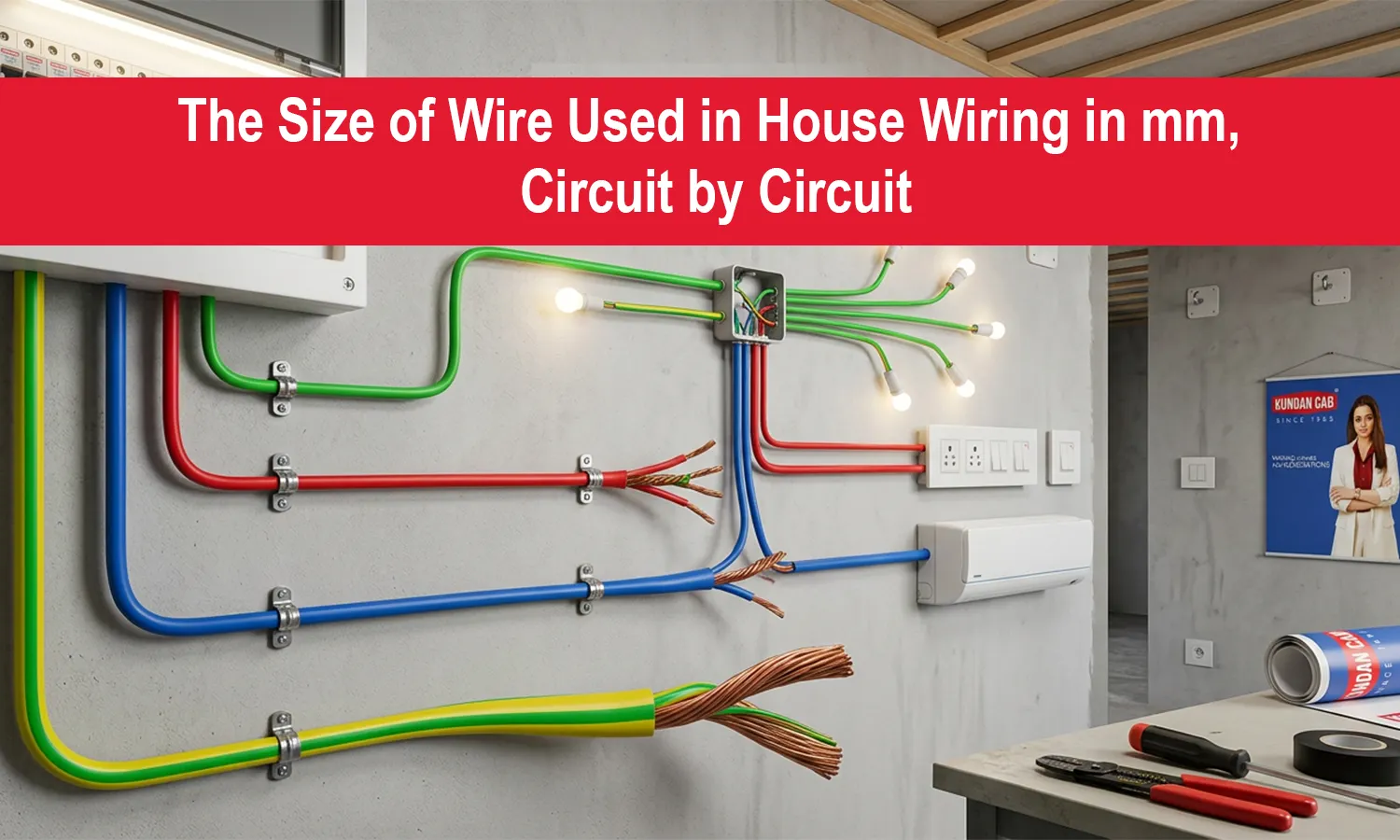
The right size of wire used in house wiring in mm changes with the load. Here is a simple cable size chart for common home circuits.
                Circuit
                Wire Size (sq mm)
                Typical Use


                Lighting
                1.0 to 1.5
                Lights and fan points


                Sockets
                2.5
                General power points


                Small Air Conditioner
                2.5
                Units up to 1.5 ton


                Geyser or Large AC
                4.0
                Dedicated heavy circuit


                Sub Main
                6.0 to 10
                Feeds within the home


                Main Incoming
                10 to 16
                House supply line
This house wiring wire size guide is indicative. Actual selection should follow the real load and a licensed electrician, since ratings shift with temperature and the way the cable is installed.
Wire Size for House Wiring and Current
Each mm size carries an indicative current. A 1.0 square millimetre wire handles around 11 amperes, a 2.5 square millimetre wire around 20 amperes, and a 4.0 square millimetre wire around 26 amperes. Choosing the correct wire size for house wiring keeps the conductor cool under load. Undersizing is the main cause of overheating, so the electrical cable size must always match the appliance it feeds.
Matching House Wire Size to Appliances
A common mistake is running every point on the same thin wire. A geyser or air conditioner needs its own thicker circuit. The correct house wire size for a dedicated appliance prevents voltage drop and heat. For a whole home, the home wiring size should step up from lighting to sockets to heavy loads, never the other way round.
Kundan Cab Covers Every Wire Size
Kundan Cab copper wire is available across the full home range, from 1.0 square millimetre for lights up to 95 square millimetre and beyond for mains, all certified to IS 694:2010. This means one trusted brand can supply every wire size for house wiring in a single home, keeping quality consistent from the smallest point to the main line.
Common Wire Size Mistakes to Avoid
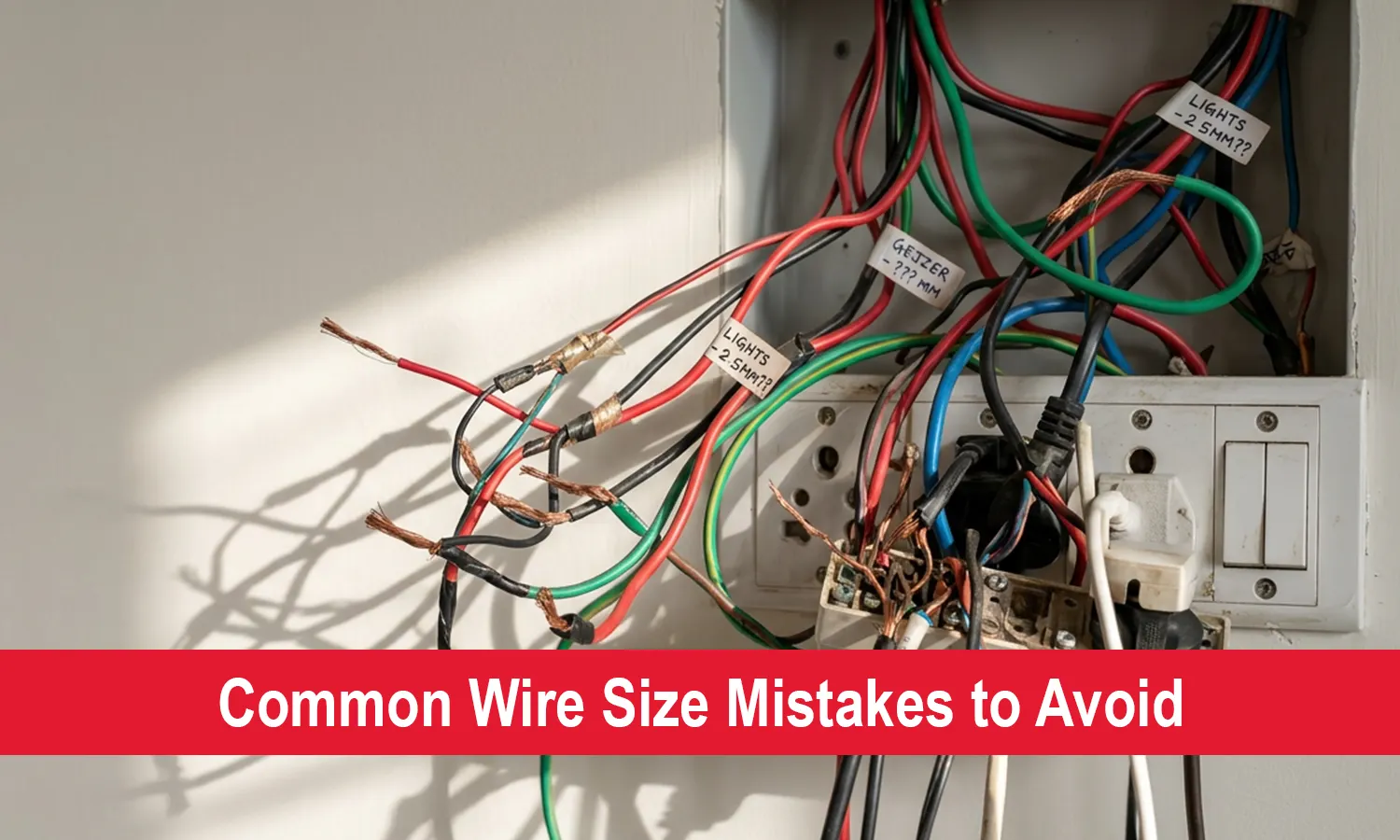
A few sizing mistakes appear again and again. Running a heavy geyser or air conditioner on a thin socket wire causes heat and voltage drop. Using the same size everywhere ignores the different loads across a home. Guessing instead of checking the cable size chart leads to unsafe circuits. The safe habit is simple. Confirm the wire size for house wiring for each circuit against its real load, and step up a size for long cable runs where voltage drop starts to matter.
It also helps to plan a little ahead. Homes add appliances over time, so choosing a slightly larger house wire size on key circuits leaves room for future load. This small step can save a rewiring job when a new air conditioner or geyser arrives later.
Get Every Wire Size Right
Get the size of wire used in house wiring in mm right the first time. Look at the Kundan Cab copper range in FR, FR-LSH and PFFR grades, match each mm size to its circuit, and wire your home for safety. Visit kundancab.in to find the correct house wire size for every point in the house.
FAQs
1. What size of wire is used in house wiring in mm?
The size of wire used in house wiring in mm ranges from 1.0 square millimetre for lighting to 4.0 square millimetre for geysers and large air conditioners. Sockets typically use 2.5 square millimetre. Main lines use 10 square millimetre and above. The correct wire size in mm always depends on the load of each circuit.
2. How do I know the right wire gauge or size?
Modern Indian wiring uses the mm cross section rather than the older wire gauge. Choose the size by the current the circuit carries. A licensed electrician can confirm the house wiring wire size for your exact load, which is the safest way to avoid overheating.
3. Is 2.5 mm wire enough for the whole house?
No. A single electrical cable size cannot serve every load. 2.5 square millimetre suits sockets and small air conditioners, but lighting can use thinner wire and geysers need thicker 4.0 square millimetre cable. Matching the cable size chart to each circuit is the safe approach.
Key Takeaways
- The size of wire used in house wiring in mm is chosen by the current each circuit carries.
- Lighting uses 1.0 to 1.5, sockets use 2.5, geysers and large AC use 4.0 square millimetre.
- Mains and sub mains step up to 6.0, 10 and 16 square millimetre and beyond.
- Modern Indian wiring uses mm cross section, not the old wire gauge.
- Kundan Cab copper covers every home wiring size certified to IS 694:2010.
Conclusion
The size of wire used in house wiring in mm is one of the most important safety decisions in a home. Match each mm size to its load and the wiring stays cool, efficient and safe. Kundan Cab copper covers the full range, backed by over 50 years of trust.