Overview
A copper cable is an insulated assembly of one or more copper conductors used to carry power safely. Choosing one means matching the core count, size, and insulation to the application. This overview explains copper cable construction, single-core and multi-core options, and the buying factors that keep an installation safe.
Cables are the arteries of any electrical system, and the metal inside them decides how safely power flows. A cable uses copper conductors for their strong conductivity and long life, which is why they run through nearly every Indian home and factory. From the wire behind a light switch to the sheathed line feeding a motor, copper does the quiet work. This resource explains what a copper cable is, how it is built, and how to choose one, using the real Kundan Cab range.
What a Copper Cable Is
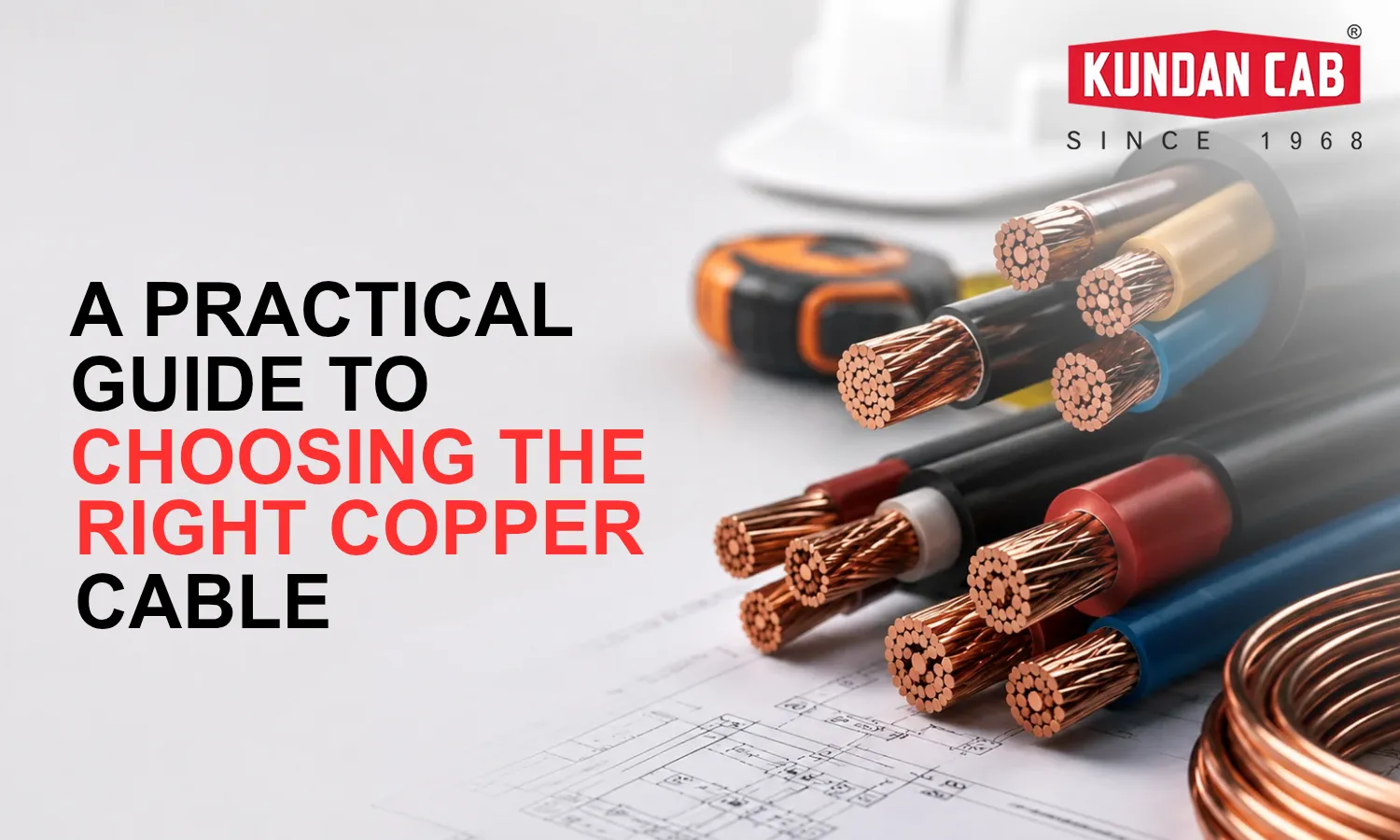
A cable is an assembly of one or more copper conductors surrounded by insulation, and sometimes an outer sheath. The conductor carries the current, the insulation contains it, and the sheath adds protection where a cable faces wear or moisture. Kundan builds its cables with electrolytic copper at 99.97 percent purity to IS 694:2010, so an electrical copper cable from its range meets a consistent, certified standard.
Cable Construction and Cores
Construction decides how a cable behaves. The conductor may be a single strand or many fine ones, the insulation is chosen for the environment, and a sheath is added where needed. Kundan uses PVC insulation in FR, FR-LSH and heat-resistant grades, with sheathed builds for submersible and industrial use. Reading a copper cable specification tells you the conductor class, the insulation grade and the voltage rating, which together define the cable. That copper cable specification is the first thing a careful electrician checks on the drum.
Single Core and Multi Core Options
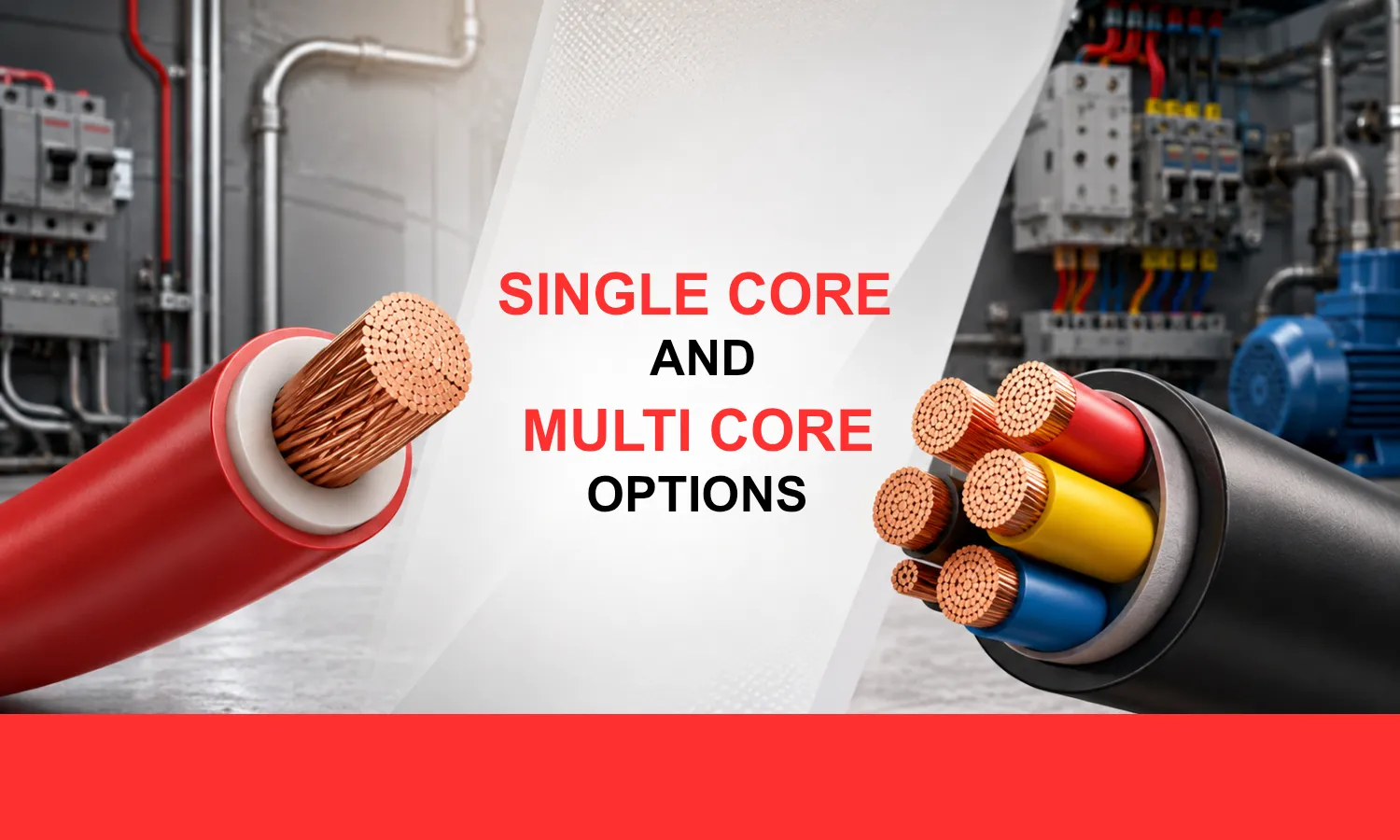
Cables come in single core and multi core forms, and the right one depends on the job.
- A single core carries one conductor and suits fixed wiring, panels and conduits.
- A multi core bundles several insulated conductors under one sheath, ideal for appliances, controls and pumps.
Kundan offers both, fromsingle core house wires to round sheathed multi core FR-LSH cables. Think of the neat single wire feeding a wall socket against the round black cable that drops down a borewell to a submersible pump. Knowing the main copper cable types helps you pick the right form, since a copper power cable for a machine is built quite differently from a lighting wire.
Common Applications
Different jobs call for different cables. House wiring uses single core wires such as Kundan GREEN+ and Safety Pro for lights and sockets. Flexible ranges suit conduits and appliance leads that move. A sheathed copper power cable carries heavier loads to motors and machinery, while multi core cables run pumps and control circuits. A copper electrical cable chosen to match its setting, rather than one type used everywhere, keeps an installation both safe and efficient. Picture the difference between the neat coil behind a bedroom light and the tougher line running to a workshop motor.
How to Choose the Right Cable
Start with the load, then the environment. Size the conductor to the current, pick an insulation grade to suit heat and fire safety, and choose single or multi core for the layout. Check the voltage rating, which is 1100 volts across the Kundan range, and confirm the certification. Among the copper cable types on the market, the right one always matches the job, and a genuine electrical copper cable carries clear IS 694 marking. A quick example helps here, since a damp pump circuit needs a sheathed, moisture resistant cable while a dry conduit run does not.
Signs of a Quality Cable
On the shelf, two coils can look identical, so it helps to know what sets a good one apart. Look for clear printing along the sheath showing the size, the voltage grade and the IS 694 marking, since a genuine product never hides its rating. The insulation should feel even and firm, without thin spots, and the copper inside should be bright rather than dull. A trusted maker also states the copper purity, and Kundan prints its 99.97 percent grade with pride.
Weight is another quiet clue. Because copper is dense, a full sized conductor gives a coil a certain heft, and a cable that feels surprisingly light may hide an undersized or impure core. None of these checks take long, yet together they separate a cable you can trust from one that only looks the part.
Key Takeaways
- A copper cable is one or more copper conductors with insulation, chosen for conductivity and long life.
- Always read the copper cable specification for conductor class, insulation grade and voltage rating.
- Use single core for fixed wiring and multi core for appliances, controls and pumps.
- A sheathed copper power cable suits heavier loads, while house wires handle lights and sockets.
- Match the cable to the job and check certification rather than choosing on price alone.
FAQs
1. What is a copper cable and where is it used?
A copper cable is an assembly of copper conductors with insulation, used to carry power safely in homes, shops and industry. The conductor carries current while the insulation contains it. Kundan builds its cables with 99.97 percent electrolytic copper to IS 694:2010, so each electrical copper cable meets a certified standard for real installations.
2. What is the difference between single core and multi core copper cable?
A single core cable carries one conductor and suits fixed wiring and panels, while a multi core bundles several conductors for appliances, controls and pumps. Both are common copper cable types, and the right choice depends on the layout and load. A sheathed multi core copper power cable is often used where several circuits run together, such as a submersible pump line.
3. How do I read a copper cable specification?
A copper cable specification lists the conductor class, the insulation grade, the size in square millimetres and the voltage rating. Kundan cables are rated to 1100 volts and built to IS 694:2010. Checking the specification, rather than the price, tells you if a cable truly suits your load and environment.
Choose With Confidence From Kundan
A cable is a long term part of any building, so it deserves a careful choice. Kundan Cab offers a full range of copper cables, from FR and FR-LSH house wires to flexible, multi core and industrial builds, all made to IS 694:2010 with 99.97 percent copper. Match the cable to your job, check the marking, and wire with confidence.
Specifying cable for a home or project? Browse the Kundan Cab range and choose a copper cable built for your exact load and environment. Visit kundancab.in or contact a Kundan dealer for guidance.