Overview
A copper flexible cable uses many fine copper strands so it bends easily and survives repeated movement. It suits appliances, machines and conduits where a stiff wire would crack. This overview explains flexible construction, PVC insulation and where flexibility becomes essential, using the real Kundan Cab range.
Some wiring never moves, and some flexes every single day. That difference decides if you need a rigid wire or a copper flexible cable built to bend without harm. Think of the lead on a pedestal fan or the wiring inside a machine that shifts on its mounts, where a stiff conductor would soon crack. Kundan builds flexible ranges for exactly these jobs, so this resource explains how they are made and where flexibility really matters.
What Makes a Cable Flexible
Flexibility comes from the conductor. Instead of one thick strand, a flexible cable uses many fine strands bundled together, which lets it bend around tight corners and take repeated movement. This multi strand copper wire construction is what separates a flexible cable from a rigid one. Kundan forms these as Class 5 conductors under IS 8130 and IEC 60228, the class made for flexibility. A good flexible copper wire keeps its shape after thousands of bends rather than breaking a strand.
Insulation and Protection
Around those strands sits insulation that must flex too. Kundan uses PVC compounds in FR and FR-LSH grades, so a pvc flexible cable bends freely while resisting flame and, in the FR-LSH grade, releasing low smoke in a fire. The insulation stays snug through movement, which matters in a busy workshop. A quality copper flexible wire pairs supple strands with insulation that will not crack or peel, giving a long, safe life even under daily flexing.
Where Flexibility Becomes Essential
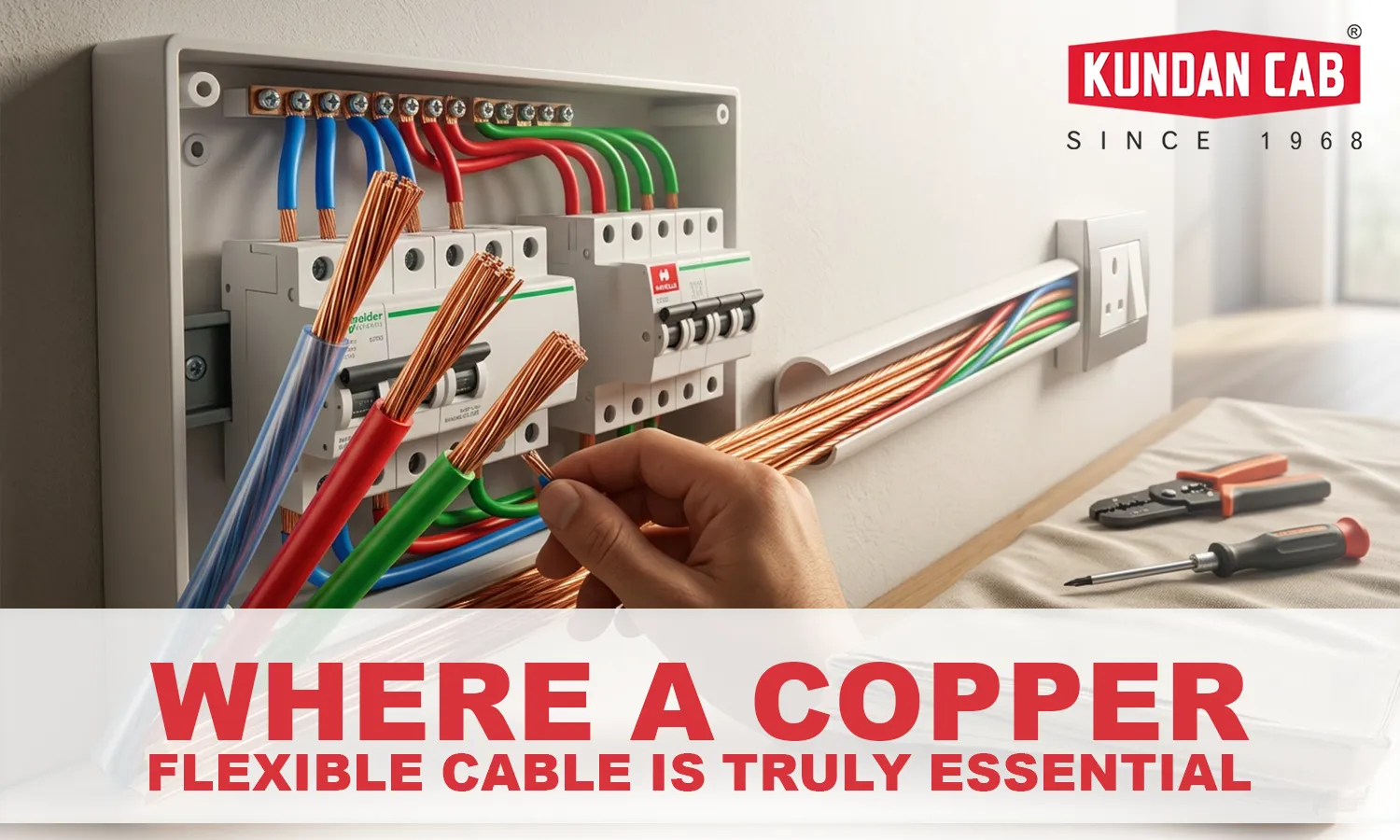
A flexible cable earns its place wherever wiring bends, moves or vibrates.
- Appliance leads such as fans, mixers and portable tools that are moved often.
- Conduit runs where a cable must be pulled around bends without kinking.
- Machines and panels where wiring flexes with moving parts.
- Temporary and site power where cables are coiled and uncoiled repeatedly.
For heavier settings, an industrial flexible cable carries the load to motors and equipment that vibrate all day. A flexible power cable in the right size keeps that connection safe and steady, and a flexible electrical cable routed neatly through a conduit stays reliable for years.
The Kundan Flexible Range
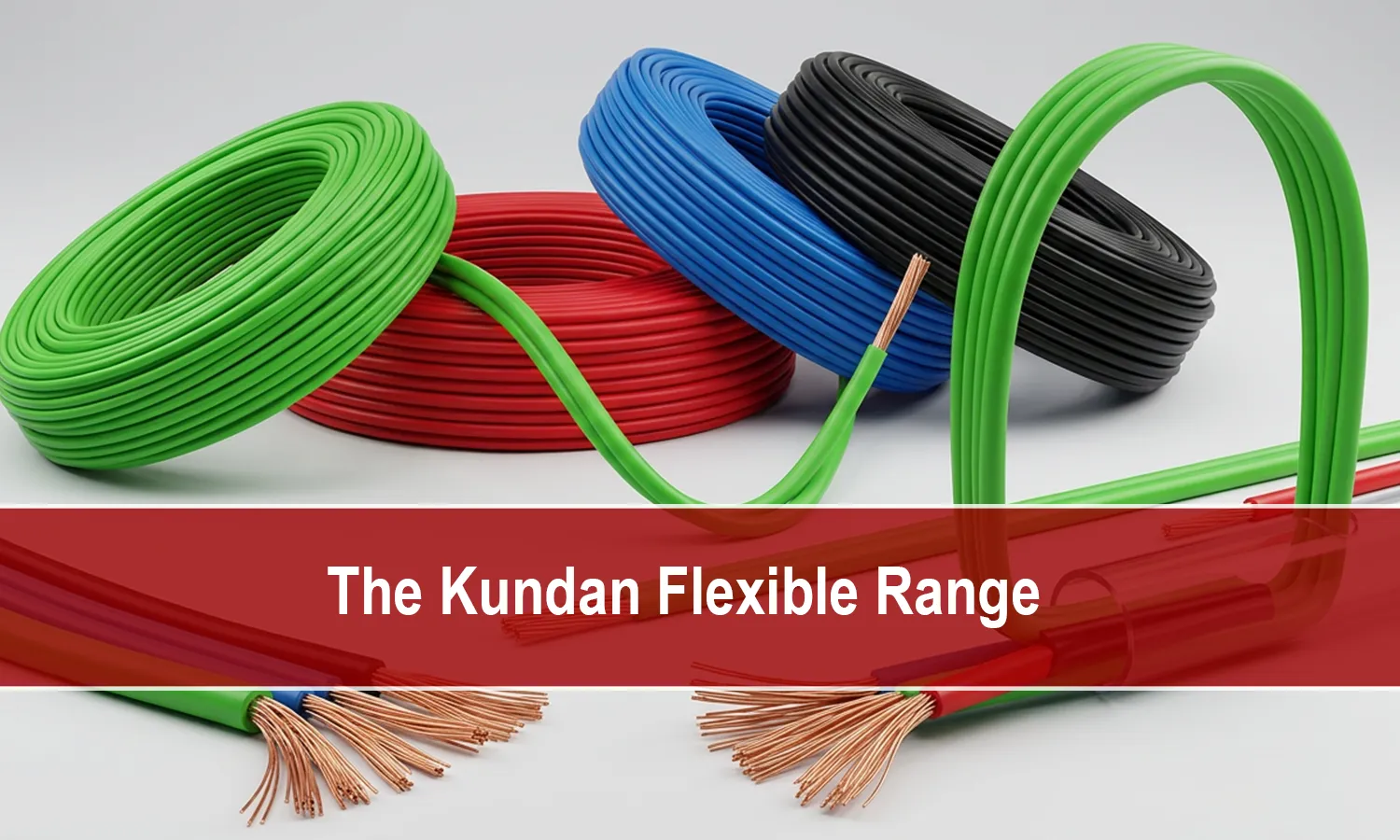
Kundan makes flexible cables for both homes and industry. Flexy Plus is a flame retardant low smoke flexible range that runs from small sizes right up to heavy industrial sizes, while Power Plus is a premium flexible wire made for conduiting systems. Both use 99.97 percent electrolytic copper and are rated to 1100 volts. As a trusted flexible cable manufacturer, Kundan builds every coil to IS 694:2010 with automated testing, so the flex you rely on today still performs years from now.
How to Choose the Right Flexible Cable
Picking a flexible cable is easier when you work through a few questions. Start with how much the cable will move, since constant flexing needs the finest stranding, while an occasional bend is less demanding. Then match the size to the load, exactly as you would for a rigid wire, and choose an insulation grade to suit the heat and fire risk of the space.
- Movement. Frequent flexing calls for fine, high count stranding.
- Load. Size the conductor to the current with a sensible margin.
- Environment. Choose FR or FR-LSH insulation for the fire risk of the space.
- Length. Allow for voltage drop on longer runs to a motor or tool.
A quick example makes it real. The lead on a portable grinder dragged around a workshop needs both fine strands and a tough grade, while a fixed conduit drop that only bends once at installation can use a simpler flexible wire. Matching the cable to how it will actually be used is the difference between one that lasts and one that frays. It also pays to watch a flexible cable over its life, since a lead that feels stiff, shows cracks or has a warm plug is telling you it has worked hard, and replacing it early avoids a fault.
Key Takeaways
- A copper flexible cable uses many fine strands so it bends and survives repeated movement.
- The multi strand copper wire conductor is what gives a flexible cable its give.
- A pvc flexible cable in FR or FR-LSH grade flexes freely while resisting flame.
- Use flexible cable for appliance leads, moving machines and conduit runs.
- Kundan Flexy Plus and Power Plus deliver flexible performance to IS 694:2010.
FAQs
1. What is a copper flexible cable used for?
A copper flexible cable is used wherever wiring must bend, move or vibrate, such as appliance leads, machine wiring and conduit runs. Its many fine strands let it flex without cracking. Kundan builds flexible ranges like Flexy Plus and Power Plus for both homes and industry, all rated to 1100 volts and made to IS 694:2010.
2. How is a flexible cable different from a rigid one?
A rigid cable uses a single thick strand, while a flexible one uses a multi strand copper wire made of many fine strands. That construction lets a flexible copper wire bend around tight corners and take daily movement without a strand breaking. Kundan forms these as Class 5 conductors, the class built for flexibility.
3. Can a flexible cable handle heavy industrial loads?
Yes. An industrial flexible cable in a suitable size carries power to motors and equipment that vibrate all day, and a correctly rated flexible power cable keeps that connection safe. Kundan Flexy Plus covers a wide size range for these needs, built from 99.97 percent copper to a 1100 volt rating.
Choose Flexible With Kundan
Wherever your wiring bends or moves, the right flexible cable saves you from cracked strands and early failure. Kundan Cab builds Flexy Plus and Power Plus flexible ranges with high purity copper and reliable PVC insulation, tested to a real standard. Match the size to the load, and enjoy a connection that keeps flexing safely for years.
Wiring something that moves? Browse the Kundan Cab Flexy Plus and Power Plus ranges and choose a copper flexible cable built for the job. Visit kundancab.in or contact a Kundan dealer to specify the right size.