Overview
An electric wire price depends on the metal inside, the size, the insulation and the length, not on how the wire looks. Two wires that seem the same can cost very differently, because the copper, the size and the cover all change the figure. The fair way to judge is to compare the full specification, not just the number.
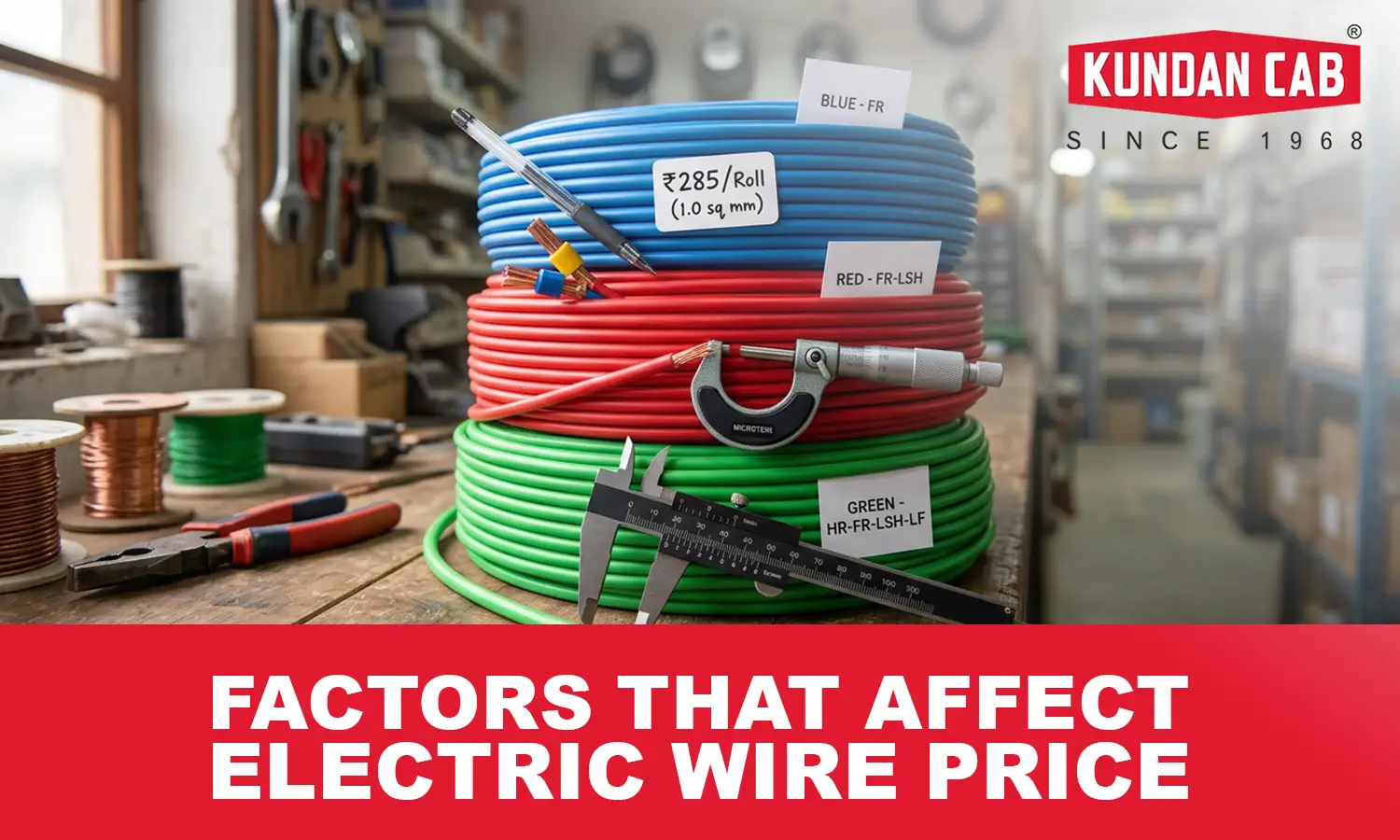
Put two reels of wire side by side and they can show the same size on the label yet very different prices. Nothing on the outside explains it. The answer is inside, in the copper, the cover around it and the metres on the reel.
Once you know what moves the number, the price makes sense. The idea is simple. Pick the right wire for the job first, then compare two fair options on price.
What Determines Electric Wire Price
So what actually sets the number? People often search for what determines wire price hoping for one figure, but a wire is really a bundle of choices rather than a single fixed thing. The metal, the size, the insulation, the build and the length all play a part. Change any one of them and the electric wire price moves with it. For the bigger picture across every size and type, see what really sets a wire price.
Key Factors Affecting Electrical Wire Price
A wire comes down to a handful of clear electrical wire cost factors. Reading them off the specification tells you why one reel costs more than another.
- Conductor material: the metal inside the wire. Copper costs more than aluminium but carries more current in a slimmer wire, which is why homes use it.
- Wire size: how thick the copper is. A bigger size has more metal and carries a heavier load, so it costs more.
- Insulation: the cover around the copper. Plain PVC is the base, while FR and FR-LSH grades add fire safety and a little cost.
- Voltage rating: the voltage the wire is built to handle. A higher rating means a tougher build.
- Manufacturing quality: the copper purity and how cleanly the wire is made. Better quality costs a little more.
- Coil length: the metres on the reel. A longer coil holds more wire, so the total is higher.
- Brand and market: a trusted, certified brand and the copper market both shift the final electrical wire price.
Copper vs Aluminium and How Material Affects the Price
The metal is the biggest part of the cost, so the choice between copper and aluminium moves the price the most. The table below shows how the two compare.
| Property | Copper | Aluminium |
|---|---|---|
| Conductivity | About 100 percent IACS | About 61 percent IACS |
| Size for the same current | Slimmer wire | About 1.6 times larger |
| Weight | Heavier | Lighter |
| Cost per kilogram | Higher | Lower |
| Best use | Home and building wiring | Long overhead and utility runs |
Copper carries more current in a slimmer wire and holds its joints for years, so it suits home and building wiring. Aluminium is cheaper and lighter, which is why it runs along long overhead lines. So the two are built for different jobs, not simply cheaper and dearer versions of the same wire. This one choice alone can change the price by a wide margin.
How Wire Size Changes the Price
Wire size means how thick the copper inside is, measured in square millimetres, or sq mm. A bigger size has more copper, so it carries a heavier load and costs more. This is why a thin lighting wire and a thick air conditioner wire never share a price. Match the size to the load first, then compare wires of the same size and grade.
Electric Cable Price Per Meter vs Coil Price
Wire is sold on a coil, so most people first see a coil figure. An electric cable wire price on a reel depends on the metres wound on it, and a short coil can look cheaper only because it holds less. It also helps to check the electric cable price per meter, but on its own that small number hides how much wire the job needs. Bring both to the same size, grade, and length, and the cheaper one is really cheaper.
How to Compare Electrical Wire Prices Before Buying
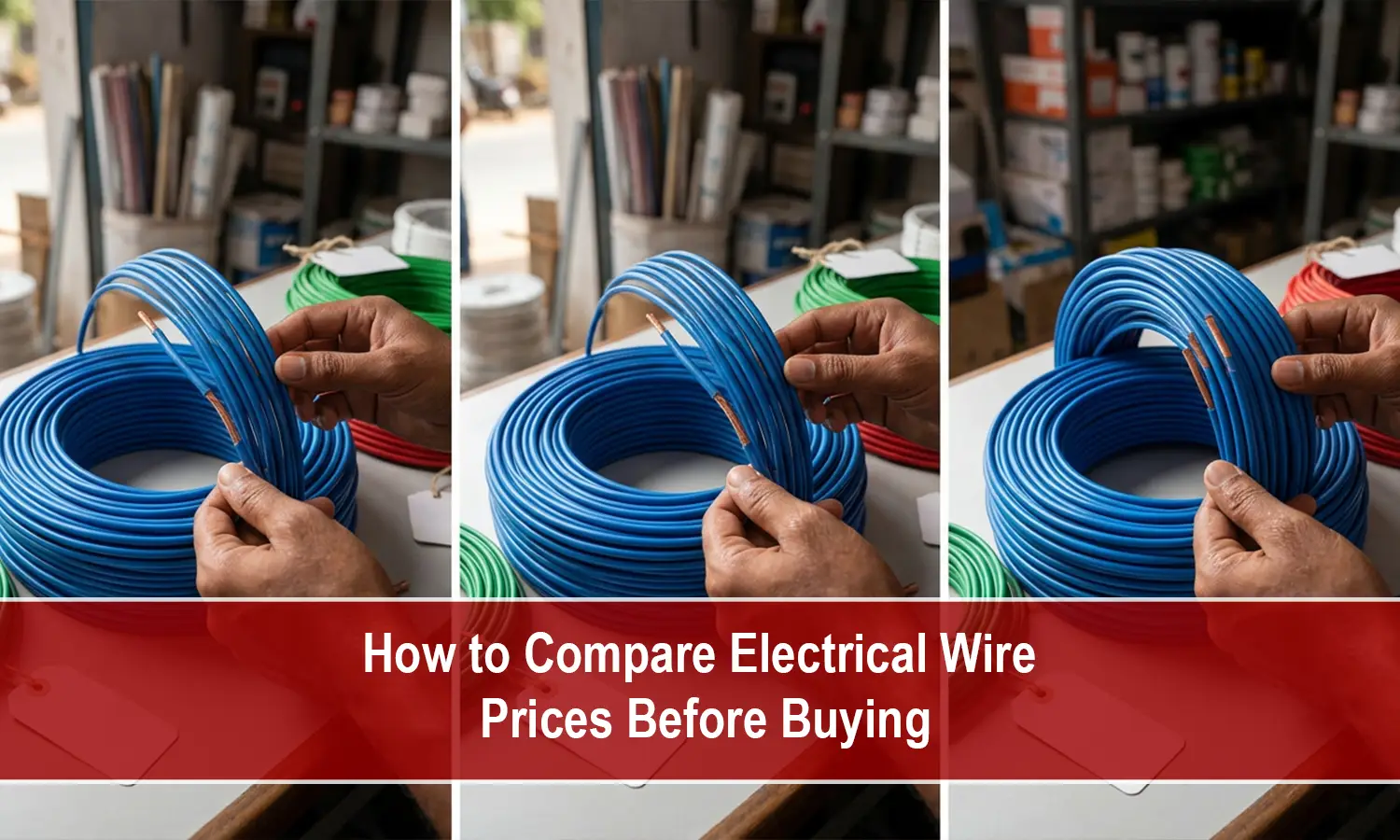
A fair comparison keeps everything the same except the price. Before you weigh one number against another, run through the main wire pricing factors on the specification.
- The size, as the copper area in square millimetres.
- The conductor, copper or aluminium, and the copper purity if it is stated.
- The insulation grade, plain PVC, FR or FR-LSH.
- The coil length, so you know the metres behind the figure.
- The standard and the maker, since a certified brand carries a quality the rate alone does not show.
Run two wires through that list and the reason for a price gap usually shows up, because the factors affecting wire price all move together. More often than not the cheaper wire is thinner, uses a lower grade cover or comes on a shorter coil.
Why Consider Kundan Cab for Wires and Cables
A real range shows how these choices play out. Kundan Cab has made wires and cables since 1968, all built to Indian standards such as IS 694:2010, with electrolytic grade annealed copper at 99.97 percent purity and a 1100 volt rating. Its work reaches homes, large buildings and industry across the country, which is a good sign of steady quality.
The Kundan Cab wires cover everyday home wiring in a clear ladder. Safety Pro is an FR grade copper wire for general circuits. Flexy Plus is a flexible FR-LSH wire offered from 1.0 sq mm up to 95 sq mm. Green Wire is the top grade, an HR-FR-LSH-LF wire with a higher 105 degree rating for extra heat safety.
Because the Kundan Cab wires and cables are made to one standard across the range, they compare fairly against other quality copper, not against a cheap, low grade strand. For the full list of sizes and grades, see the full Kundan Cab range.
FAQs
1. Why is one electric wire more expensive than another of the same size?
Because size is only one part of it. An electric wire price also depends on the metal and its purity, the insulation grade and the coil length, which are among the main factors affecting electrical wire price. A wire with good copper and a flame retardant cover costs more than a thin, low grade one, even at the same size. So compare the full specification, not just the number.
2. Does copper always cost more than aluminium?
For the same current, yes. Copper costs more per kilogram, but it carries more current in a slimmer wire and holds its joints for years, which is why homes use it. Aluminium is cheaper and lighter but has to be thicker, so it suits long overhead lines. This is a big reason an electric wire price changes with the metal.
3. How do I compare an electric wire price fairly?
Line up the specifications, not just the numbers. Check that both wires share the same size, the same metal and purity, the same insulation grade and a similar coil length. Once those match, the two prices can be compared. If a wire is cheaper on every count, it is usually a lower grade, not a better deal.
Key Takeaways
- An electric wire price reflects the metal, the size, the insulation and the length, not the way the wire looks.
- The conductor is the biggest cost, and copper suits home wiring while aluminium suits long overhead runs.
- A bigger size and a higher insulation grade both raise the figure because they add capacity and safety.
- Compare the full specification before prices, since a cheaper wire is often simply a lower grade one.
- Kundan Cab house wires run from FR grade Safety Pro to the HR-FR-LSH-LF Green Wire, all in copper to IS 694:2010.
Comparing wires for a home or a project? Instead of chasing one figure, match the size, the copper grade and the insulation you need, then ask a Kundan Cab dealer for the current price. Visit kundancab.in to find the right wire and enquire for live details.